

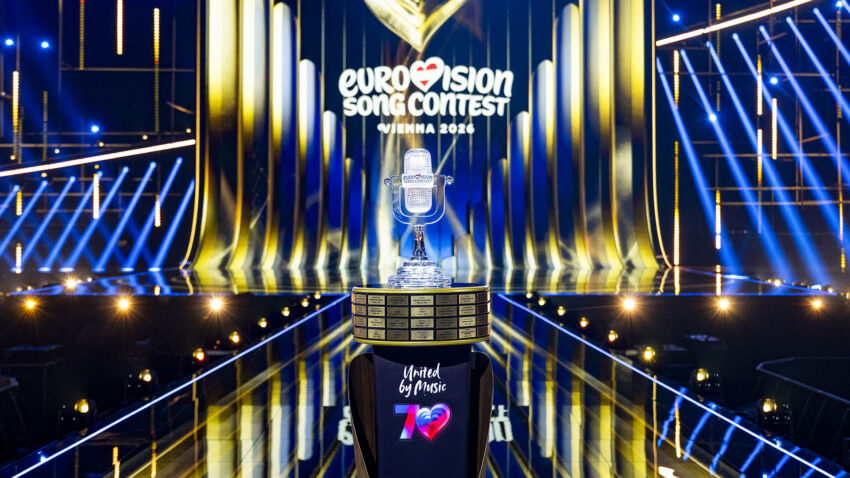
The Wiener Stadthalle in Vienna hosts the Grand Final of the Eurovision Song Contest 2026. This Saturday, May 16, live from 21:00 CEST, 25 countries compete for victory and, consequently, for the legendary crystal microphone.
Vienna, the European capital of music, takes on the organization of the third Eurovision Song Contest in its history, following the editions of 1967 and 2015.
Despite reaching its 70th anniversary, the European contest is taking place in a climate of tension and protests never seen before. Israel’s presence in the competition has led to the largest boycott in its history, with the withdrawal of five countries (Slovenia, Spain, Ireland, Iceland, and the Netherlands) after refusing to share the stage with the Israeli representative.
The city of Vienna is torn between the musical spectacle of the Eurovision Song Contest and the protests and demonstrations that have been organized throughout the entire week in the Austrian capital. Pro-Palestinian activists believe that the European contest cannot serve as a platform for the international whitewashing of Israel. In addition to this, there have been constant attempts to disrupt the balance of the voting in the Eurovision Song Contest through massive promotional campaigns, such as the one launched in the days leading up to the live shows and because of which the EBU had to intervene to stop the promotional strategy.
Tonight, the competition completes its 70th edition. On this occasion, the host broadcaster ORF has chosen two major names to lead the live shows. Victoria Swarovski and Michael Ostrowski are responsible for welcoming viewers from all over the world. In addition, they are joined by Emily Busvine, presenter of the Viennese green room, who will speak with the artists after their performances.
Which countries and artists are participating in the Grand Final of Eurovision 2026? Review the running order
Maintaining its current format with two semifinals, out of the 35 participating countries in the Eurovision Song Contest 2026 (the lowest number of participants in two decades), 30 of them competed for a place in this Saturday, May 16, Grand Final. From both qualifying shows came the 20 finalists (10 per semifinal) who joined the artists from the Big 4 (Germany, France, Italy, and the United Kingdom) and Austria as the host country.
In total, 25 entries compete to win the crystal microphone in the Grand Final. As a notable fact, the absence of Spain due to the boycott of the festival over Israel’s participation reduces the number of finalist entries, something that had not happened since Turin 2022, an edition organized by Italy, whose broadcaster is a member of the contest’s ‘Big’ group.
Review the running order of the Grand Final this Saturday, May 16, from 21:00 CEST, below:
| Country | Artist | Song | |
|---|---|---|---|
| 1st | Denmark | Søren Torpegaard Lund | «Før Vi Går Hjem» |
| 2nd | Germany | Sarah Engels | «Fire» |
| 3rd | Israel | Noam Bettan | «Michelle» |
| 4th | Belgium | ESSYLA | «Dancing On The Ice» |
| 5th | Albania | Alis Kallaçi | «Nân» |
| 6th | Greece | Akylas | «Ferto» |
| 7th | Ukraine | LELÉKA | «Ridnym» |
| 8th | Australia | Delta Goodrem | «Eclipse» |
| 9th | Serbia | LAVINA | «Kraj Mene» |
| 10th | Malta | AIDAN | «Bella» |
| 11th | Czechia | Daniel Žižka | «CROSSROADS» |
| 12th | Bulgaria | DARA | «Bangaranga» |
| 13th | Croatia | LELEK | «Andromeda» |
| 14th | United Kingdom | LOOK MUM NO COMPUTER | «Eins, Zwei, Drei» |
| 15th | France | Monroe | «Regarde!» |
| 16th | Moldova | Satoshi | «Viva, Moldova!» |
| 17th | Finland | Linda Lampenius x Pete Parkkonen | «Liekinheitin» |
| 18th | Poland | ALICJA | «Pray» |
| 19th | Lithuania | Lion Ceccah | «Sólo Quiero Más» |
| 20th | Sweden | FELICIA | «My System» |
| 21st | Cyprus | Antigoni | «JALLA» |
| 22nd | Italy | Sal Da Vinci | «Per Sempre Sì» |
| 23rd | Norway | JONAS LOVV | «YA YA YA» |
| 24th | Romania | Alexandra Căpitănescu | «Choke Me» |
| 25th | Austria | COSMÓ | «TANZSCHEIN» |
In the Grand Final, the participating countries will be subject to the verdict of the professional jury (49.4%) and the televote plus online voting (50.6%). Votes are cast by the viewers from the participating countries, along with those who did not manage to qualify from the semifinals and those from the “rest of the world” (through the new platform esc.vote). As a new feature, the expert panels increase their composition to seven members (two of them with a young profile).
Review the songs participating in the Eurovision 2026 Grand Final
01. Denmark: Søren Torpegaard Lund – «Før Vi Går Hjem»
02. Germany: Sarah Engels – «Fire»
03. Israel: Noam Bettan – «Michelle»
Faced with the instrumentalization of the contest for political purposes by Israel, ESCplus limits the content offered regarding the country’s entry.
04. Belgium: ESSYLA – «Dancing On The Ice»
05. Albania: Alis Kallaçi – «Nân»
06. Greece: Akylas – «Ferto»
07. Ukraine: LELÉKA – «Ridnym»
08. Australia: Delta Goodrem – «Eclipse»
09. Serbia: LAVINA – «Kraj Mene»
10. Malta: AIDAN – «Bella»
11. Czechia: Daniel Žižka – «CROSSROADS»
12. Bulgaria: DARA – «Bangaranga»
13. Croatia: LELEK – «Andromeda»
14. United Kingdom: LOOK MUM NO COMPUTER – «Eins, Zwei, Drei»
15. France: Monroe – «Regarde!»
16. Moldova: Satoshi – «Viva, Moldova!»
17. Finland: Linda Lampenius x Pete Parkkonen – «Liekinheitin»
18. Poland: ALICJA – «Pray»
19. Lithuania: Lion Ceccah – «Sólo Quiero Más»
20. Sweden: FELICIA – «My System»
21. Cyprus: Antigoni – «JALLA»
22. Italy: Sal Da Vinci – «Per Sempre Sì»
23. Norway: JONAS LOVV – «YA YA YA»
24. Romania: Alexandra Căpitănescu – «Choke Me»
25. Austria: COSMÓ – «TANZSCHEIN»
How is the mechanism of the Eurovision 2026 Grand Final? Voting system, guests, and how the results will be revealed
The Grand Final of the Eurovision Song Contest 2026 will begin at 21:00 CEST from the Wiener Stadthalle in Vienna. The show will open with the notes of the iconic «Te Deum», the official Eurovision anthem. Next will come the flag parade, in which the 25 Grand Final artists will participate, accompanied by JJ, winner of the 2025 contest, performing the aria «The Queen of the Night» from Wolfgang Amadeus Mozart’s opera ‘The Magic Flute’ and his hit «Wasted Love». The performance will feature the ORF Radio-Symphonieorchester Wien (Vienna Radio Symphony Orchestra), along with dancers and acrobats.
Afterwards, presenters Victoria Swarovski and Michael Ostrowski will welcome viewers from all over the world and open the televote together with the online vote on esc.vote (available from midnight on Friday, May 15 to Saturday, May 16). All participating broadcasters vote (finalists and semifinalists), along with those from the rest of the world (which will count as one additional country). It should be remembered that the online voting has a fixed cost of €0.99 per vote through the new platform esc.vote.
Once the 25 competing performances have concluded, along with the traditional brief recaps of the entries, the Austrian broadcaster ORF has prepared a series of special performances.
The interval act of the Grand Final of the Eurovision Song Contest 2026 brings together Eurovision legends in a musical journey through seven decades of the festival’s history. Among them are recent winners such as Ruslana (Ukraine 2004), Lordi (Finland 2006), and Alexander Rybak (Norway 2009). Also present will be artists who have competed in recent years but did not win, such as Erika Vikman (Finland 2025), Miriana Conte (Malta 2025), Kristian Kostov (Bulgaria 2017), Verka Serduchka (Ukraine 2007), and Max Mutzke (Germany 2004). All of them will join their voices in the special ‘Celebration!’, revisiting the hits from the 70-year history of the contest.
Meanwhile, before the voting, César Sampson (Austria 2018) will perform a new version of «Vienna» by Billy Joel.
The Grand Final will also feature the presence of the Austrian electro-swing icon Parov Stelar, who will revisit some of his most well-known songs, and the 2025 winner JJ, who will be responsible for handing over the crystal microphone to the winner of the 70th edition of the Eurovision Song Contest.
The Grand Final will reach its most emotional moment with the highly anticipated announcement of the results of the Eurovision Song Contest 2026. First, it will be the turn of the national jury vote, with the 35 spokespersons revealing their scores. In this case, their votes were decided during the second dress rehearsal on Friday, May 14, commonly known as the jury show.
Next, the televote will be revealed. As usual, it will be announced in the order in which the countries ranked in the previous national jury vote. This announcement will culminate in a final two-country split screen featuring only the countries still in contention for victory. As a new feature, an animation with flag hearts has been added, making this moment highly visual. It rises according to the number of viewer votes received to show whether a country catches up with or overtakes the other finalist.
Finally, the winner will be declared and will walk along the runway connecting the green room to the main stage, performing their entry. There, they will receive the crystal microphone from JJ, winner of the 2025 contest. After delivering their expected words of thanks for their victory, the 70th edition of the Eurovision Song Contest will come to an end.
Protests and demonstrations in Vienna over Israel’s participation in Eurovision 2026
What has always been considered the best week of the year has, this time, been overshadowed by the boycott of the Eurovision Song Contest, the absence of major countries, and a climate of unprecedented tension and discontent in the contest. All of this has happened despite Vienna’s efforts to deliver a high-level event.
The Austrian capital had hoped to vibrate to the rhythm of Eurovision music, but what resonates most across Europe are the voices and demonstrations against Israel’s participation. In fact, in Vienna, the main associations and groups have organized a series of gatherings throughout the week to raise their voices against the genocide in Gaza and to criticize Israel’s presence in the contest, which they describe as an intolerable act of international whitewashing.
The reality is that protests against Israel’s participation have become a constant in recent editions of the European contest, from the demonstrations at the gates of the Malmö Arena in 2024, to the gatherings during the start of Basel 2025, or even inside the St. Jakobshalle during a dress rehearsal, which forced security teams to intervene.
In this edition, during the first semifinal, security at the Wiener Stadthalle expelled an attendee who shouted live “stop, stop, the genocide”, something that could be heard on the official broadcast feed. The organization also reported that three other people were removed. In this case, it was due to “disruptive behavior” not specified by the organizers.
According to Austrian law, protests must be registered at least 48 hours in advance. At present, the days of May 15 and 16 are the ones with the highest number of demonstrations. The organization ‘Voices for Neutrality’ (Stimmen für Neutralität) launched a schedule of rallies in protest against the Israeli presence in Vienna.
Above all, local authorities highlighted that the day of greatest tension was Friday, May 15, due to the commemoration of the Nakba Day, a date on which Palestinians remember the loss of their land after the 1948 war, following which the State of Israel was created.
As it is a day with a “great emotional significance for the pro-Palestinian movement,” in the words of Xenia Zauner, a senior Vienna police official, the police sealed off the city to deal with a wide range of threats.
Among them, a musical protest stood out under the slogan “No stage for genocide.” Meanwhile, for the day of the Grand Final of the Eurovision Song Contest 2026, a demonstration has been scheduled under the slogan: “No platform to legitimize genocide – Freedom for Palestine.”
Among the measures imposed is the ban on the use of drones within a 1.5-kilometer radius of the key locations of the Eurovision Song Contest 2026 (Wiener Stadthalle, Eurovision Village, EuroCafe). In addition, there is cooperation with a task force from the Federal Bureau of Investigation (FBI) of the United States, with which Austrian authorities will be able to contact 24 hours a day to address cyber threats.
Currently, the terrorism alert level in Austria remains at the second-highest level, as it has in the last two years. Security forces emphasize that there is no specific threat against the Eurovision Song Contest, according to Dieter Csefan, Vice President of the Vienna Police.
According to the police, those attending the event must be aware of airport-style security checks, and will only be allowed to bring small, transparent bags inside. These security measures will also be implemented in the public viewing area of the Grand Final at the Eurovision Village in front of Vienna City Hall.
When and where to watch the Eurovision 2026 Grand Final?
The Grand Final of the Eurovision Song Contest 2026 will be broadcast this Saturday, May 16, from 21:00 CEST. It is expected to last around four hours, ending at approximately 01:00 CEST.
As usual, the broadcast can be followed live on the 35 participating broadcasters (both the finalists and the countries eliminated in the semifinals). In addition, it has also been scheduled in some non-participating countries such as the United States (NBC’s Peacock), Iceland (RÚV), Kosovo (RTK), North Macedonia (MRT), and the Netherlands (AVROTROS). In the case of Spain, only the official signal through the Eurovision Song Contest YouTube channel without commentary is available.