

The Eurovision Song Contest is heading toward its 70th edition, which will take place in Vienna (Austria) on May 12, 14, and 16 at the Wiener Stadthalle.
Little by little, the participating countries are immersed in preparations to refine the details of their entries with which they will fight to win the coveted glass microphone.
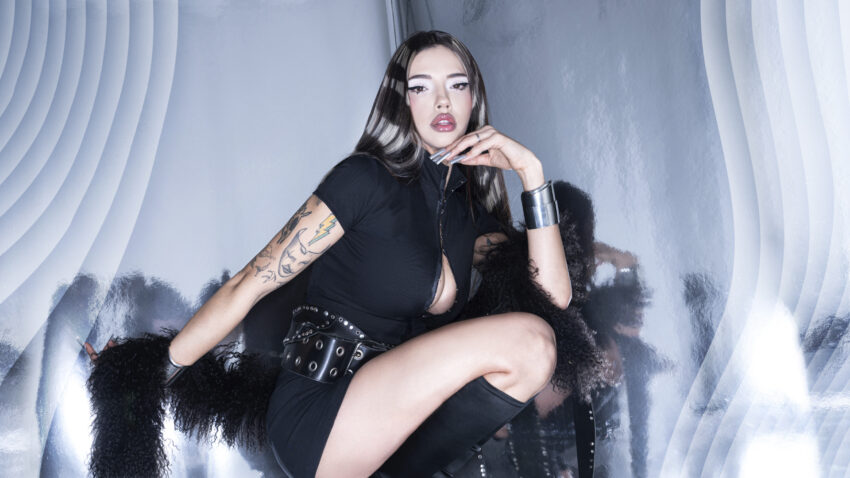
The Eurovision season features many prominent names, and among them is Bulgaria, which has chosen one of its most established pop artists of the moment. The Bulgarian broadcaster selected its representative through the national selection Natsionalna Selektsiya 2026, where DARA managed to prevail with her “Bangaranga,” securing the ticket to Vienna.
How did she make it to Eurovision? What experience does she have in the music world? How is she preparing her entry with which she will compete in Vienna 2026?
In this edition, we take a look at DARA’s musical career, the context of her candidacy, and her song. Bulgaria’s representative at the Eurovision Song Contest 2026 will defend her entry with “Bangaranga,” a proposal with which she aims to stand out on the European stage in what will be Bulgaria’s 16th participation.
This is DARA, from television talent to Bulgarian pop star
Darina Nikolaeva Yotova, known artistically as DARA, was born on 9 September 1998 in Varna, Bulgaria. From a very young age she showed a clear musical vocation, training at the Dobri Hristov National School of Arts. This education provided her with a very solid technical foundation and vocal control that would later define her style. Her rise to fame came in 2015, when she participated in the fourth season of X Factor Bulgaria at only 17 years old. Although she finished in third place, her performances stood out for their energy and personality, which allowed her to sign with Virginia Records.
In 2016 she debuted with the single “Kvo Ne Chu”, which became the most viewed video of the year in Bulgaria and a radio hit. From that point on, DARA embraced a pop sound with R&B influences, moving away from traditional chalga and closer to more international trends. In the following years she released songs such as “Nedei” and “Vse na men”, as well as collaborating with artists like Plamen & Ivo together with Pavell and Venci Venc’. Her artistic growth also came through international producers such as Monoir, with whom she released English-language songs like “My Time” and “Cold as Ice”, managing to gain airplay outside Bulgaria, especially in neighbouring countries. She participated in the Bulgarian version of Your Face Sounds Familiar in 2020, where she once again finished in third place.
From 2021 onwards, DARA established herself as a key figure in Bulgarian music television by becoming a coach on The Voice of Bulgaria, where she has won the show several times with artists from her team. In 2022 she released her first album, “Rodena takava”, a project that gathers her early hits, while in 2025 she released “Ádhara”, a more personal project focused on her international development. Among her most notable songs are “Thunder”, “Call Me” and “Mr. Rover”, which have topped airplay charts in Bulgaria for weeks. She has also worked with composers and producers from countries such as the United States, the United Kingdom and South Korea, expanding her sound and reach. In 2024 she was runner-up in Dancing Stars and, at the beginning of 2026, she has taken her music to venues in cities such as Berlin, Madrid and London.
This is “Bangaranga” DARA’s entry to represent Bulgaria at Eurovision 2026
“Bangaranga” is the song with which DARA represents Bulgaria at the Eurovision Song Contest 2026 in its return to the competition. The track was composed by DARA herself together with Anne Judith Wik, Cristian Tarcea, and Dimitris Kontopoulos.
The pop entry with electronic touches, entirely in English, conveys a combined feeling of energy, controlled chaos, and strong identity in a party of shared emotional experience. It invites us to let go, disconnect from everything, and enter an almost euphoric state. All of this comes from a rebellious and fun attitude where “chaos moves everything.”
Lyrics
English
Come alive
Surrender to the blinding lights
No one’s gonna sleep tonight
Welcome to the riot
I’m the bangarang
Bangaranga bangaranga
Bangaranga
I’m the bangarang
Bangaranga bangaranga
Bangaranga, I’m the bangarang
Blinding lights
Welcome to the riot
I’m an angel
I’m a demon
I’m a psycho
For no reason
I’m a mover
I’m a teaser
I don’t follow
I’m the leader
Lemme
Hype ya, hype ya up
Lemme hype ya up
Imma imma
Let you get so hooked
Imma leave you shook
Come alive
Surrender to the blinding lights
No one’s gonna sleep tonight
Welcome to the riot
I’m the bangarang
Bangaranga bangaranga
Bangaranga
I’m the bangarang
Bangaranga bangaranga
Bangaranga, I’m the bangarang
Blinding lights
Welcome to the riot
Close to the edge I can feel it inside
Bodies on bodies and sparks ‘bout to fly
I’m (oh, I’m) about to lose my mind (mind)
I’m the bangarang
Bangaranga bangaranga
Bangaranga
I’m the bangarang
Bangaranga bangaranga
Bangaranga, I’m the bangarang
Blinding lights
Welcome to the riot
I’m a rebel,
I’m a danger
I’m a mover,
For a freedom
Let me light you, light you up
Let me light you up
Come on, let me pull you in so deep
I am gone leave you weak
(I’m the bangarang)
(I’m the bangarang)
Bulgaria at Eurovision: A Quick History
Bulgaria debuted in Eurovision in 2005 with Kaffe and the song “Lorraine”, failing to qualify for the final. Its first notable result came in 2007 with Elitsa Todorova and Stoyan Yankoulov, who finished fifth with “Water”. In 2016 Poli Genova achieved the best result up to that point with a fourth place and “If Love Was a Crime”.
In 2017 Kristian Kostov reached second place, the country’s best-ever result. After several subsequent absences, it returned in 2021 with VICTORIA, who achieved 11th place. In 2022 it once again failed to reach the final with the group Intelligent Music Project, which finished second to last in its semifinal, scoring only 29 points and marking one of the country’s worst positions in the contest.