

Junior Eurovision 2026 has officially kicked off in Malta! The Malta Fairs & Conventions Centre (MFCC) in Ta’ Qali has welcomed the first young performers to its stage, with individual rehearsals getting underway on Sunday 18 October.
The countdown is well and truly on. With the 24th edition of the Junior Eurovision Song Contest taking place on Saturday 24 October at 21:00 CEST, the 16 participating delegations are now putting the finishing touches to their performances.
For weeks, the artists have been preparing their songs, choreography, costumes and stage concepts back home. Now comes the moment when everything has to work together under the lights, in front of the cameras and on a stage much bigger than most of them are used to.
The Netherlands, Cyprus, Portugal, Montenegro, San Marino, France, Poland and Armenia were the first eight countries to rehearse in Malta. Their opening sessions have already given fans a taste of what to expect from this year’s competition.
There has been no shortage of colour, either. From golden pyrotechnics and a bright red piano to futuristic cityscapes and a giant unicorn, the first Junior Eurovision 2026 rehearsals have revealed eight very different approaches to staging a song.
How do the Junior Eurovision 2026 rehearsals work?
Each country has two individual rehearsal sessions before moving on to the dress rehearsals later in the week.
The first session gives delegations the chance to see their planned performance on the actual Junior Eurovision stage. Artists can rehearse their songs several times while the production team checks camera shots, lighting cues, choreography and stage effects.
First rehearsals last 30 minutes per country, making them particularly important for identifying anything that needs to be changed or improved.
These sessions follow the stand-in rehearsals held the previous week, when the technical team worked through the performances before the competing artists arrived on stage.
The second individual rehearsal lasts 20 minutes and is mainly used to refine the details. By then, the delegations have already seen how their performance looks in the venue and can concentrate on making adjustments ahead of the live show.
The organisers are expected to publish a compilation of the second rehearsals, featuring television camera footage, on YouTube at the end of each rehearsal day.
Individual rehearsals will continue until Wednesday 21 October.
The next major date is Friday 23 October, when the traditional jury show will take place. During this dress rehearsal, the professional juries from the participating countries will cast their votes, which will account for 50% of the final result.
Which countries rehearsed on the first day of Junior Eurovision 2026?
For the second consecutive edition, the European Broadcasting Union (EBU) has decided not to allow accredited press access to Junior Eurovision rehearsals, either in person or remotely.
Instead, fans and media outlets are receiving updates through the official photographs and videos released by the organisers.
Rehearsal schedules are being shared at the beginning of each session, with the opening day’s activities taking place during the morning and including a midday break.
Eight countries took to the stage on Sunday 18 October 2026:
- The Netherlands: Maria – «Stronger Together»
- Cyprus: Harry Georgiou – «Who I Can Be»
- Portugal: Salvador Rio – «Alma»
- Montenegro: Mija Vujović – «Muzika Nas Spaja»
- San Marino: Violamarie – «Ruota Panoramica»
- France: Alec Burette – «Comment Tu Vas ?»
- Poland: Wiktor Sas – «Gravity»
- Armenia: Naré – «BOO!»
Junior Eurovision 2026 first rehearsals: A closer look at all eight performances
The Netherlands: Maria – «Stronger Together»
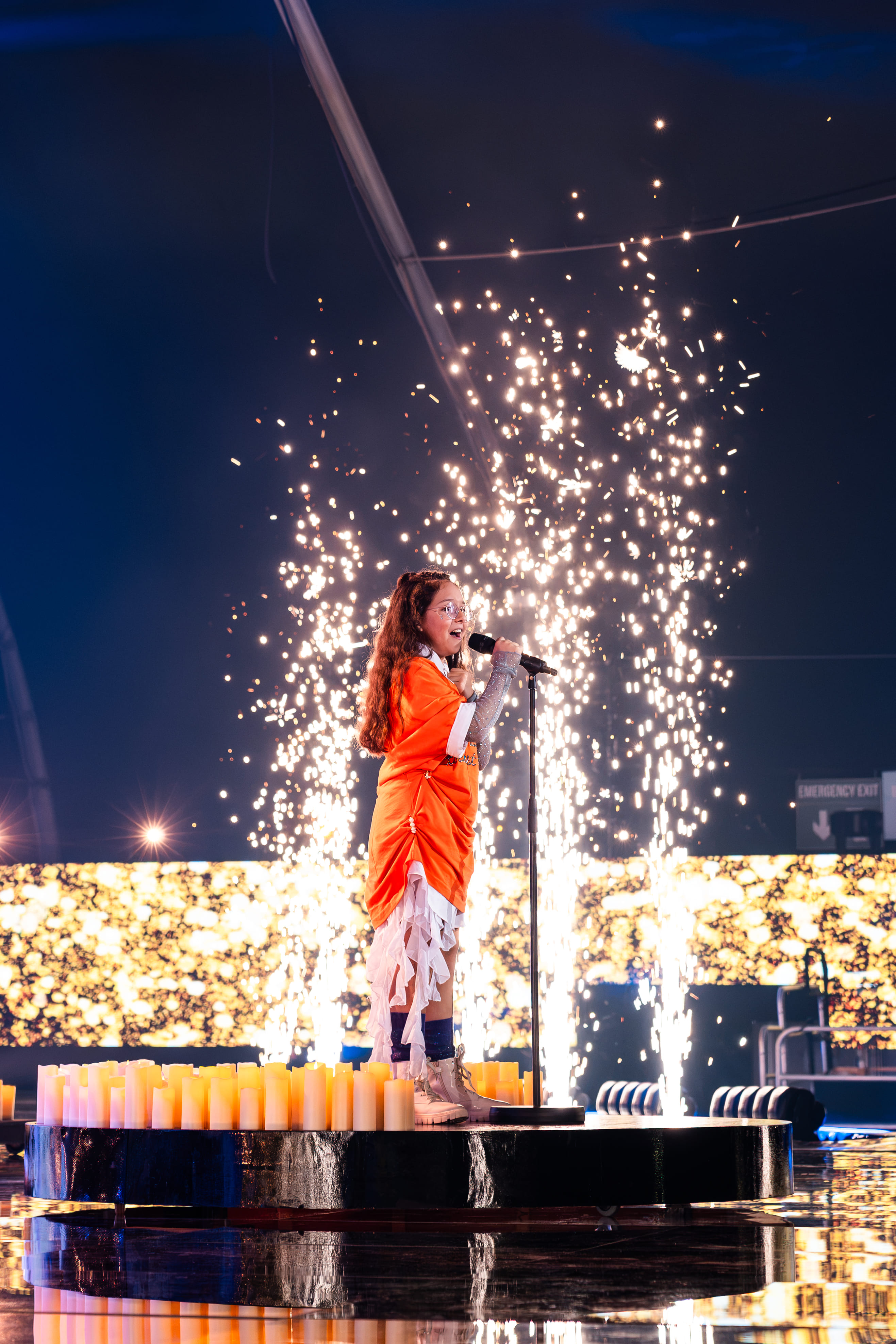
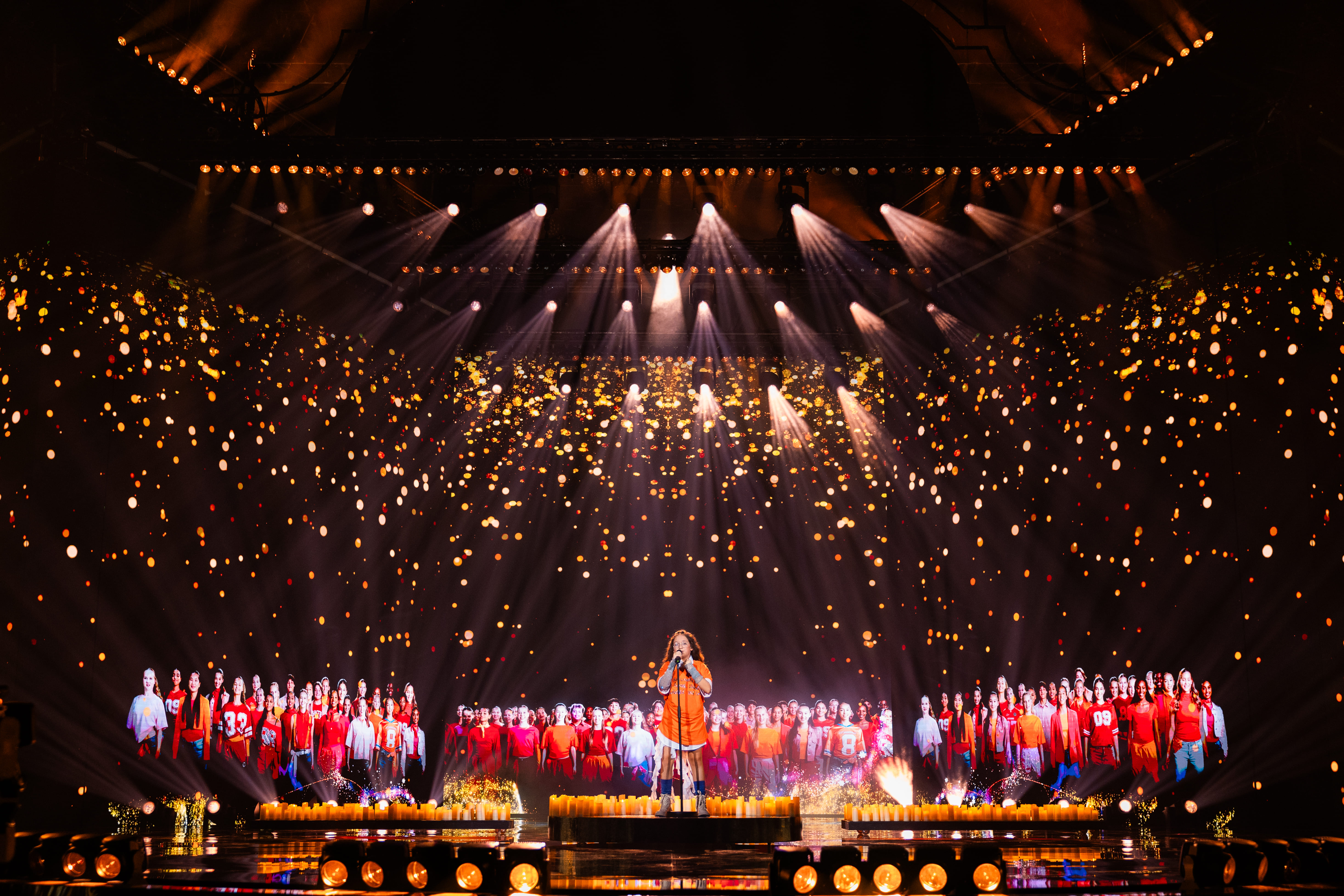
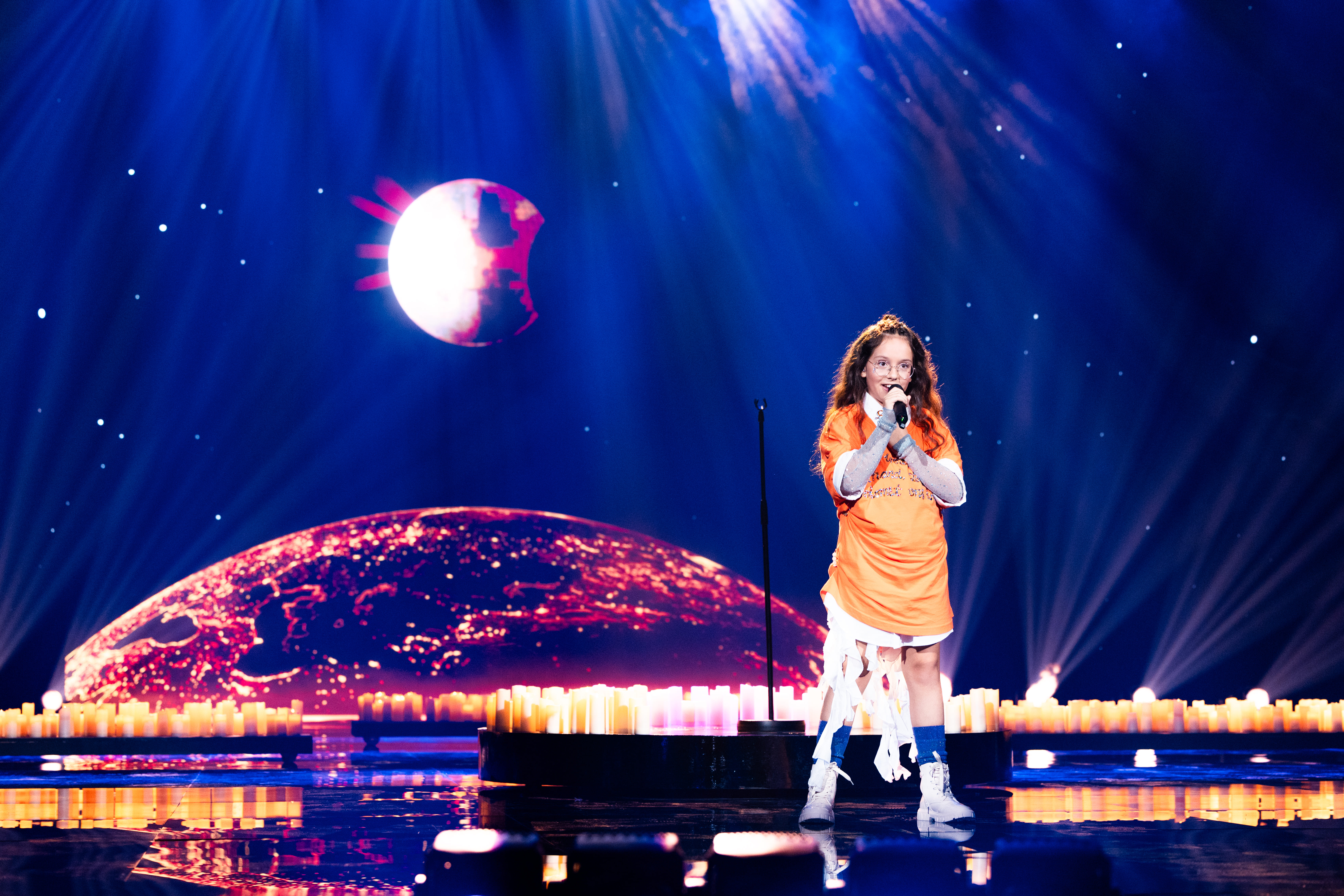
Maria is going big for the Netherlands at Junior Eurovision 2026, with a performance that brings together golden pyrotechnics, a new costume and an on-screen choir.
The Dutch representative performs «Stronger Together» on a raised platform surrounded by candles, creating a warm setting that gradually develops into a much larger visual production.
One of the most striking moments comes when golden pyrotechnic fountains rise behind the singer, producing a curtain of sparks across the stage. Warm lighting and carefully positioned spotlights add to the effect, giving the song several powerful visual moments.
Maria has also changed her outfit since her appearance at Junior Songfestival 2026. She now wears an orange ensemble with white details, featuring shimmering inner sleeves and tulle elements that move as she performs. Dark boots complete the look, giving her a youthful appearance that fits the overall staging.
Another important feature is the large choir shown on the LED screens. Made up of numerous young people wearing predominantly red and orange, it reinforces the song’s message of togetherness.
The golden background visuals help tie the different elements together, creating a sense of scale without taking the focus away from Maria.
The Netherlands is making full use of the Junior Eurovision stage, combining a personal performance with some of the more ambitious visual effects seen during the opening rehearsals.
Cyprus: Harry Georgiou – «Who I Can Be»
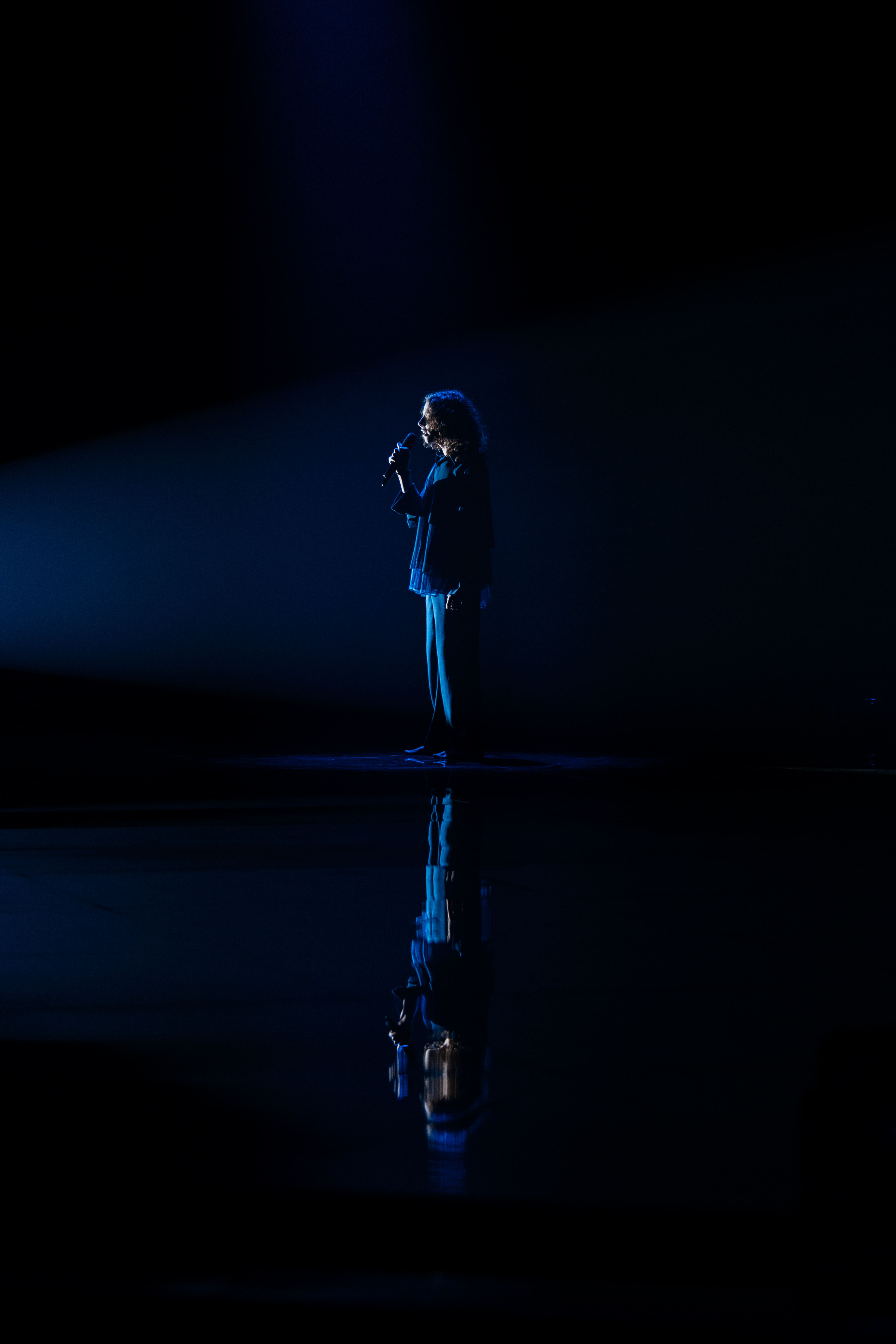
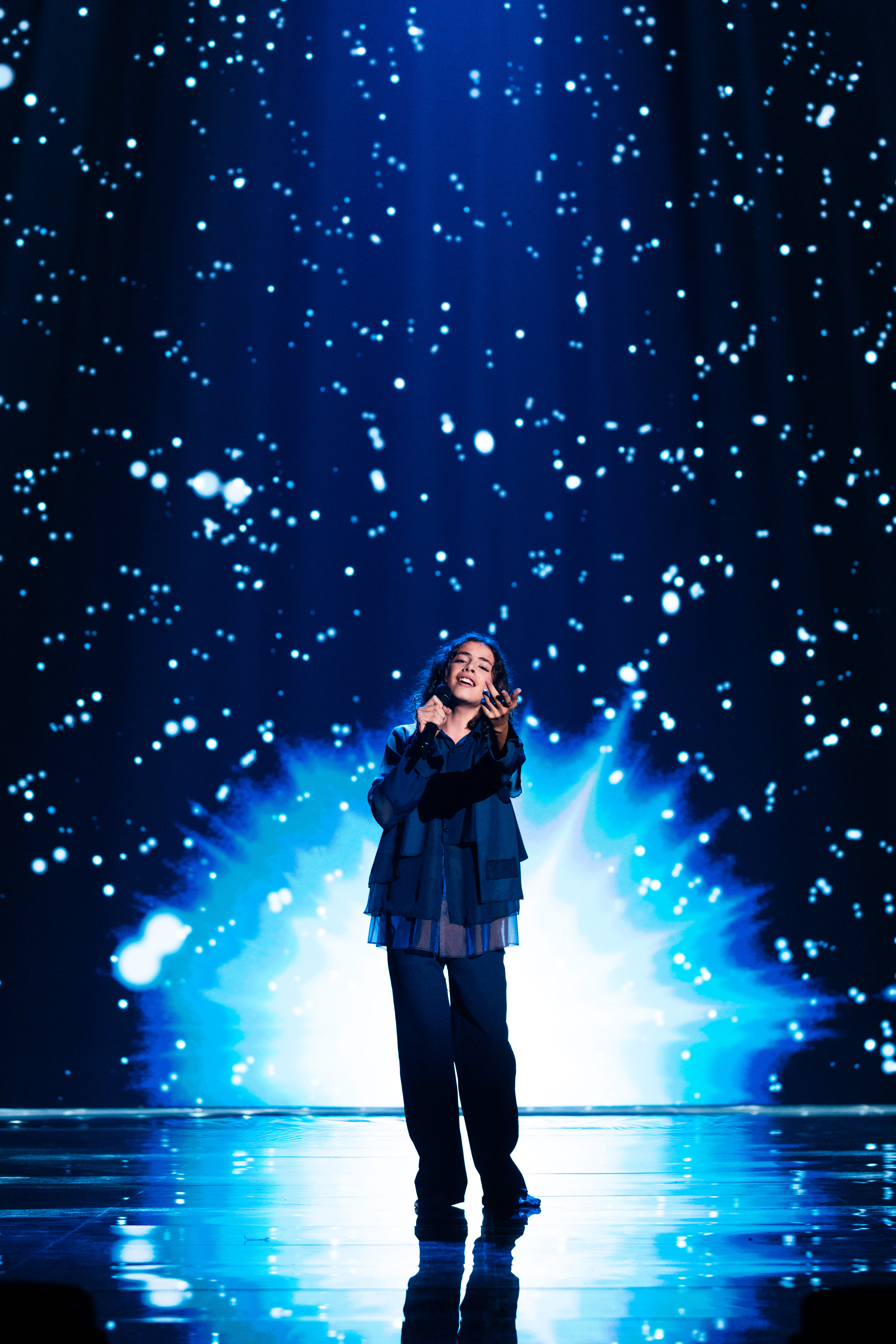
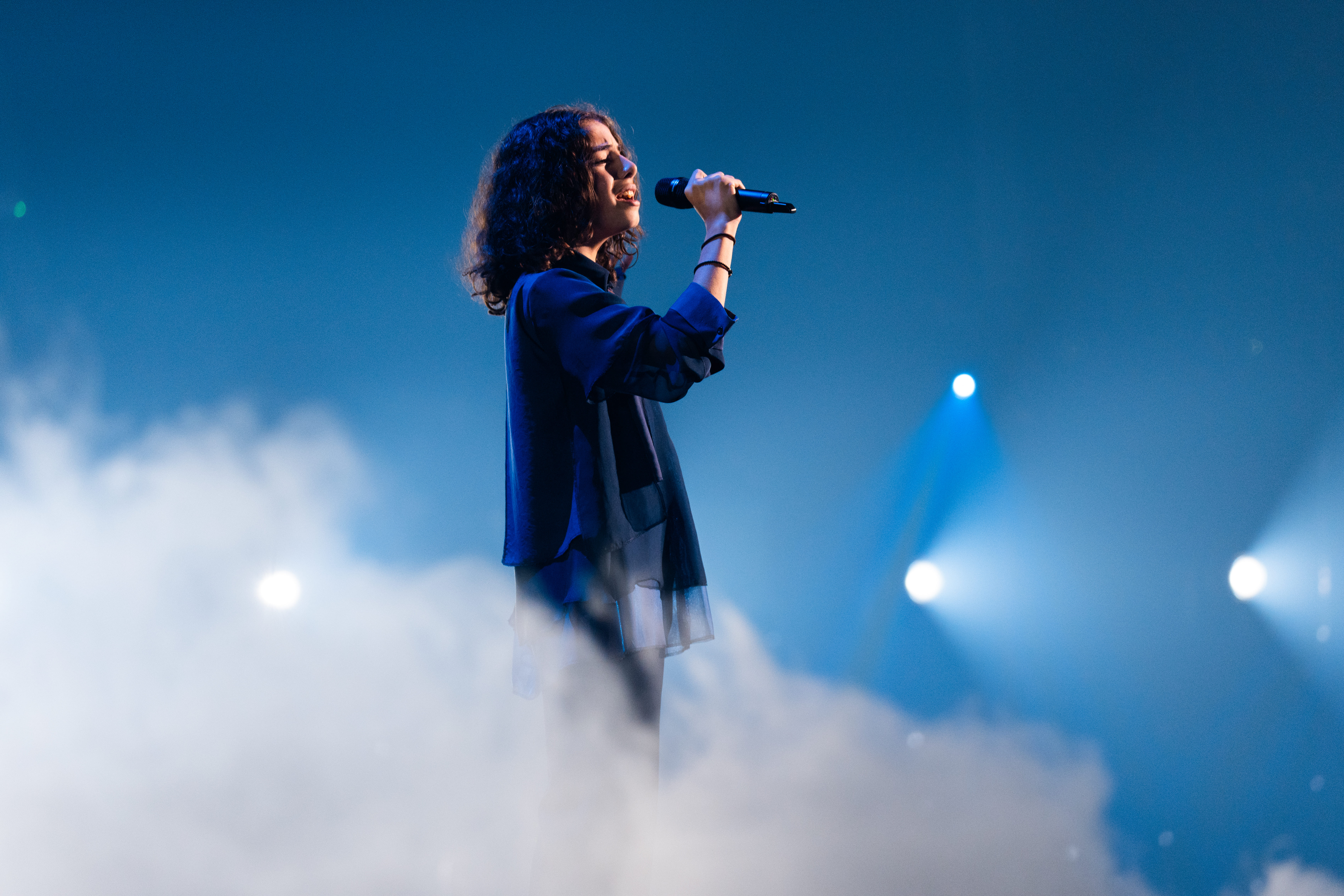
Cyprus has taken a more restrained approach with Harry Georgiou’s «Who I Can Be», allowing lighting and atmosphere to do much of the work.
Rather than relying on elaborate props or busy graphics, the performance is built around cool shades of blue and white, with spotlights cutting through the darkness.
The lighting creates an intimate atmosphere, while low-lying stage fog softens the beams and gives the scene a slightly dreamlike quality.
Harry’s costume follows the same colour scheme.
He wears a dark blue outfit featuring layered garments and lightweight fabrics, complementing the understated visual style of the performance.
The reflective stage floor also plays an important role, catching the light and creating additional depth.
What makes the staging effective is the way these relatively simple elements work together. The blue lighting, fog and costume create a consistent visual identity while leaving plenty of room for Harry’s interpretation.
Cyprus is keeping the focus on the singer and the emotion of the song, with a carefully controlled atmosphere rather than large-scale effects.
Portugal: Salvador Rio – «Alma»
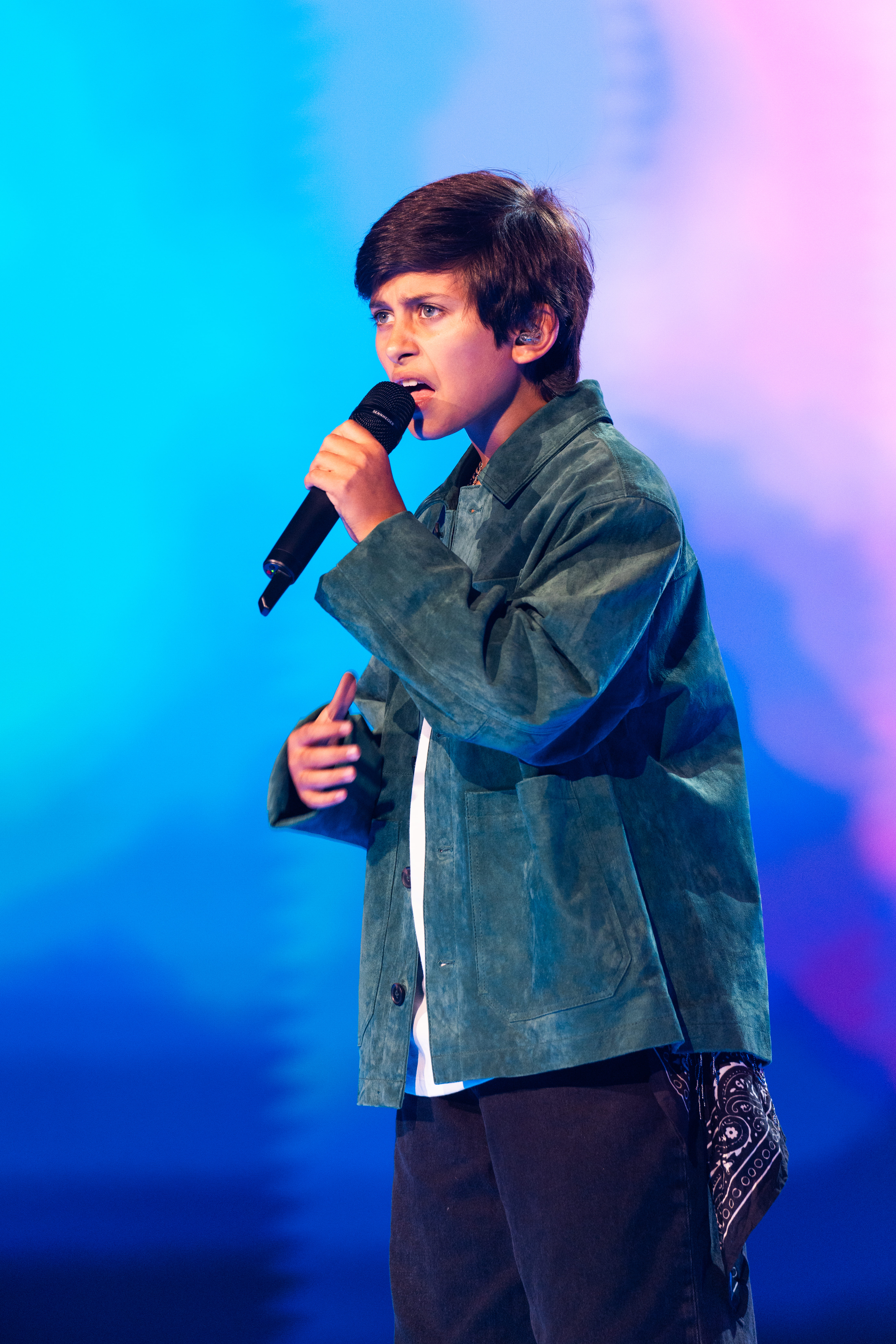
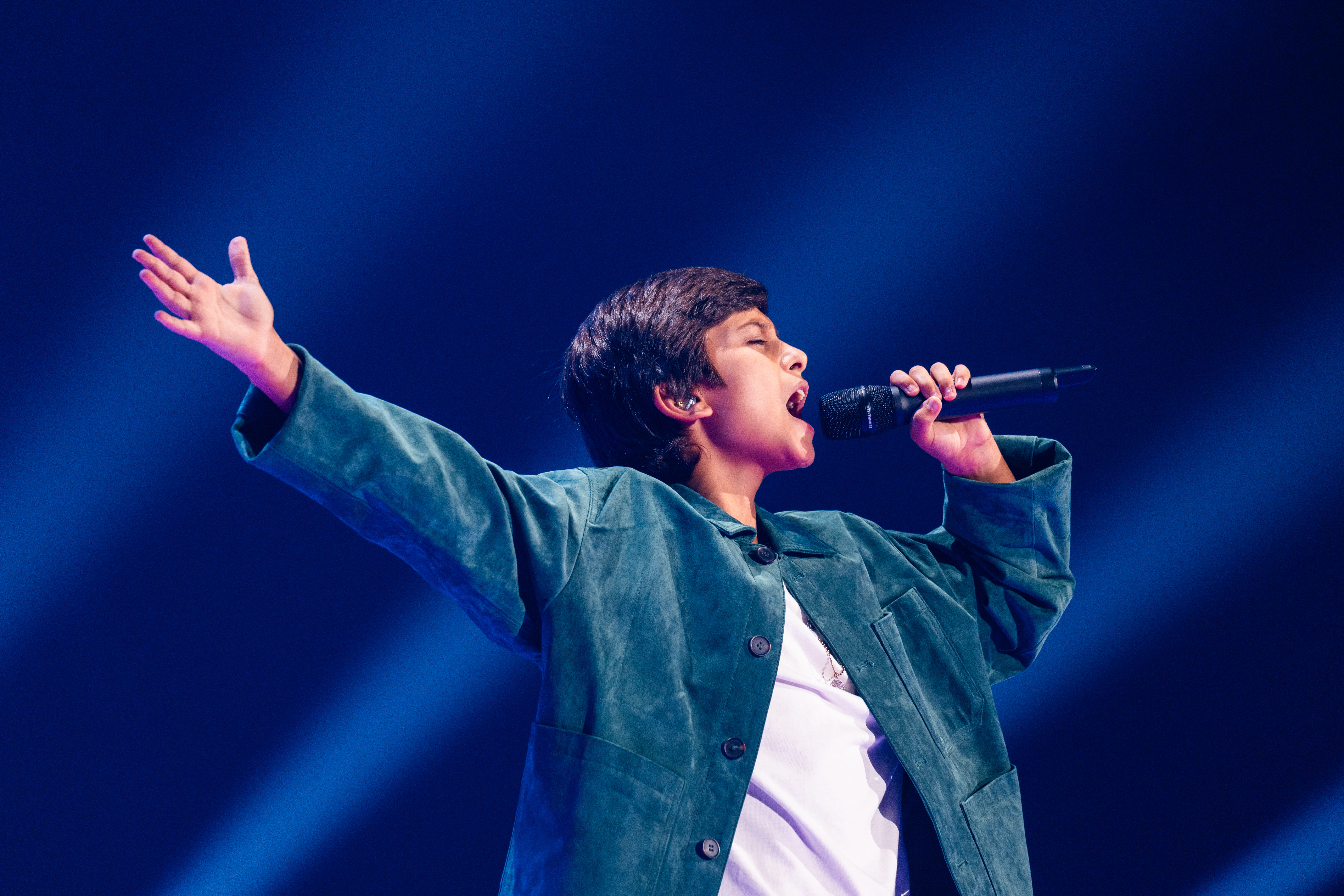
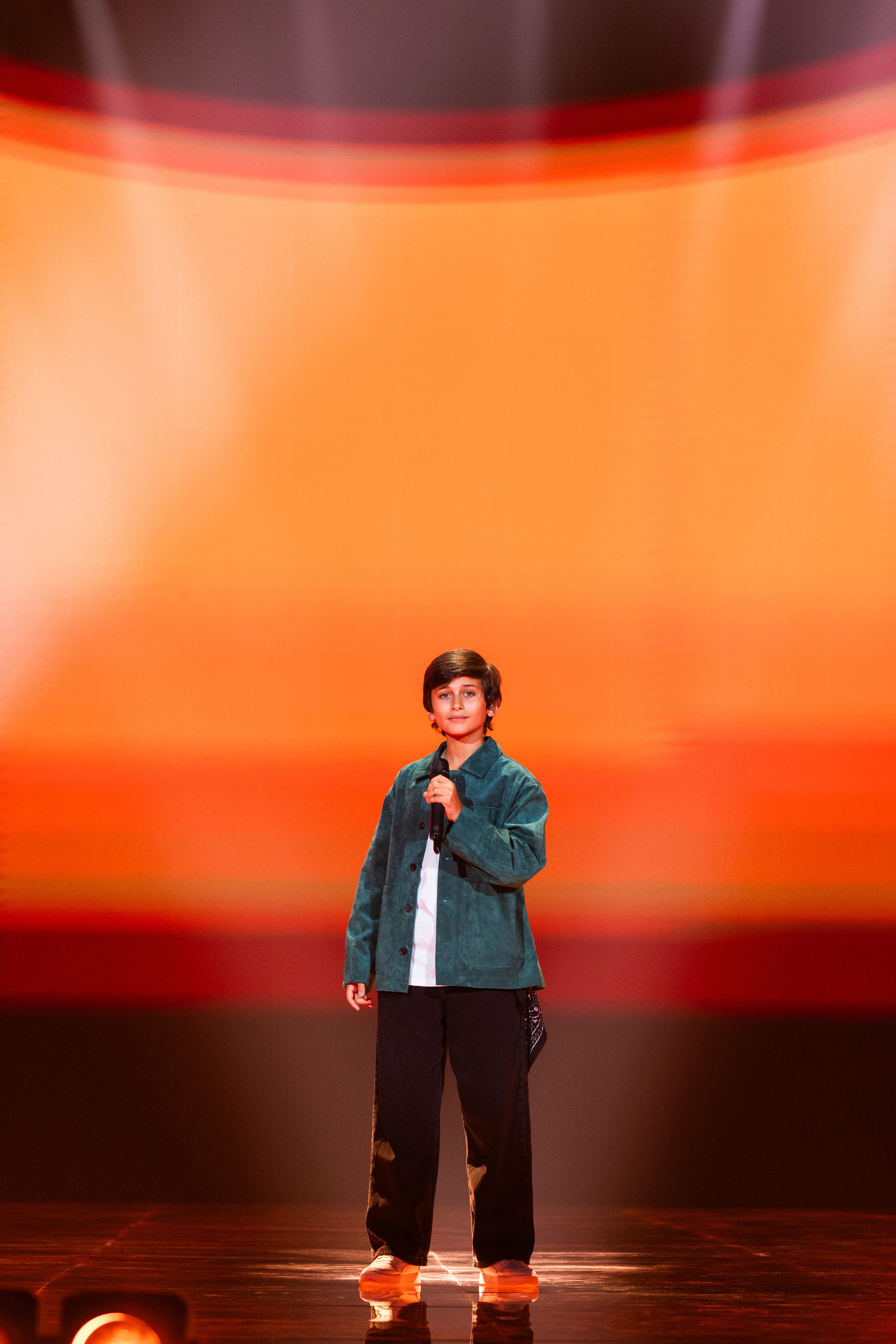
Portugal’s first rehearsal is all about the song and the person singing it. Salvador Rio performs «Alma» with a straightforward stage concept that places his voice and interpretation at the centre of the performance.
There are no oversized props or complicated visual effects. Instead, the Portuguese delegation has chosen to work with lighting and colour to accompany the song’s emotional development.
Salvador wears an outfit similar to the one seen in his official music video: a faded teal-green jacket, white T-shirt and black trousers, finished with a few understated accessories.
The casual styling suits the intimate nature of the performance. At the beginning, the stage is covered in cool blue and violet lighting, creating a calm atmosphere.
As the song progresses, these colours gradually give way to warmer orange and red tones, reflecting the increasing emotional intensity of the music.
The transition is subtle but noticeable, allowing the staging to develop alongside Salvador’s performance.
His facial expressions and gestures also play an important part, helping him connect with the song without needing elaborate choreography.
Portugal is proving that a performance doesn’t need a complicated stage production to make an impression. Sometimes, the voice, the song and the right lighting are enough.
Montenegro: Mija Vujović – «Muzika Nas Spaja»
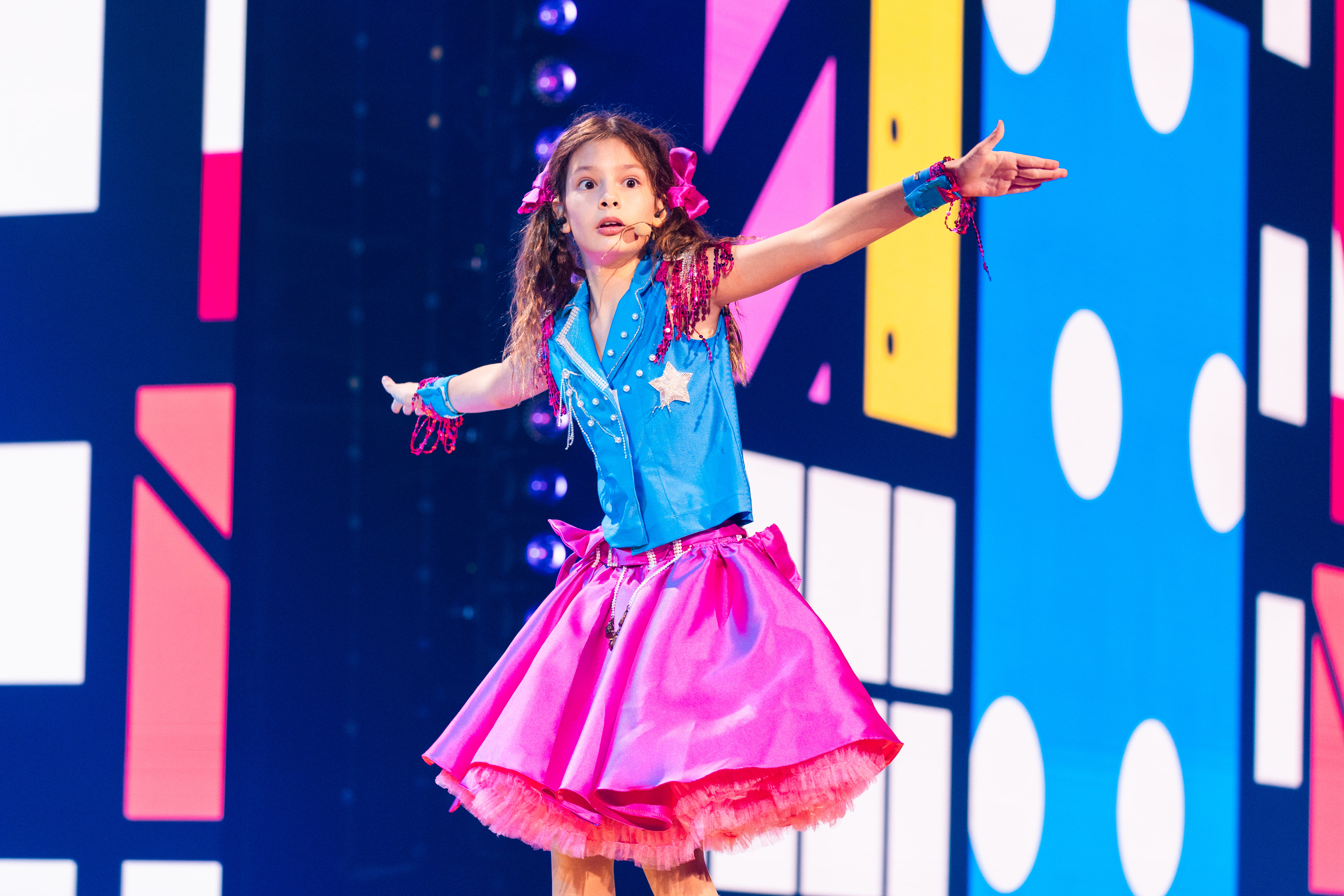
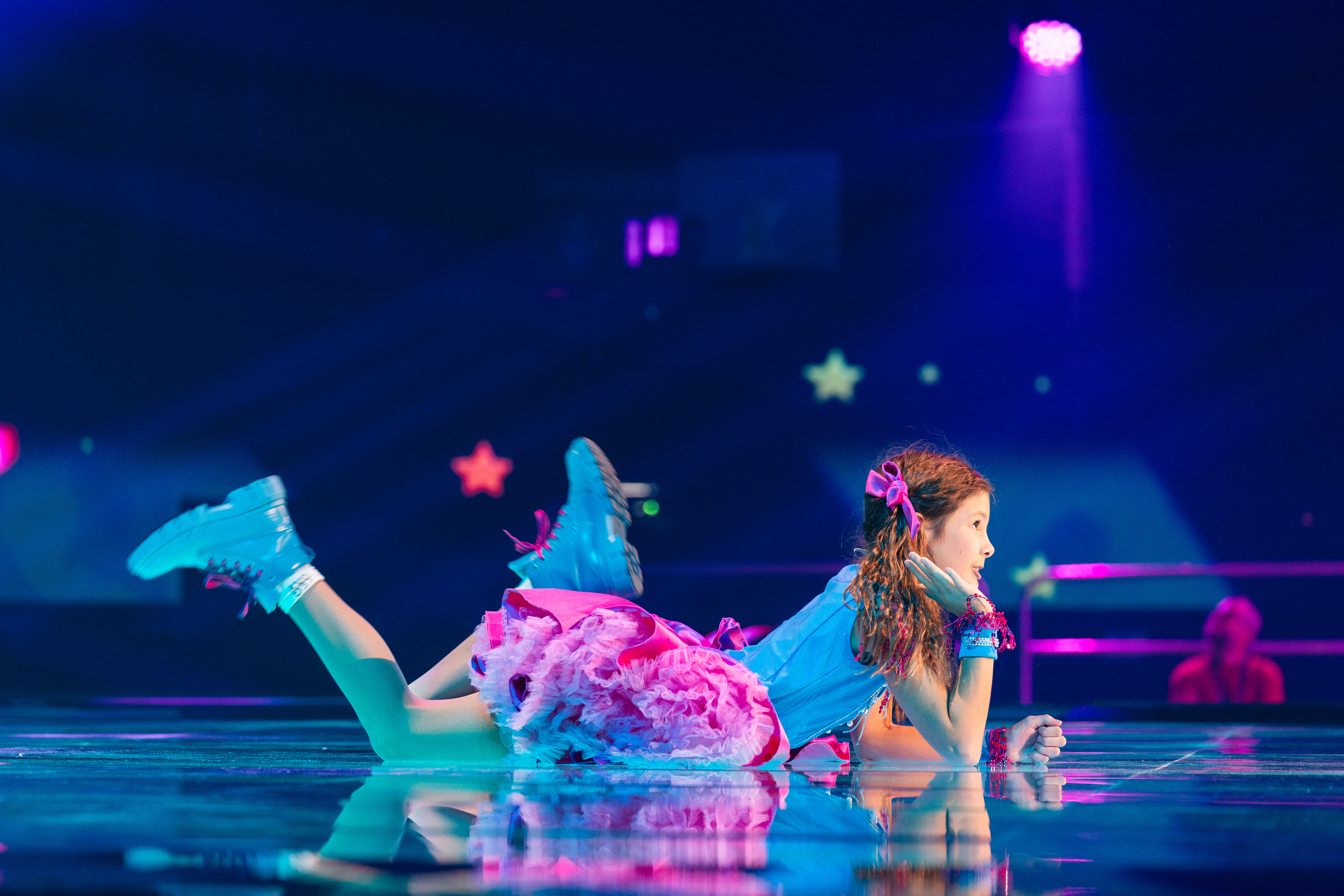
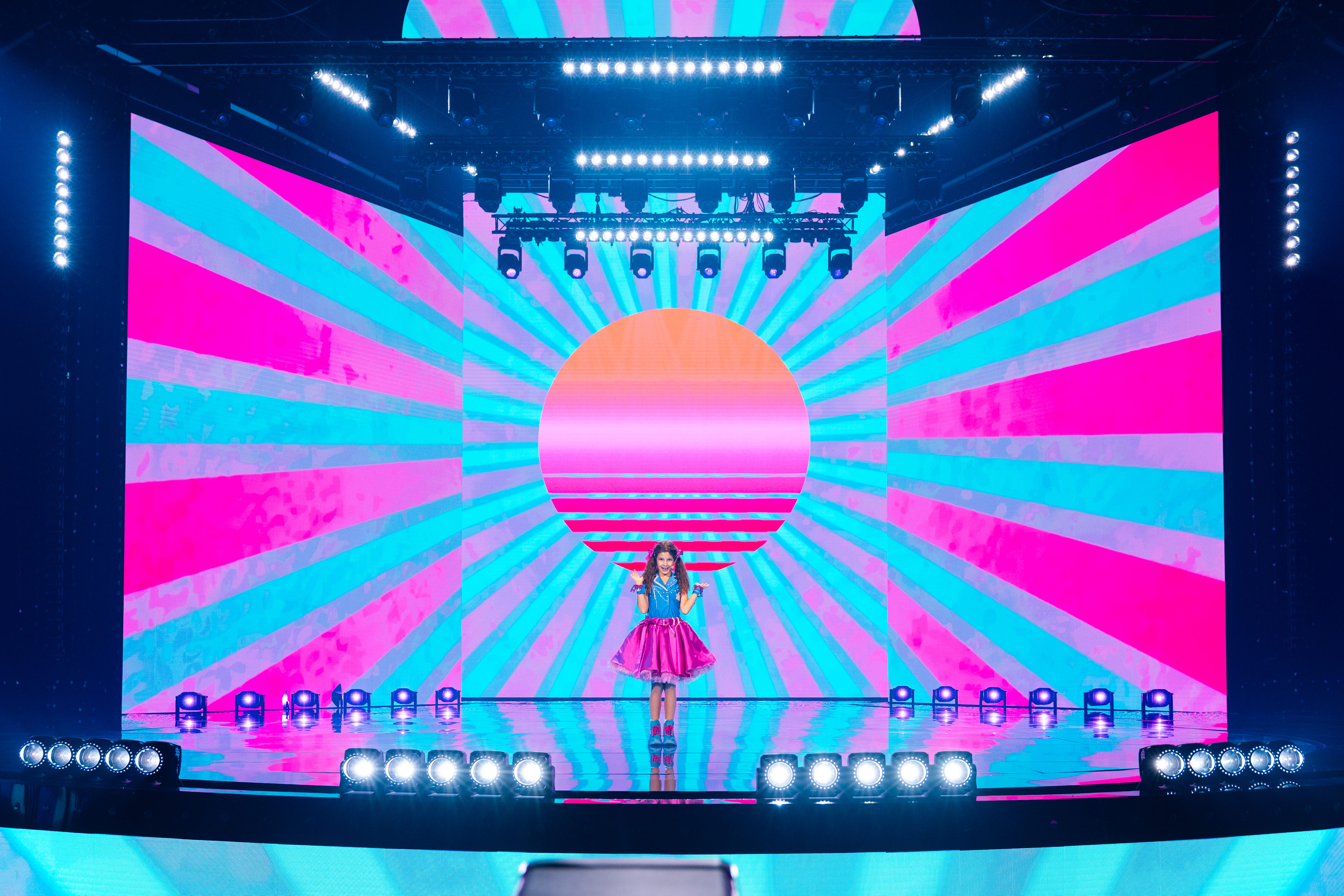
Montenegro has brought plenty of colour to Malta, with Mija Vujović delivering one of the most playful stage concepts of the first rehearsal day.
Her entry, «Muzika Nas Spaja», features a lively pop aesthetic dominated by electric blue, hot pink and bright yellow.
The LED screens are filled with geometric figures, circles, abstract shapes and colourful beams, creating a backdrop that occasionally resembles a retro video game.
One particularly noticeable visual is a large retro-style sun set against pink and turquoise stripes, giving the performance a fun, nostalgic feel.
The lighting and reflections on the glossy stage floor add even more movement to the presentation.
Mija’s costume is just as colourful as the graphics. She wears a shiny turquoise-blue jacket with silver details, decorated with a star on the chest and small sparkling embellishments.
The jacket is paired with a voluminous hot-pink skirt made from several layers of tulle and ruffles, which moves with her choreography.
Pink bows in her hair, fringed blue wrist accessories and blue boots with pink laces complete the outfit.
Everything follows the same cheerful aesthetic, from the costume to the background visuals.
Montenegro’s performance embraces colour, movement and a playful pop identity, creating a staging concept that feels particularly suited to the youthful spirit of Junior Eurovision.
San Marino: Violamarie – «Ruota Panoramica»
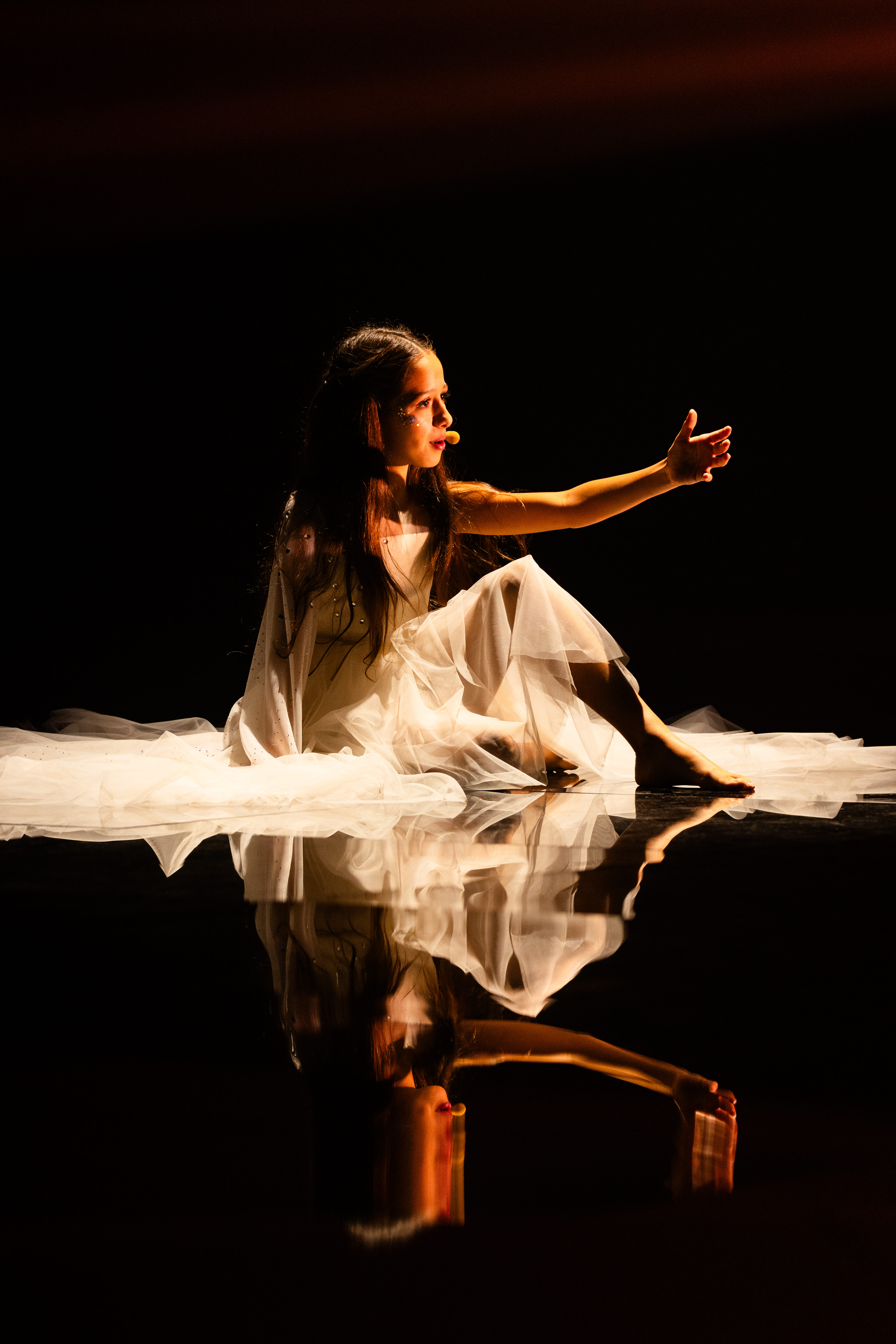
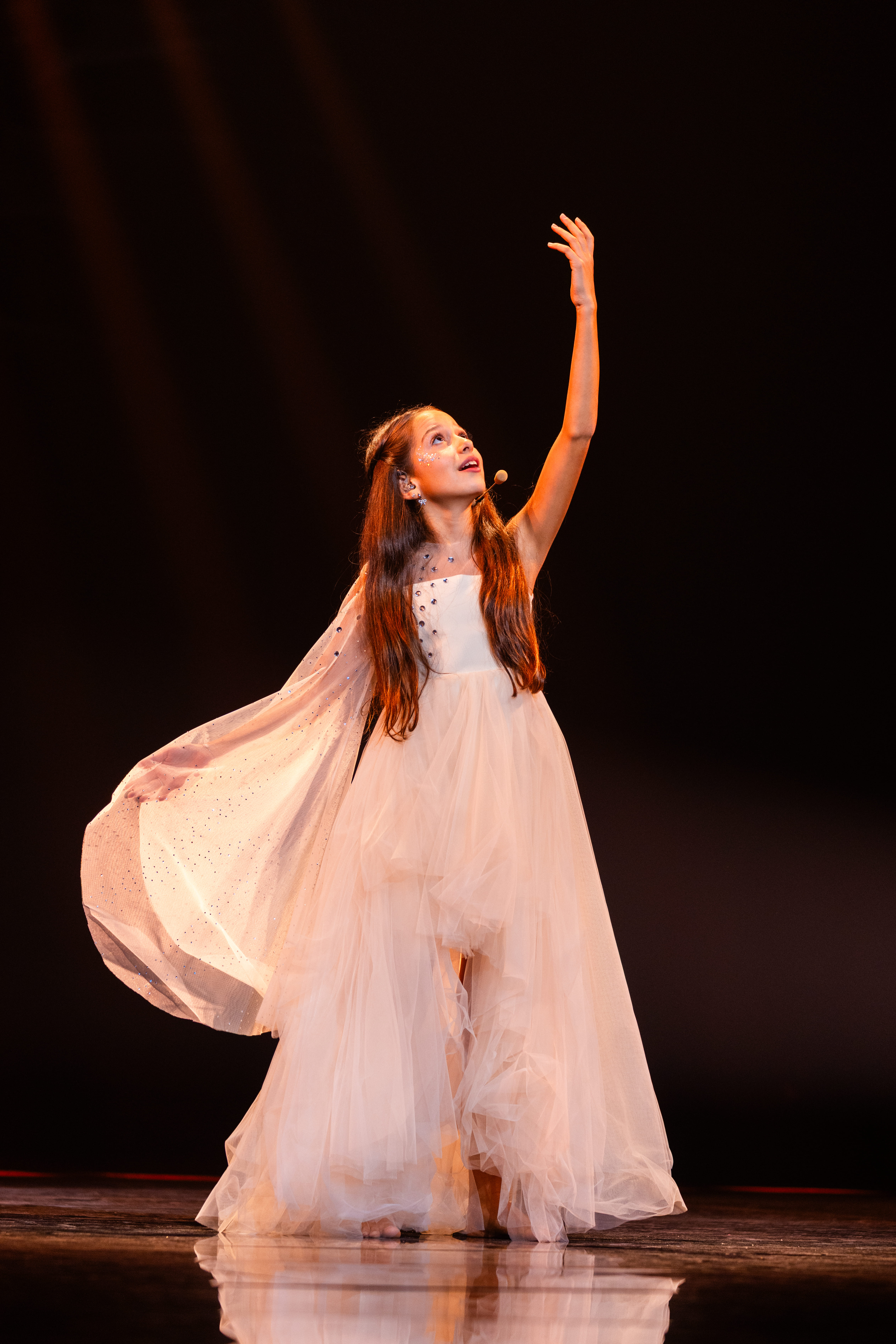
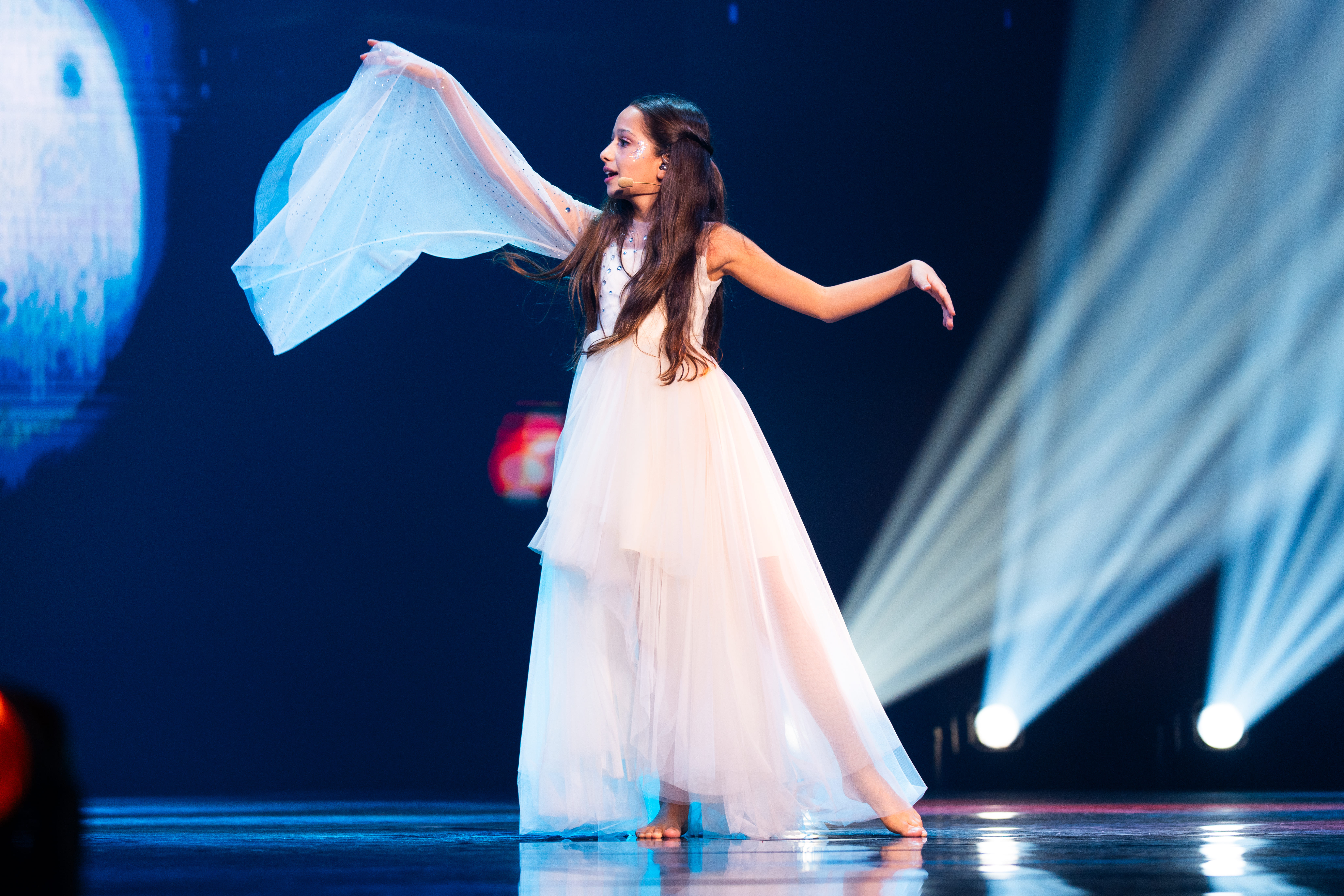
San Marino is taking a softer, more atmospheric direction with Violamarie’s «Ruota Panoramica», using flowing fabrics and changes in lighting to support the emotional character of the song.
The young singer wears a long white dress made from several layers of tulle, accompanied by a translucent cape decorated with small shimmering details.
The lightweight fabric moves naturally with her gestures, giving the performance an elegant, almost dreamlike appearance.
The staging begins in near darkness, with a warm orange spotlight illuminating Violamarie and highlighting her silhouette.
As the song develops, the lighting gradually changes, introducing blue, pink and violet tones that bring a different atmosphere to the stage.
The contrast between the darker opening and the brighter sections is one of the main features of the performance. The reflective floor adds another visual element, mirroring the singer and the movement of her dress.
Violamarie makes good use of expressive gestures, including outstretched arms and upward glances, which complement the emotional tone of the song.
The overall staging is built around a series of contrasts: darkness and light, stillness and movement, intimacy and larger visual moments.
San Marino has opted for an elegant presentation that relies on atmosphere rather than spectacle, allowing Violamarie’s interpretation to remain the main focus.
France: Alec Burette – «Comment Tu Vas ?»
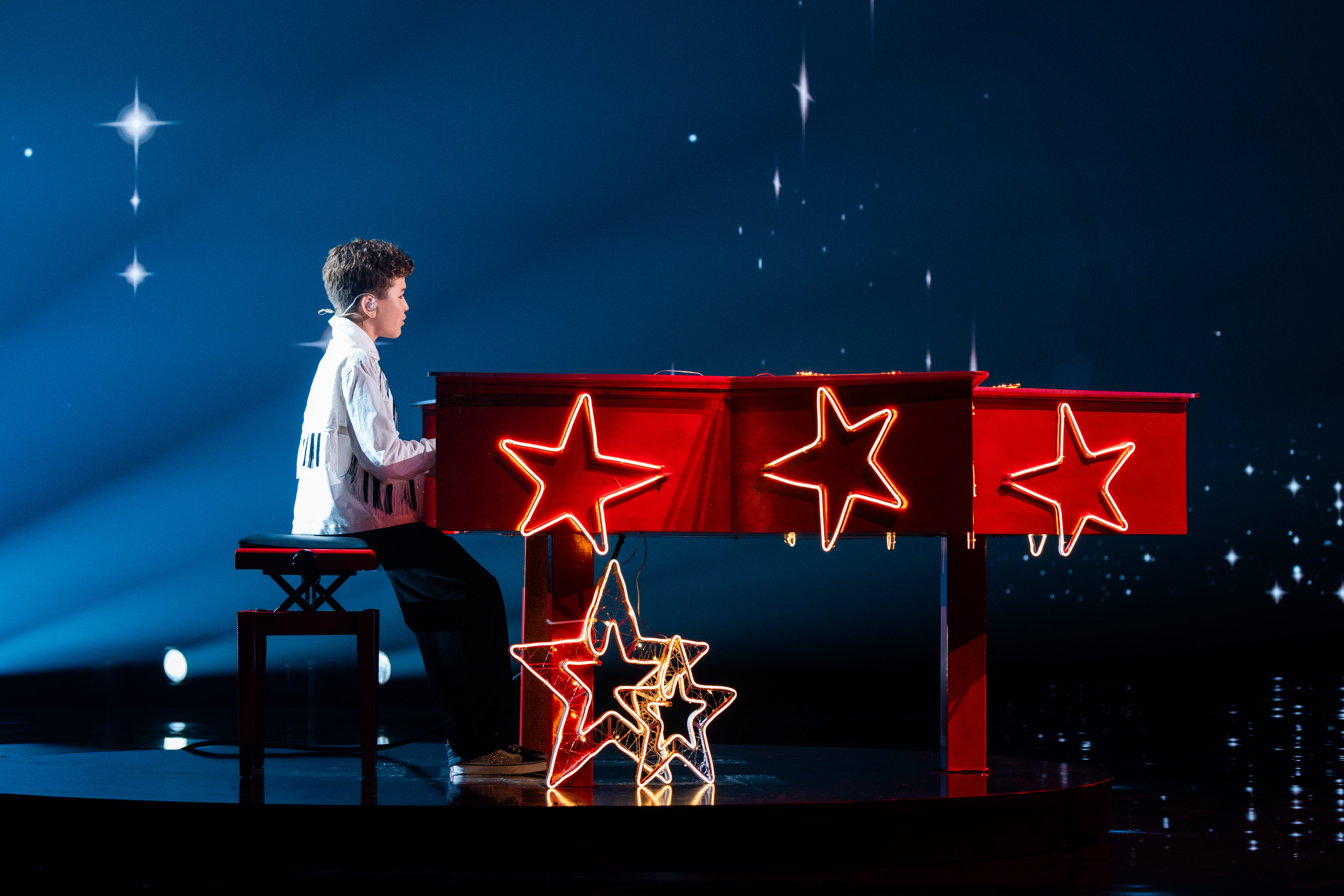
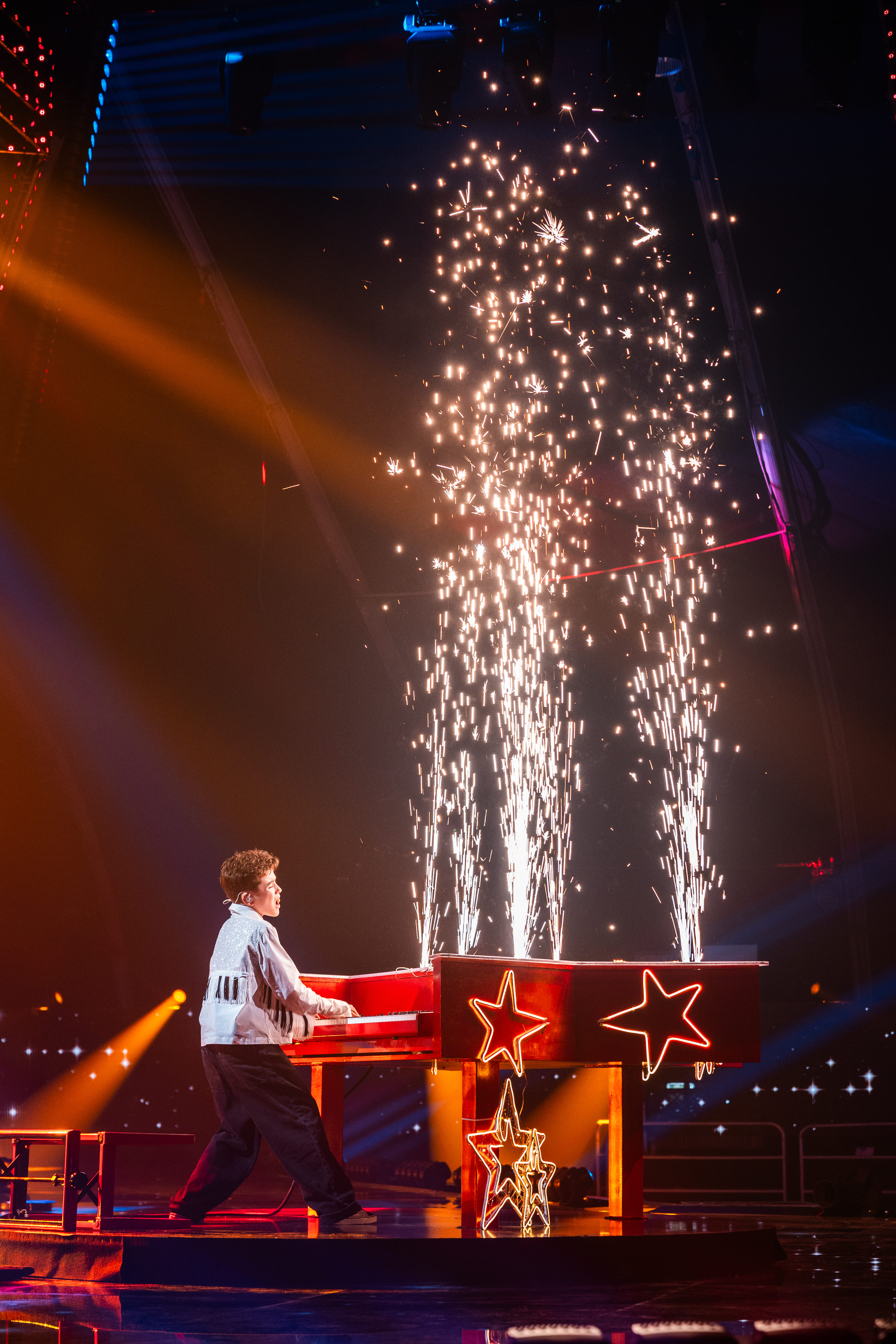
A bright red piano is at the centre of France’s Junior Eurovision 2026 performance, and it certainly isn’t an ordinary one.
Alec Burette takes to the stage with «Comment Tu Vas ?», performing alongside a large red piano decorated with illuminated neon stars.
The instrument gives the French entry an immediately recognisable visual identity and plays a major role throughout the performance.
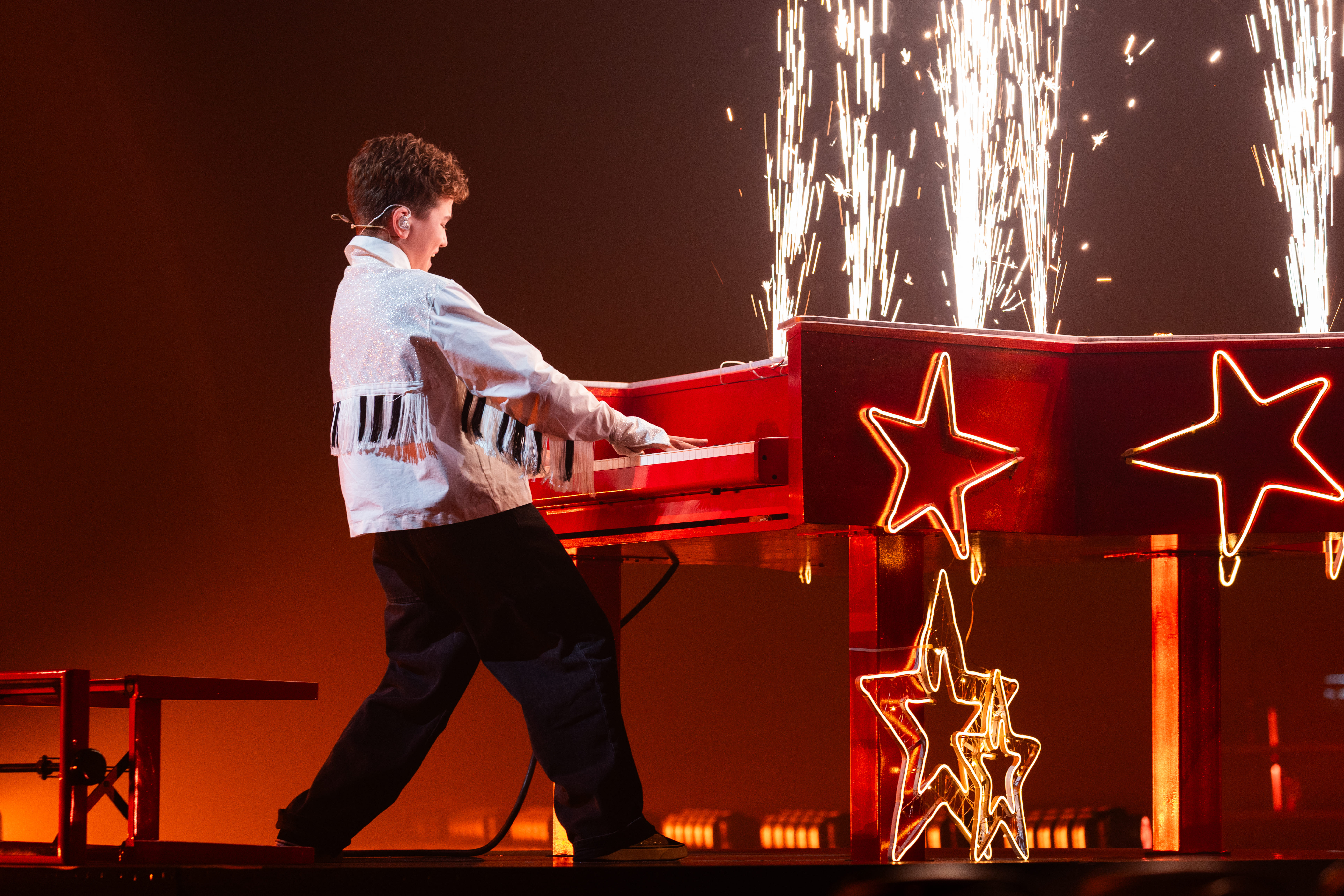
One of the biggest surprises comes when golden pyrotechnic sparks shoot upwards from the piano, lighting up the stage and creating one of the most dramatic moments seen during the first rehearsals.
The contrast between the golden sparks, the vivid red instrument and the stage lighting makes for a particularly striking image.
He wears a white jacket with black fringes designed to resemble piano keys along the sleeves, paired with wide black trousers and trainers.
It’s a clever detail that connects his outfit directly to the centrepiece of the staging.
The final moments bring another strong visual image, with Alec smiling and spreading his arms in front of a backdrop filled with red lights and stars.
The performance combines youthful styling with a theatrical stage production, making full use of lighting, props and pyrotechnics.
France has clearly put considerable thought into its visual presentation, with the red piano providing a distinctive centrepiece for Alec’s performance.
Poland: Wiktor Sas – «Gravity»
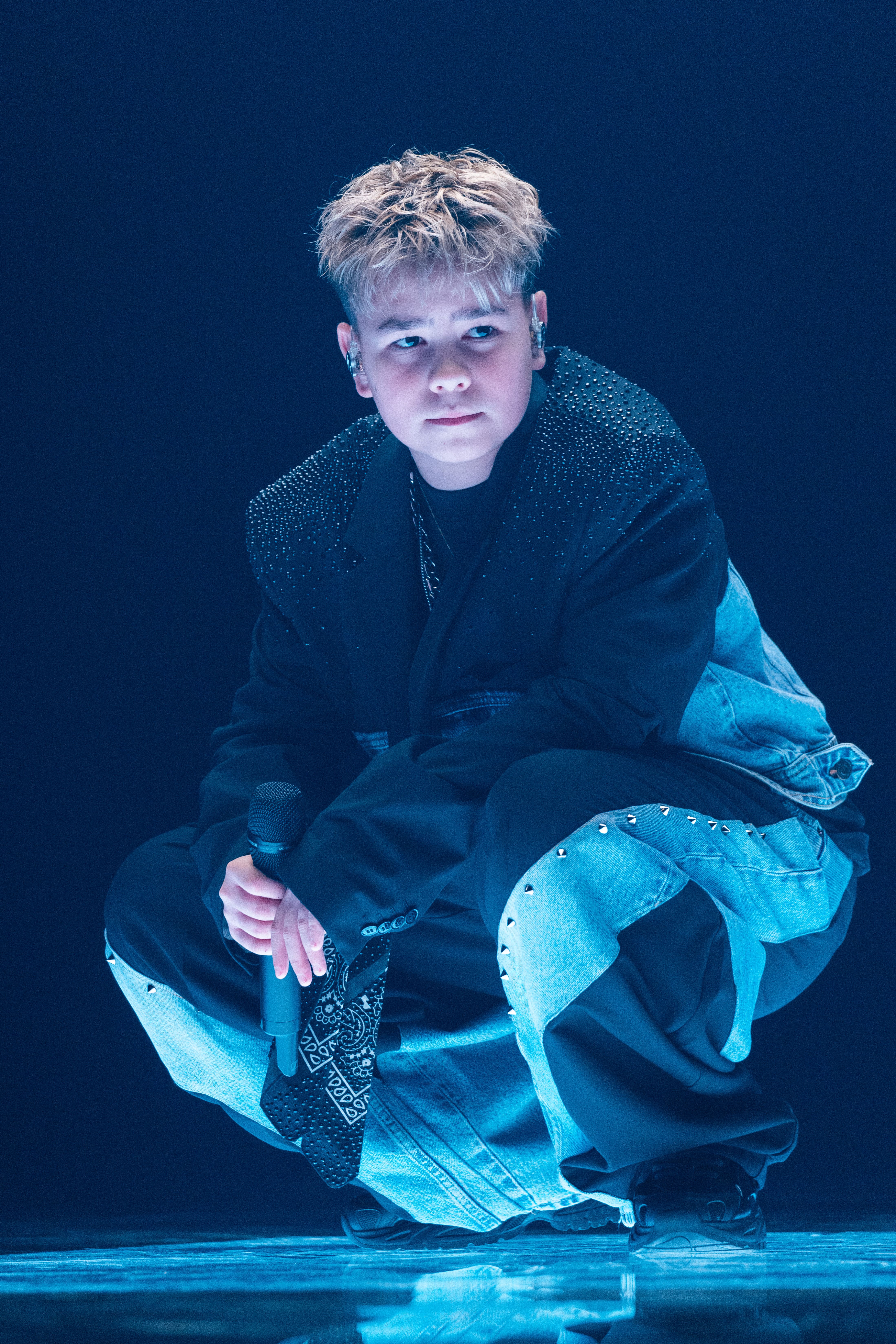
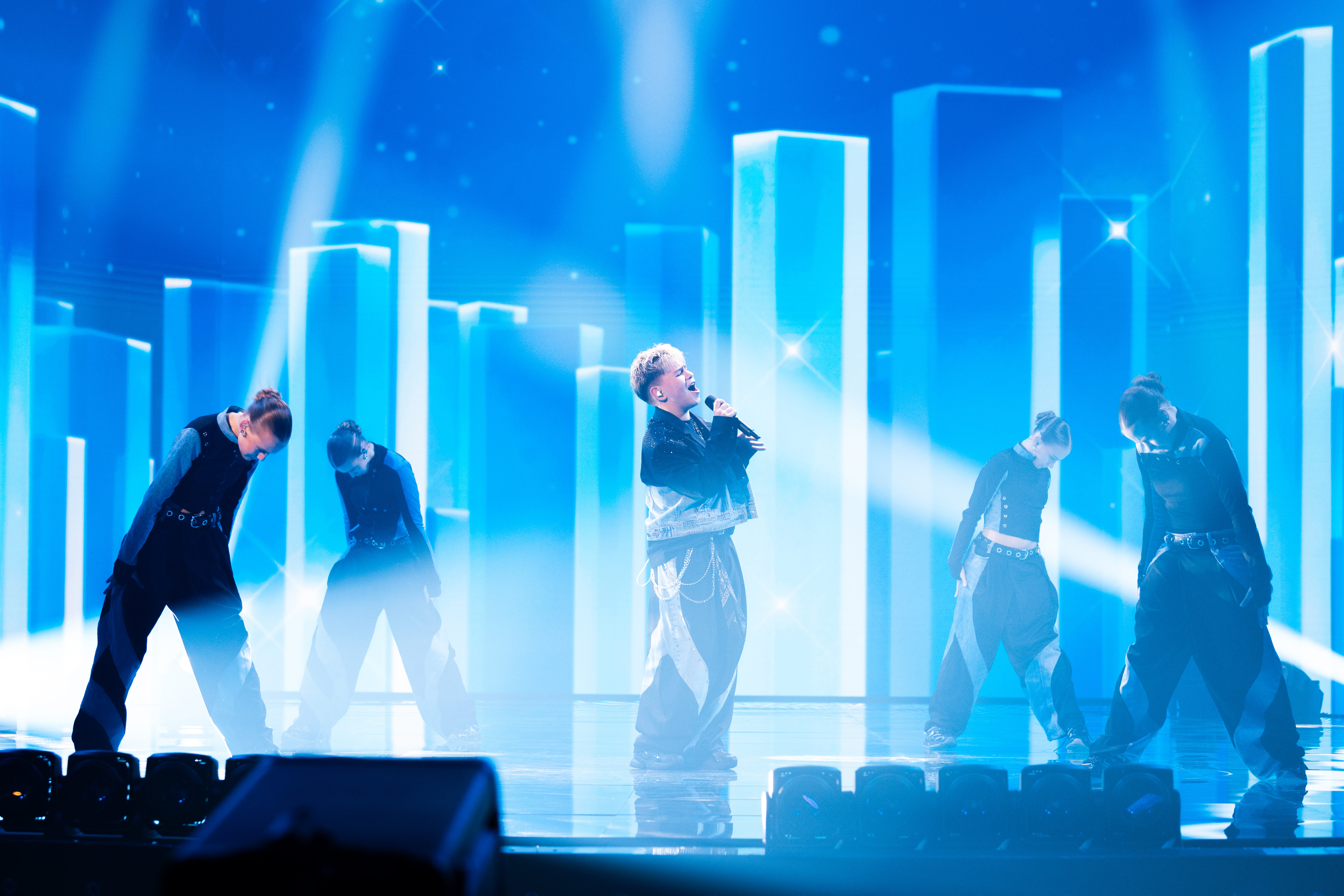
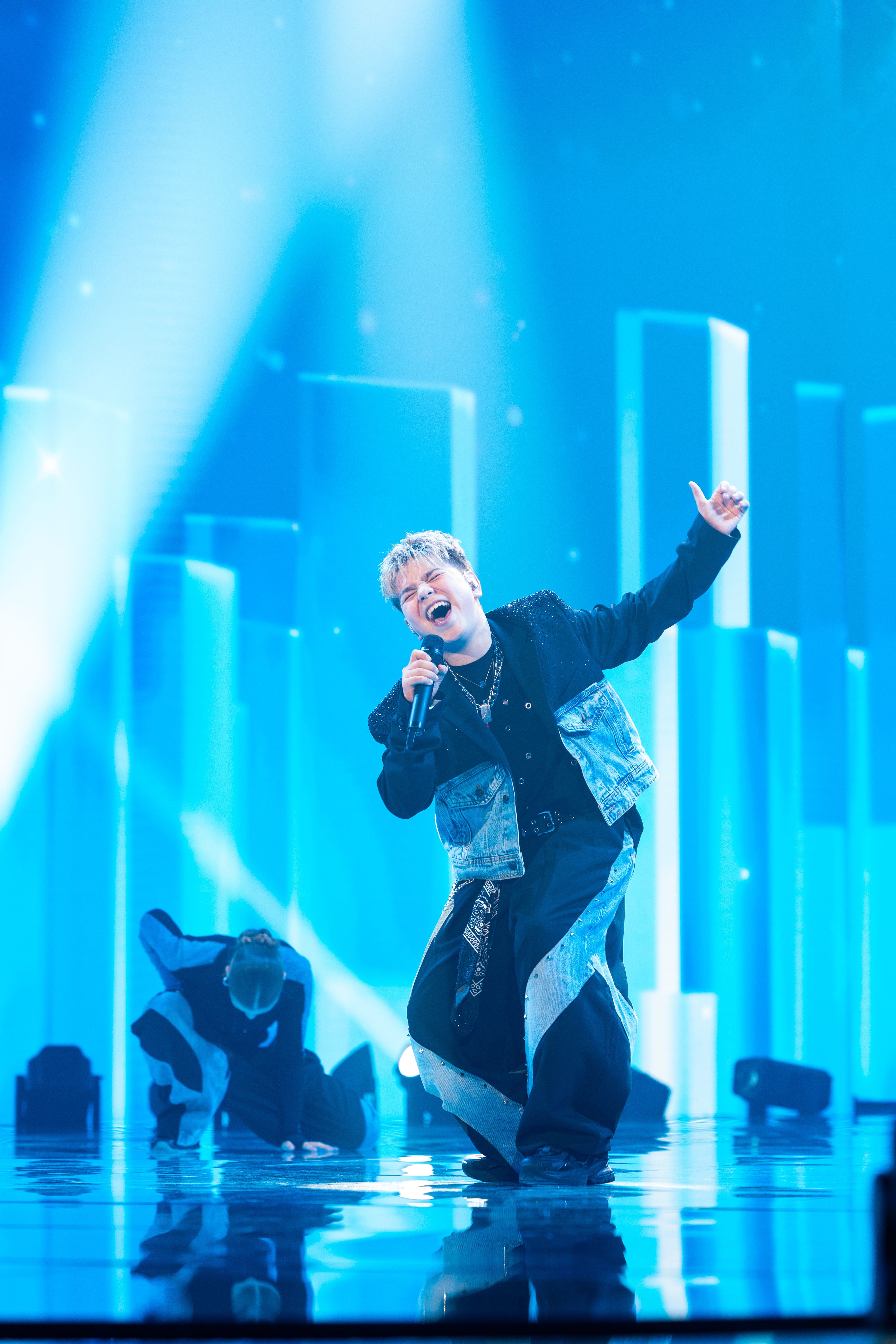
Poland’s Wiktor Sas has brought a futuristic, urban-inspired performance to Malta, with «Gravity» combining contemporary choreography and a carefully designed lighting concept.
The stage features large illuminated vertical structures resembling futuristic buildings, arranged at different heights to create a sense of depth.
The glossy black floor reflects the performers and lighting, making the set appear larger.
The colour palette is dominated by electric blue, cyan and turquoise, with sharp white beams cutting across the stage.
Vertical and diagonal lighting effects add movement to the background, while the contrast between darker and brighter sections gives the performance a cinematic feel. Wiktor is accompanied by four female dancers performing contemporary choreography.
Their movements include controlled body bends, expressive poses and coordinated sequences that support the singer’s interpretation.
The dancers wear black urban-style outfits, featuring loose trousers, metallic belts and grey or blue details. Wiktor’s own costume mixes streetwear with more tailored elements.
He wears an oversized black blazer decorated with small shimmering details on the shoulders and sleeves, combined with large light-blue denim panels.
A black T-shirt, wide trousers with denim accents, dark footwear, silver chains and a patterned scarf around his waist complete the look.
The overall result is a modern stage presentation where the choreography, costume and lighting share the same visual identity. Poland is using a futuristic city-inspired setting and coordinated dancers to bring additional intensity to «Gravity».
Armenia: Naré – «BOO!»
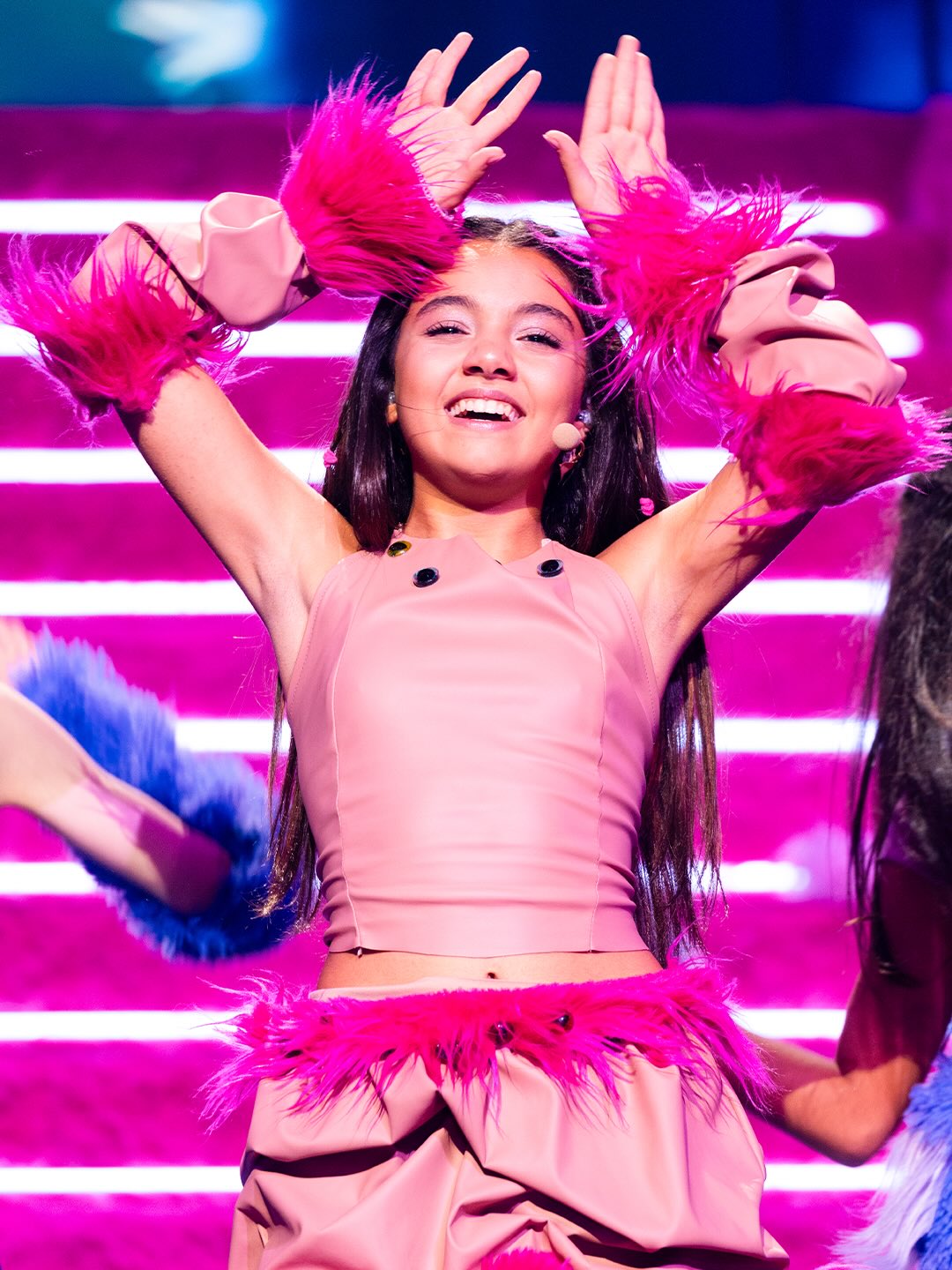
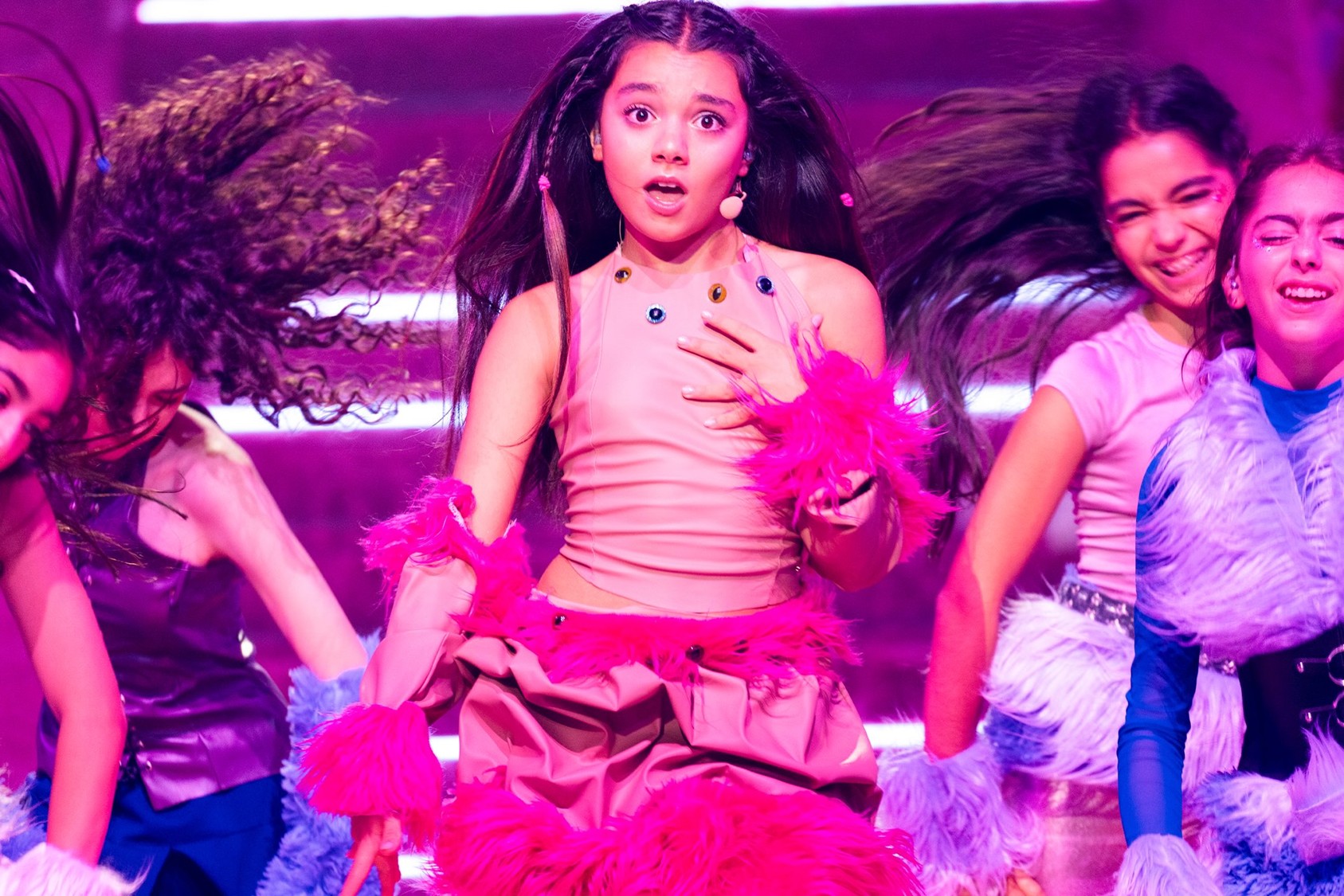
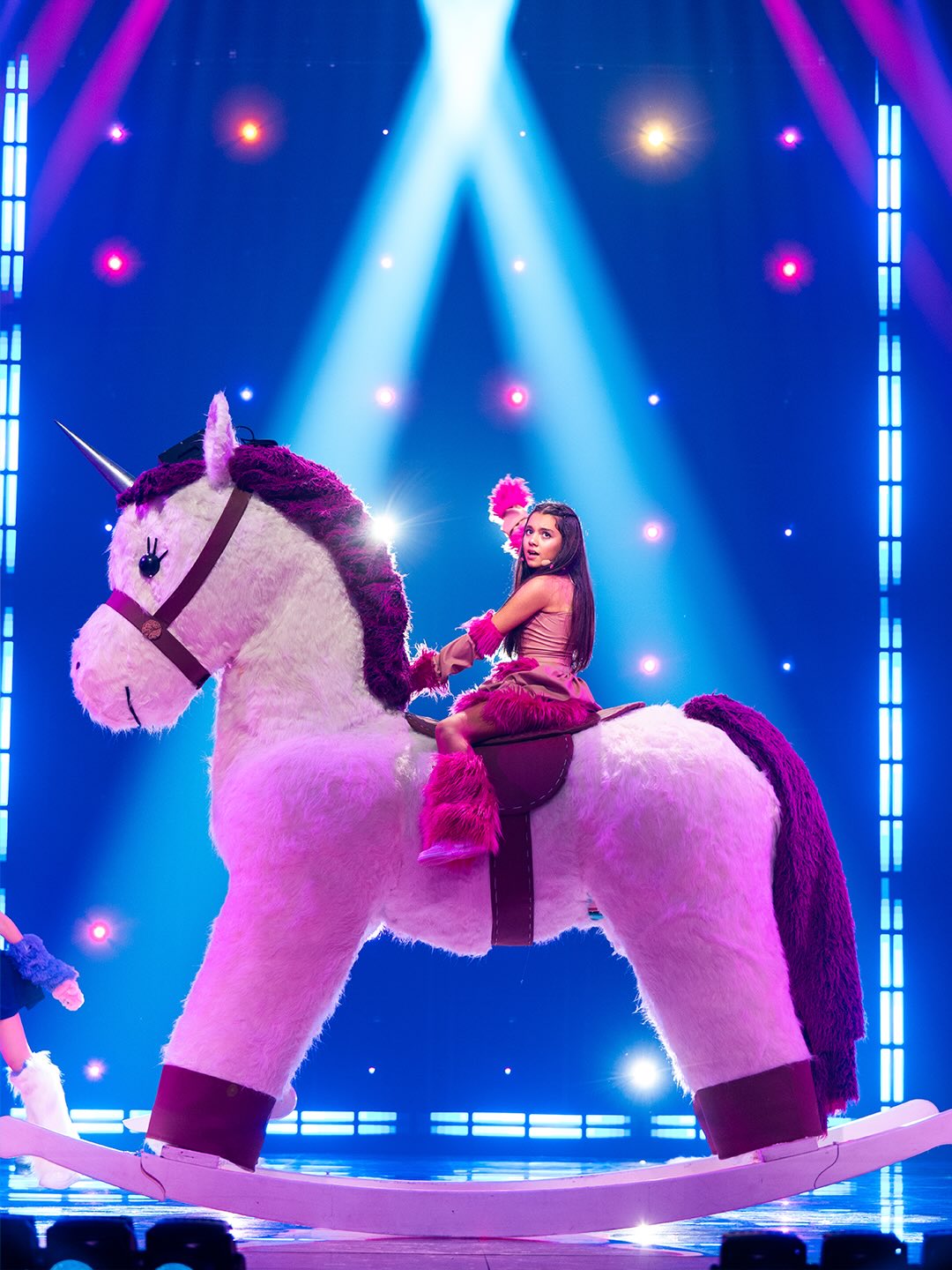
Armenia has delivered one of the most unusual and colourful staging concepts of the opening rehearsal day, with Naré turning the Junior Eurovision stage into a world of pop fantasy.
Her song, «BOO!», comes with a bold visual identity dominated by hot pink, playful shapes and theatrical details.
The performance draws on contemporary pop culture and fantasy imagery, combining bright colours with a deliberately extravagant style.
Naré wears a pastel-pink outfit consisting of a sleeveless top and a voluminous pleated skirt, decorated with striking fuchsia faux-fur details.
Long gloves, furry wrist accessories and matching leg warmers add to the look, creating a playful silhouette that immediately catches the eye.
Small colourful decorations on the top and contrasting white footwear complete the costume.
The stage design is equally imaginative.
The LED visuals feature large rounded arches and windows, pink furry textures and blue backgrounds, creating the impression of a colourful fantasy landscape.
But perhaps the most surprising element is the appearance of a giant white unicorn with a purple mane and tail.
It’s an unexpected detail that fits naturally within the deliberately playful and surreal world created for the performance.
Lighting also contributes to the overall effect.
Blue and white beams cross the stage, while magenta and violet spotlights intensify the colourful atmosphere.
The glossy floor reflects the graphics and lighting, making the fantasy-inspired set appear even larger.
Everything is deliberately bold, from the furry costume details to the oversized stage visuals.
Armenia has embraced a maximalist, kitsch-inspired aesthetic for «BOO!», creating a performance full of personality, fantasy and colourful contrasts.
Junior Eurovision 2026: The countdown to the Grand Final continues
With the first eight individual rehearsals completed, preparations for Junior Eurovision 2026 are now moving into their final stages.
The opening sessions have shown just how different the participating countries’ approaches can be. Some are relying on elaborate effects and colourful staging, while others are placing the emphasis on their singers and the emotional character of their songs.
There is still time for changes, however.
Over the coming days, delegations will return to the stage to adjust camera angles, refine choreography and make final changes to their performances before the dress rehearsals begin.
The jury show on Friday 23 October will be particularly important, as the professional juries will award half of the final points.
The following evening, Saturday 24 October at 21:00 CEST, all 16 participating countries will come together at the Malta Fairs & Conventions Centre in Ta’ Qali for the Junior Eurovision Song Contest 2026 Grand Final.
For now, the first rehearsals have offered a fascinating early look at what is waiting for viewers.
Keep following ESCplus for the latest Junior Eurovision 2026 rehearsal updates, official photographs and all the news from Malta.