

Every year the results of Junior Eurovision are quite varied, but a handful of countries always seem to be in the mix. France, Poland, Armenia and Georgia regularly fight for the top places. Is it luck, or is there a strategy behind it? In this article we look at what some of these countries do to secure good positions and, as a result, the occasional victory.
Junior Eurovision is no longer a “children’s game”
Some delegations no longer see Junior Eurovision as a contest aimed mainly at children, with songs written to suit the age of the audience. For them it has become a showcase for future promises of the music industry, some of whom may even take part in the adult Eurovision in the future.
Countries such as France, Poland and Armenia see the contest as a matter of national prestige and cultural diplomacy rather than as a children’s programme broadcast on a weekend. The difference between winning and losing is not mainly down to chance, but to how each delegation is managed: some do a simpler job, aimed at the age of the participants, while others invest in what could be called the “professionalisation” of their young candidates.
This professionalisation is sometimes criticised by experts and fans, who stress that the participants are children and that their safety and comfort must come first, whatever the result. That is why the EBU has introduced rules such as an online vote in which viewers must choose three entries, which makes the vote more diverse.
France: the “chic pop” formula
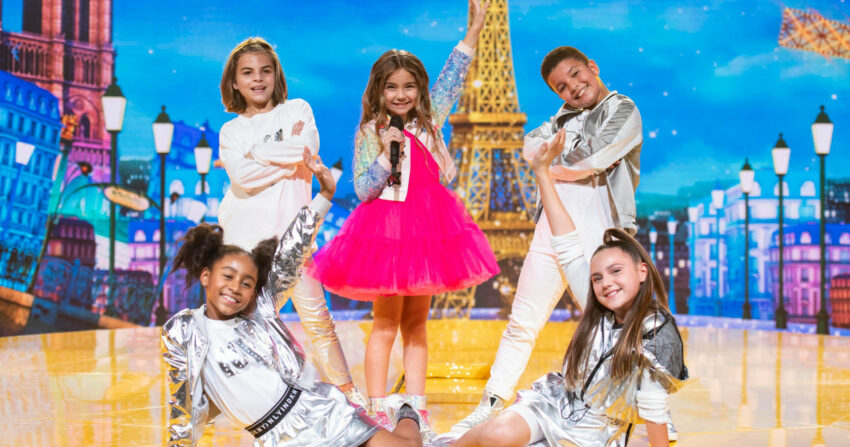
If one country has understood how the modern Junior Eurovision works, it is France. Since its return in 2018, France Télévisions has treated the contest as a high-performance project, and the results speak for themselves: from 2018 to 2025 France finished second (2018), fifth (2019), first (2020), third (2021), first (2022), first (2023), fourth (2024) and first (2025). That makes four victories, which ties it with Georgia as the most successful country in the contest.
Many of its recent representatives have come through the talent show ‘The Voice Kids’, so they arrive with experience on a television stage. They are, in a sense, “miniature professionals” who perform with a confidence that often surpasses that of many adults.
The French strategy does not stop at the performer. The key is the songs. France moves away from the traditional children’s song and commissions songs from established names in the French music industry, producing what could be called “chic pop”: upbeat, catchy tracks with choruses that work on platforms such as TikTok. Combined with a polished, colourful visual aesthetic, this lets France win over both the professional juries and the general public. It has even won two years in a row, in 2022 and 2023, and again in 2025 with Lou Deleuze and “Ce monde”.
Poland: the power of the public vote
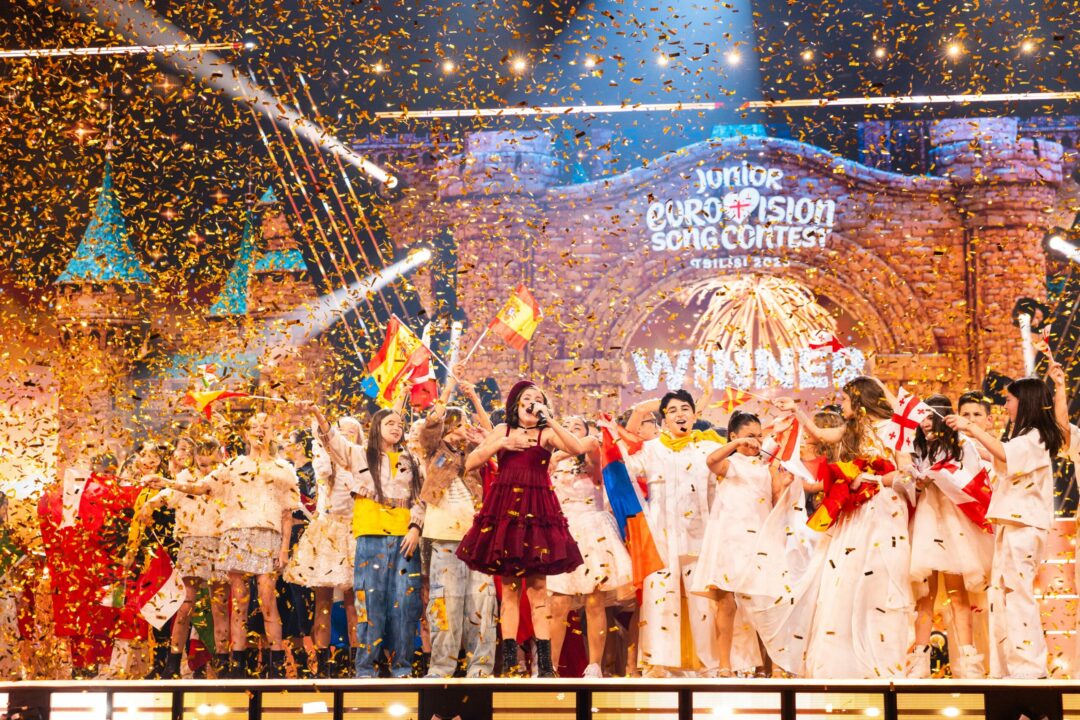
Poland shows how a country can transform its record in the contest through national enthusiasm and digital mobilisation. After a modest start (16th in 2003 and 17th in 2004), it won in 2018 with Roksana Węgiel and “Anyone I Want to Be”, and again in 2019 with Viki Gabor and “Superhero”. Poland has a population of around 38 million and an active diaspora across Europe, so it has a very large pool of potential voters, and in the children’s contest a country can vote for itself.
But population alone is not enough: viewers have to be mobilised. The Polish broadcaster TVP promotes the contest as a national event, with the artists treated as stars. Its selection formats, such as the long-running ‘Szansa na Sukces’ in the past and ‘The Voice Kids Poland’ in recent years, turn candidates into celebrities before they even set foot on the Junior Eurovision stage. This year’s representative, Wiktor Sas, won ‘The Voice Kids Poland’ in a final decided exclusively by the public via SMS vote, on 9 May 2026. That way, Polish viewers do not feel they are simply voting for a song, but backing a national artist.
Armenia: pioneers of the “grown-up” sound
If we look at the statistics, Armenia is one of the most consistent countries in the contest’s history: in 18 appearances it has never finished lower than ninth. It has won twice, in 2010 with Vladimir Arzumanyan and “Mama”, and in 2021 with Maléna and “Qami Qami”.
Armenia was among the first countries to bet on more mature-sounding entries, aware that the voting public, which includes many pre-teens, is not looking for “children’s music” but for songs closer to what young adults listen to. Maléna’s “Qami Qami” was a clear example: a polished space-pop production that did not sound like a typical children’s contest entry. Armenia also takes the visual side very seriously, with presentation videos of a high standard that help to establish its candidates as favourites weeks before the show.
So, is it luck or strategy?
The consistent countries have several things in common: a careful selection process for both artist and song, strong support from the national broadcaster and an eye for the online vote, which accounts for half of the points. This does not guarantee a victory, as every edition proves, but it explains why some countries are almost always in the mix.