

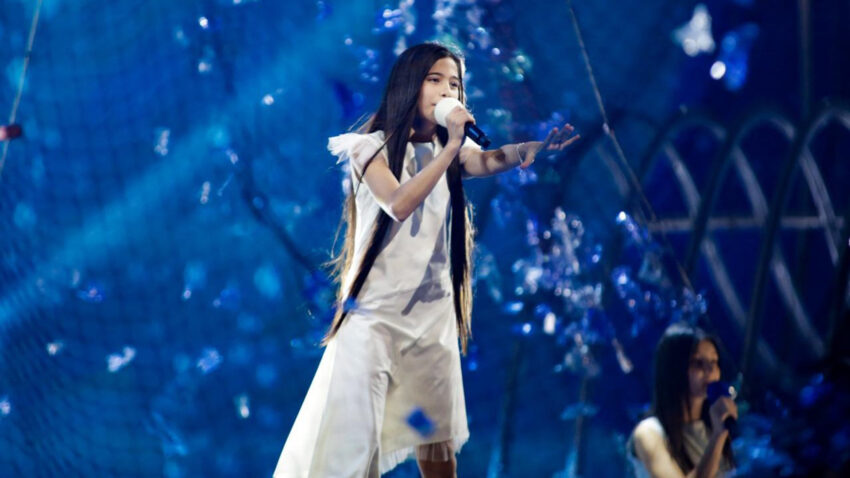
Spain is one of the most successful countries in the history of Junior Eurovision, yet it was also absent from the contest for 12 editions in a row. After its last appearance in 2006, it did not return until 2019, 13 years later. Why did Spain leave a contest in which it had won once and finished second twice, and why did it come back? This is the story of Spain at the Junior Eurovision Song Contest, updated after Tbilisi 2025 and with Lucas Paulano about to fly the flag in Malta 2026.
How Junior Eurovision was born
The origins of the contest go back to 2000, when the Danish broadcaster Danmarks Radio organised a song contest for children, MGP Junior, that year and the next. The idea grew into MGP Nordic in 2002, with Denmark, Norway and Sweden taking part. In November 2002 the European Broadcasting Union (EBU) took up the idea and opened it to all of its member broadcasters, creating Junior Eurovision.
The first edition was held on 15 November 2003 in Copenhagen, with 16 countries: Belarus, Belgium, Croatia, Cyprus, Denmark, Greece, Latvia, Malta, the Netherlands, North Macedonia, Norway, Poland, Romania, Spain, Sweden and the United Kingdom. A draw had initially included Germany and Slovakia, but both withdrew before the contest; Finland showed interest but ended up only broadcasting it.
From the very beginning, Spain wondered how to choose its young representative. The answer was a children’s talent show on La 1: Eurojunior.
Spain’s first stage with Eurojunior: 2003–2006
Spain’s first four years were an almost uninterrupted success. Eurojunior, a talent show in the spirit of Operación Triunfo but with young artists, served as the national selection and helped Spain become one of the fiercest competitors of the early editions. In fact, Spain’s first four entries all finished in the top five.
At the first contest, in Copenhagen 2003, Sergio finished second with the ballad “Desde el cielo”, only behind Croatia’s Dino Jelusić. Spain’s debut could hardly have gone better.
A year later, in Lillehammer (Norway), the Eurojunior winner was María Isabel, from Ayamonte (Huelva). On 20 November 2004 she won the contest with “Antes muerta que sencilla” and 171 points, giving Spain its only victory to date. The song became a hit and, years later, it is still sung and danced to as a classic of Spanish pop.
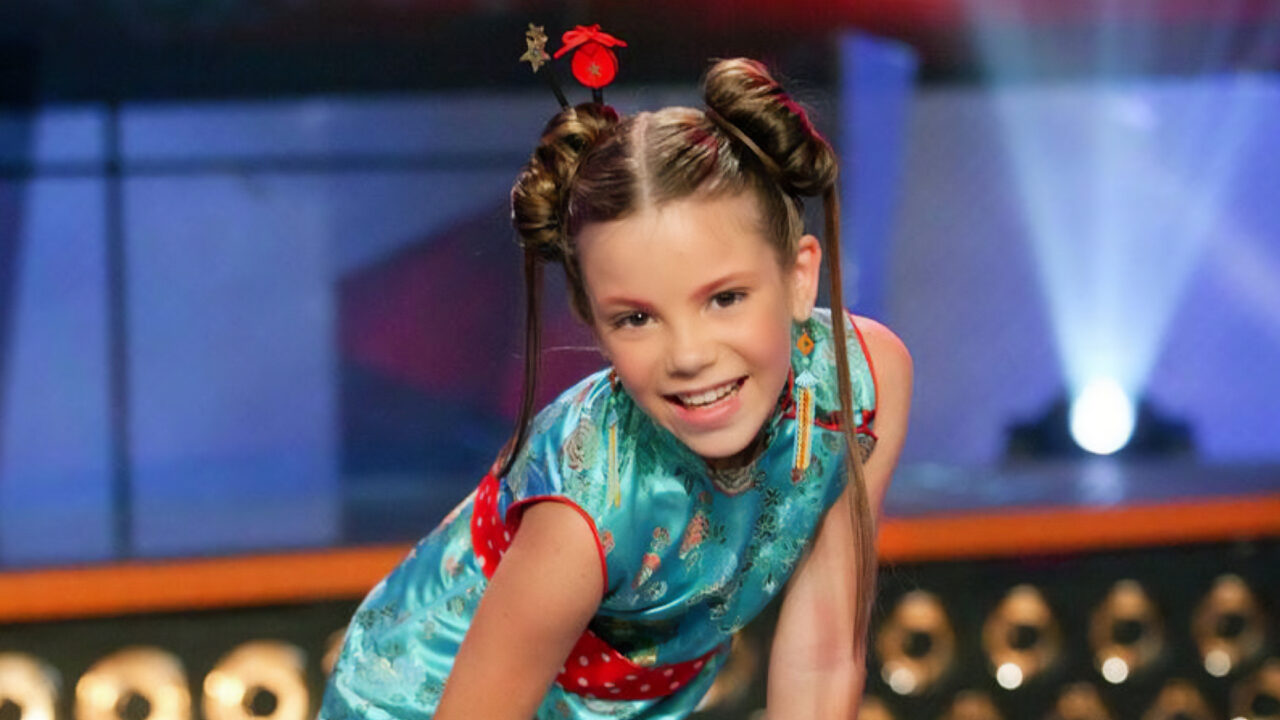
In 2005, Antonio José travelled to Hasselt (Belgium) with “Te traigo flores” and finished second again on 26 November. In 2006, Dani Fernández sang “Te doy mi voz” in Bucharest (Romania) on 2 December and finished fourth.
Nobody could have guessed that 2006 would be the end of Spain’s first era in the contest.
Why did Spain leave Junior Eurovision? 2007–2018
Spanish public television unexpectedly announced that it would not take part in the contest held on 8 December 2007 in Rotterdam. The news surprised fans, because Spain had achieved very good results and the contest had gained popularity after María Isabel’s victory.
At first the broadcaster spoke of restructuring and changes to its schedule, but other reasons were reported over time. According to the accounts of the time, the contest “promotes stereotypes we do not share”, and the protection of minors was the argument most often cited: taking part in an international competition means public scrutiny and a heavy schedule of rehearsals and performances for very young artists. Other accounts point to the contest’s limited audience compared with the investment required, and to the budget cuts that the corporation was facing in those years.
Spain therefore missed 12 editions (2007–2018). Between 2013 and 2016 there were several attempts to bring it back, including contacts with the EBU, but none came to anything: Spain was not on the list of participants in Valletta 2016 either.
Spain’s return in 2019 and a new era of internal selections
Spain finally returned in 2019, in Gliwice (Poland), after a 13-year absence. The news was welcomed with enthusiasm by fans. Reports at the time linked the return to the changes the EBU had made to the contest, with a format more focused on young talent and closer supervision of the participants’ workload, which had been the main worry of the broadcaster when it left, and to the boom in children’s talent shows on Spanish television.
In this new stage, RTVE has chosen its representative internally, in recent years through an open casting in which many children have taken part. The results have been remarkable:
| Year | Host city | Artist | Song | Place | Points |
|---|---|---|---|---|---|
| 2019 | Gliwice | Melani García | “Marte” | 3rd | 212 |
| 2020 | Warsaw | Soleá | “Palante” | 3rd | 133 |
| 2021 | Paris | Levi Díaz | “Reír” | 15th | 77 |
| 2022 | Yerevan | Carlos Higes | “Señorita” | 6th | 137 |
| 2023 | Nice | Sandra Valero | “Loviu” | 2nd | 201 |
| 2024 | Madrid | Chloe DelaRosa | “Como la Lola” | 6th | 144 |
| 2025 | Tbilisi | Gonzalo Pinillos | “Érase una vez (Once Upon a Time)” | 5th | 152 |
Melani García gave Spain a third place on its return with “Marte”, and Soleá repeated it in 2020 with “Palante”, in an unusual edition marked by Covid-19. In 2021 Levi Díaz finished 15th in Paris with “Reír”, Spain’s worst result so far. Carlos Higes was sixth in Yerevan with “Señorita”.
In Nice 2023, Sandra Valero came very close to a second victory. Spain and France’s Zoé Clauzure were left in a tense split-screen finale, and “Loviu” finally finished second with 201 points.
France declined to host the following edition, so RTVE took on the organisation of Junior Eurovision 2024, the first time Spain hosted the contest. The event was held at La Caja Mágica in Madrid, with 17 countries. Chloe DelaRosa finished sixth with 144 points and “Como la Lola”. The winner was Georgia’s Andria Putkaradze.
Last year, in Tbilisi, Gonzalo Pinillos sang “Érase una vez (Once Upon a Time)” and gave Spain a fifth place with 152 points, in a contest won by France with Lou Deleuze.

Now it is the turn of Lucas Paulano, who will represent Spain in Ta’ Qali with “Cuore Bello (Te Quiero, Te Quiero)”. It will be Spain’s 12th participation in the contest, and it will close the show, performing 16th and last on 24 October 2026.
Since its return, Spain has finished in the top six in six of its seven participations, and only once outside the top ten. The reasons that led it to leave in 2007 have been largely overcome, and Spain is once again one of the contest’s most consistent countries.