


When a Junior Eurovision edition ends, one question comes up straight away: who will host the next one? Fans have traditionally assumed that, as in the adult Eurovision Song Contest, the winning country organises the following year’s show. In the children’s contest, however, the reality is far more complex, as Malta 2026 shows: France won in Tbilisi in 2025 but declined to host, and the European Broadcasting Union (EBU) ended up choosing Malta.
Unlike the adult contest, where victory brings an obligation to host (barring force majeure, as with Ukraine in 2022), in Junior Eurovision the choice of host is not automatic. Here is how it works.
Winning does not mean hosting: the right of first refusal
Since 2019, the winning broadcaster has had the right of first refusal: it is offered the chance to host the next edition, but it may decline. The system is designed to protect the finances of public broadcasters, since staging the contest is costly and rarely profitable on its own. Since 2011 it has been customary for the winner to take on the hosting duties, with exceptions in 2012, 2015, 2018, 2024 and 2026.
The numbers show how flexible the system is. Among the winners of the first 23 editions, Armenia (2010), Ukraine (2012), Malta (2013 and 2015), Georgia (2016 and 2024), Poland (2018 and 2019), France (2020 and 2022) and Armenia again (2021) all organised the following contest, while Italy (2014) and France (2023 and 2025) turned the offer down.
A lesson learned in 2004
This flexibility comes from a hard lesson. In May 2003 the EBU had chosen the British broadcaster ITV to host the 2004 contest in Manchester, but ITV pulled out a year later because of financial and scheduling problems. The venue was then moved to Croatia, the 2003 winner, but the Croatian broadcaster HRT reportedly forgot that the arena it had in mind was already booked for those dates. Only in June 2004, with five months to go, did the Norwegian broadcaster NRK offer to step in, and the contest was finally held in Lillehammer on 20 November 2004.
The episode showed the EBU that a victory on stage does not guarantee the logistical capacity to host. That is why choosing the host today is a negotiation between the winning broadcaster, the host candidates and the EBU, with the contest’s Reference Group overseeing the executive decisions.
The case of Junior Eurovision 2025: when technical criteria decide
After Georgia won in Madrid with Andria Putkaradze, the Georgian broadcaster GPB confirmed it would host, and the capital, Tbilisi, was chosen. At first the Olympic Palace, which had already hosted the contest in 2017, was named as the venue. However, on 24 November 2025, only weeks before the show, it was announced that the contest would be held in the Gymnastic Hall of Olympic City, because the Olympic Palace was not available for the assessment visit that the EBU requires.
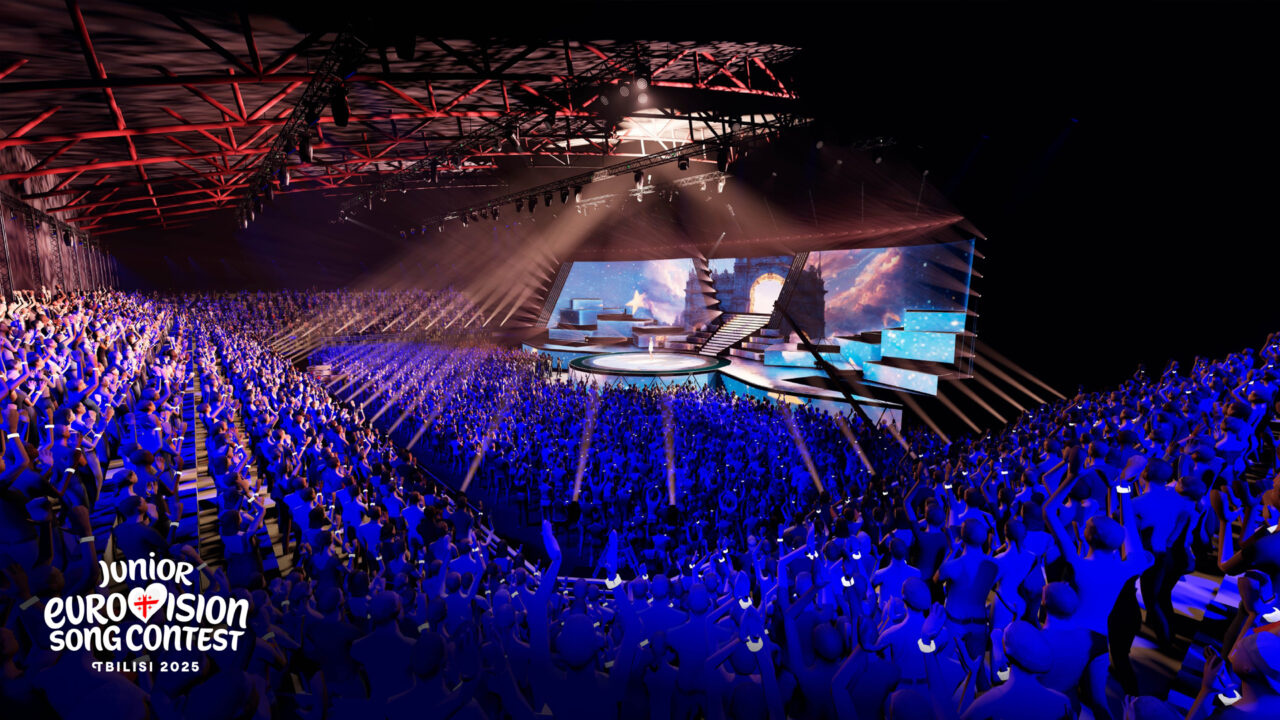
The episode shows that the EBU’s technical validation is binding: if the executive producer cannot inspect a venue, it is ruled out, regardless of its history or the host broadcaster’s wishes. The Georgian government also allocated money from its reserve fund to guarantee the edition, around €2.9 million by November 2025.
When the winner says no: Italy, France and the road to Malta
Staging Junior Eurovision is expensive, and several winners have decided not to do it. In 2015, Italy, which had won at its first attempt in 2014, was offered the right of first refusal and declined on 15 January 2015. The EBU then received bids from Bulgaria and Malta, and Sofia hosted the contest.
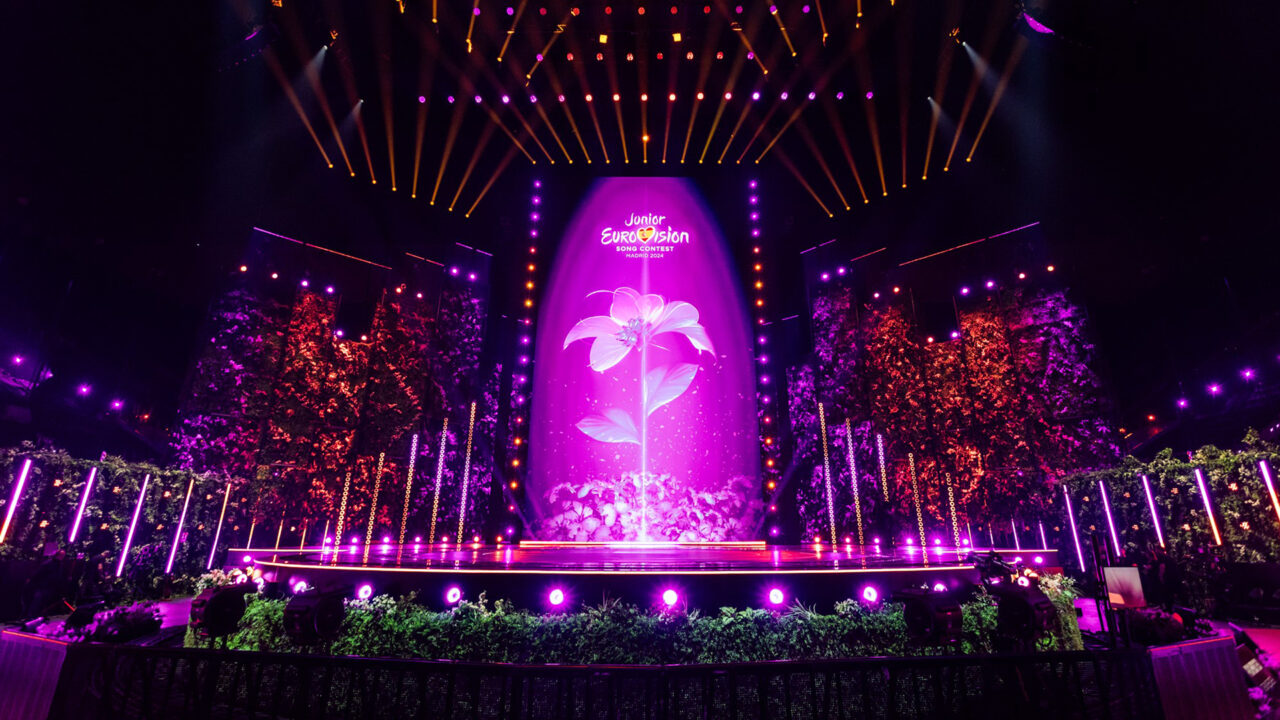
In 2024, after winning in Nice, France Télévisions announced that it would hold talks with the EBU because it did not want a “French monopoly on Junior Eurovision”, having already hosted the event twice in three years. RTVE, whose representative Sandra Valero had finished second, took over, and Junior Eurovision 2024 was held in Madrid, in Spain’s first time as host.
The same happened after Lou Deleuze’s victory in Tbilisi 2025. On 18 December 2025, France Télévisions announced that it would not host the 2026 edition for financial reasons. After months of rumours and intense negotiations, with San Marino and North Macedonia among the options, the organisers confirmed on 15 May 2026 that Malta would host Junior Eurovision at the Malta Fairs & Conventions Centre (MFCC) in Ta’ Qali, on 24 October.

So, who decides where Junior Eurovision is held?
In short: the winning broadcaster has the first word, but the final decision lies with the EBU, which assesses every bid on its financial guarantees and, above all, on the technical suitability of the venue. When the winner declines, other broadcasters can bid, and the EBU picks the one that offers the best guarantees. The results are mixed: some editions have gone to the winner, others to a country with proven experience, such as Malta, which will host for the third time in 2026.
Ultimately, whoever decides the host is not just whoever wins the contest, but whoever has the institutional and financial backing to pay for it.