


The European Broadcasting Union (EBU) and the host broadcaster Bălgarska Natsionalna Televiziya (BNT) have revealed new details about the host city selection process for the Eurovision Song Contest 2027, a historic edition in which Bulgaria will host the contest for the first time in its history.
Four cities were competing to become the host city of the European contest, and after completing the first evaluation phase, the bids from Burgas and Sofia have advanced to the next stage, leaving the decision between these two cities. Meanwhile, Plovdiv and Varna have been eliminated from the race to host the 71st Eurovision Song Contest, having failed to meet the technical and infrastructure criteria established by the EBU and the contest’s production team.
The evaluation took into account factors such as the technical specifications of the proposed venue, its compliance with EBU requirements, and its ability to meet the production standards of the contest. As a result, Burgas and Sofia are the only bids still in the running, and one of them will ultimately host Eurovision 2027.
With the elimination of Plovdiv and Varna, the process now enters its final stage. The international evaluation panel will continue to carry out an in-depth assessment of the proposals submitted by Burgas and Sofia before making a final decision.
The city selected to host the Eurovision Song Contest 2027 will be officially announced in the coming weeks, with July 31 set as the deadline. This will mark the completion of Bulgaria’s first major challenge on the road to organising the 71st edition of the European contest.
The EBU and the Bulgarian broadcaster thank Plovdiv and Varna for their interest in Eurovision 2027
Martin Green CBE, Director of the Eurovision Song Contest, has expressed his appreciation for the efforts made by Plovdiv and Varna throughout the host city selection process. The head of the event highlighted the economic benefits that come with hosting the European contest. In addition, he emphasised the institutional and public support in Bulgaria for the organisation of the Eurovision Song Contest 2027.
“Thank you to Plovdiv and Varna for their passion for the Eurovision Song Contest and interest in hosting this event that unites millions of people around the world with the power of music.
Such intense competition between cities underscores the significant economic and social benefits of hosting. Both bids demonstrated just how widespread the support for next year’s event is across Bulgaria and we hope both cities will be part of the nationwide celebrations next May.”
Martin Green CBE, Director of the Eurovision Song Contest
For her part, Milena Milotinova, Director General of BNT, also thanked the municipal teams for their work and stressed that the decision was based exclusively on previously established technical criteria. She also left the door open for the candidate cities to take part in the programme of activities and special events during the Eurovision Song Contest 2027.
“We would like to emphasize that this decision is based solely on the assessment of the pre-established technical and infrastructure criteria, which were applied equally to all candidates.
It does not call into question the undeniable strengths of your cities or their well-established traditions in music, culture, and international festivals. This also creates opportunities for their participation in the programme of accompanying events.”
Milena Milotinova, BNT Director General
Where will Eurovision 2027 be held? Get to know the two cities competing to host the contest
Considering the available infrastructure, Burgas and Sofia emerged from the outset as the strongest candidates to host the Eurovision Song Contest 2027. Both cities have indoor arenas that meet the event’s capacity requirements, meaning no additional investment is needed. By contrast, the bids from Plovdiv and Varna depended on the completion of an expansion of their venues within a limited timeframe, a condition that ultimately affected their viability.
Therefore, the race to host the Eurovision Song Contest 2027 is now down to Burgas and Sofia. Here is a closer look at the main features of both bids.
Burgas | Arena Burgas
Burgas is the fourth most populous city in Bulgaria, with a population of more than 200,000 people. The city is one of the country’s main economic and logistics hubs thanks to its strategic location on the Black Sea coast. It is home to Bulgaria’s largest seaport and has an international airport, enhancing its connectivity and international profile, particularly during the tourist season.
The city also offers a wide range of hotel accommodation and an adequate transport network for hosting large-scale events, placing it among the Bulgarian cities best equipped to stage international competitions.
For the Eurovision Song Contest 2027, the proposed venue is the Arena Burgas. Recently opened in 2023, it has a capacity of 4,100 for sporting events, which can be expanded to 6,100 spectators. In addition, for concerts, it can accommodate up to 15,000 spectators, thanks to its flexible seating capacity, which can be adjusted depending on the venue configuration and the type of event.
It is the home venue of BC Chernomorets, the local basketball team that competes in the Bulgarian National League. The arena features an international-standard main court, retractable seating, changing rooms, training facilities, spaces for event organisers and the media, as well as VIP areas.
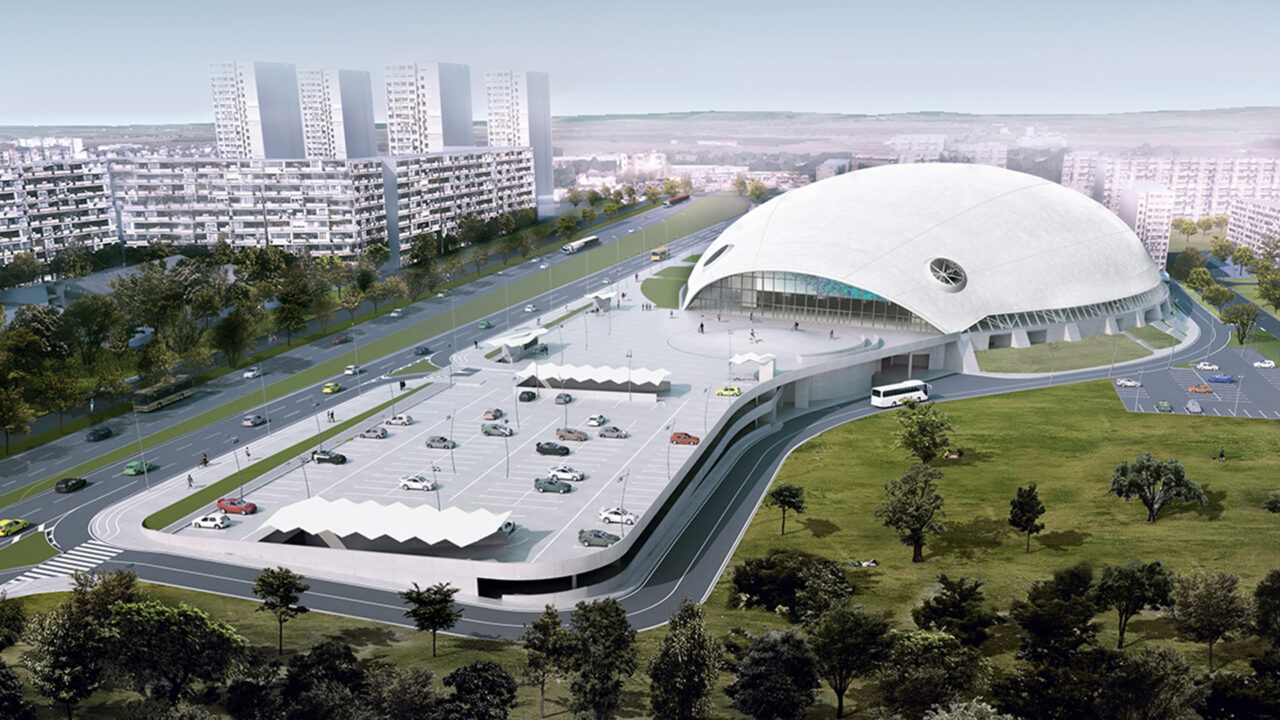
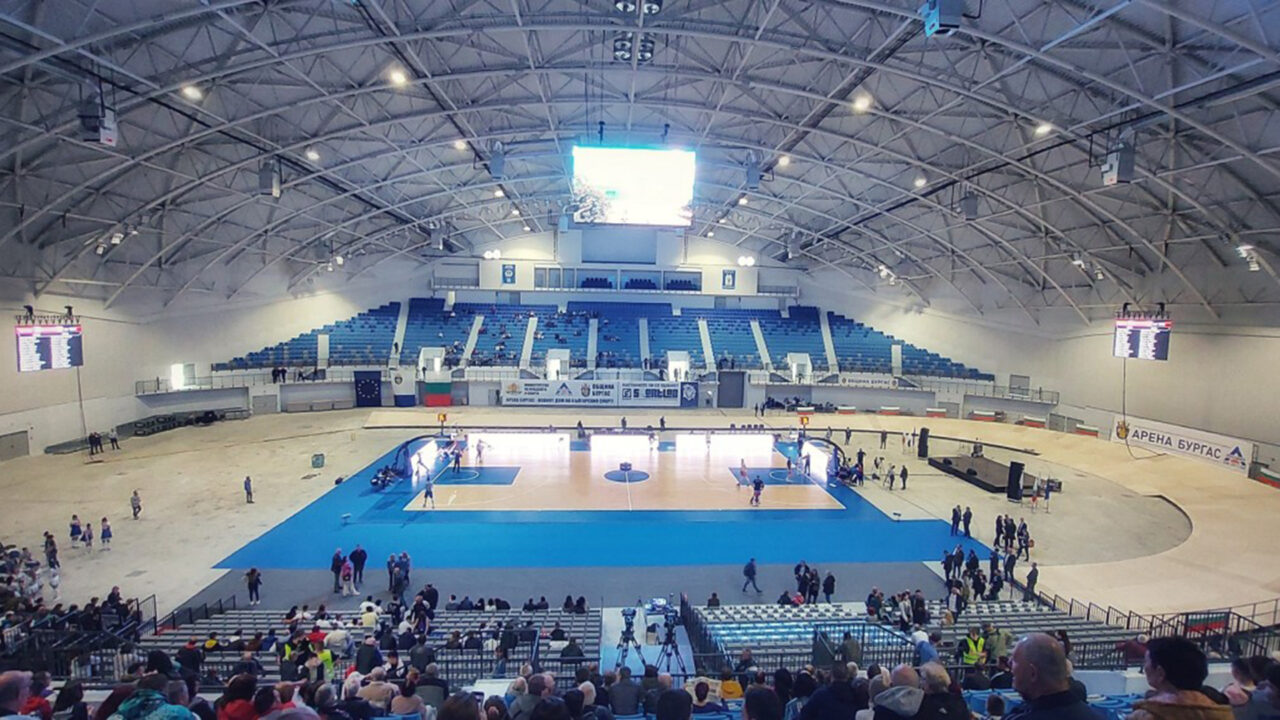
In addition, the venue features a modern lighting, sound, and climate control system, along with a versatile design. In terms of figures, Arena Burgas has the following main dimensions:
- Venue length: 68 metres.
- Venue width: 34 metres.
- Clear height to the roof: 22 metres.
- Competition area: adaptable depending on the sporting discipline; for rhythmic gymnastics, a 14 × 14 metre floor is installed.
- Adjacent warm-up hall: the same dimensions (68 × 34 metres), with two 14 × 14 metre warm-up areas and three training zones.
Among its technical features, its 22-metre clear height makes it suitable for the installation of large-scale stage structures, lighting rigs, and technical equipment, all of which are essential for the Eurovision Song Contest.
Sofia | Arena Sofia
Sofia is the capital of Bulgaria and also its most populous city, with nearly 1.3 million inhabitants and more than 1.6 million people living in its metropolitan area. The city is Bulgaria’s main political, economic, administrative, and cultural centre, hosting the country’s principal state institutions as well as a significant share of its business and academic activity.
In recent years, its international profile has been strengthened by hosting numerous European and international sporting, cultural, and political events. One of the key strengths of its bid is the availability of modern, high-capacity infrastructure, together with a wide range of hotel accommodation and excellent transport connections, including Bulgaria’s main international airport, which handled more than 8.4 million passenger journeys last year.
For the Eurovision Song Contest 2027, the proposed venue is the Arena Sofia. This multi-purpose arena can accommodate up to 17,000 spectators. It also has the experience of hosting the Junior Eurovision Song Contest 2015. In addition, Lady Gaga, Julio Iglesias, and Jennifer Lopez are among the artists who have performed at the venue.
It is currently Bulgaria’s leading multi-purpose arena. Opened in 2011, it offers top-level technical facilities for both sporting competitions and cultural and musical events. The venue can be adapted to different configurations depending on the requirements of each event.
The Arena Sofia features a central arena, spacious athlete areas, changing rooms, press rooms, VIP facilities, hospitality areas, and dedicated spaces for event organisers and the media, including room for 120 journalists. It also incorporates modern lighting and sound systems, video scoreboards, accessible entrances for people with reduced mobility, and parking facilities with capacity for 1,200 vehicles.
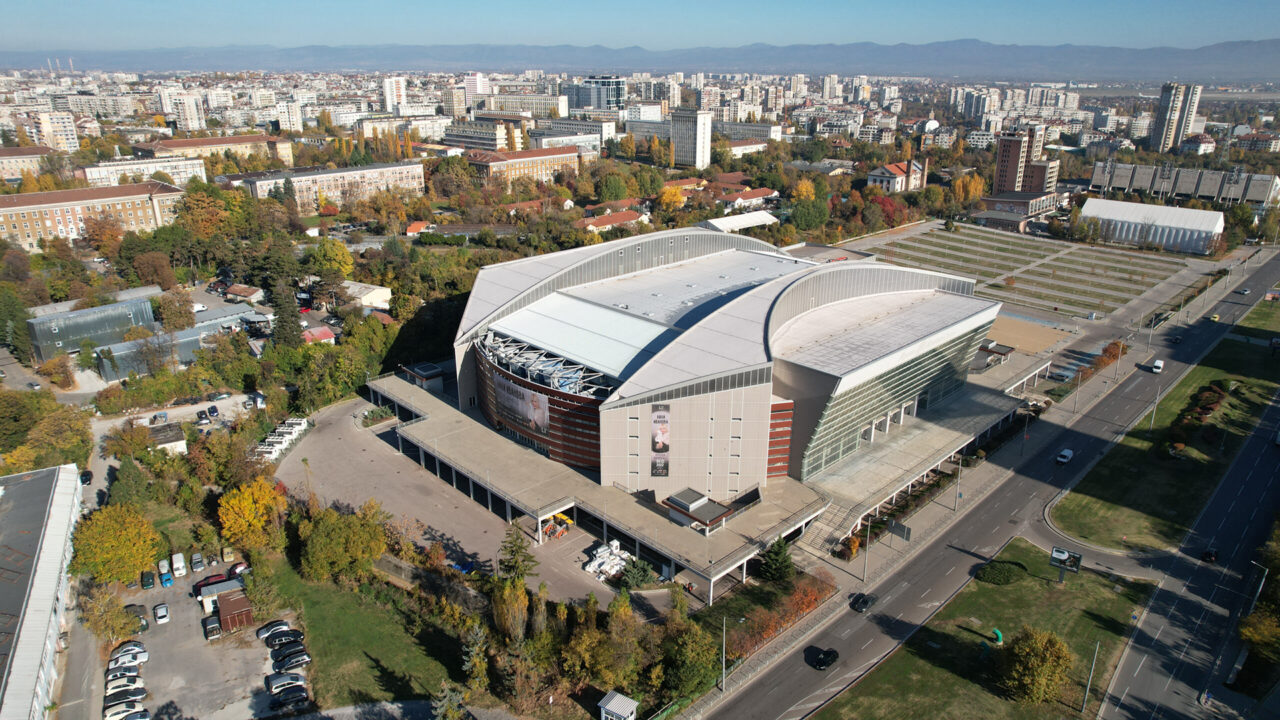
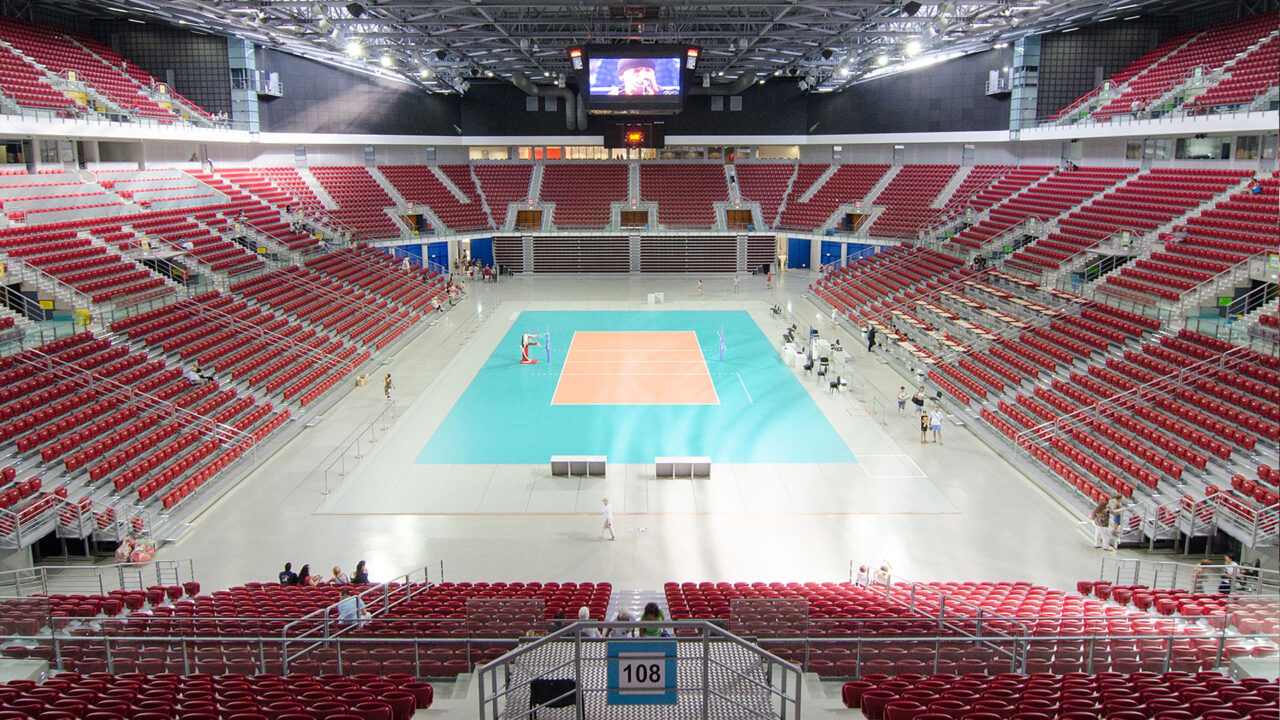
In terms of figures, Arena Sofia has 12,373 seats, with the possibility of increasing the capacity by approximately 3,500 additional seats when the characteristics of the event require it. For music concerts, the arena can accommodate around 6,500 additional standing spectators. In addition, it features retractable seating. Its main technical dimensions are as follows:
- Maximum venue length: 77.20 metres.
- Width with the retractable seating extended: 32.80 metres.
- Width with the retractable seating retracted: 53.20 metres.
- Clear height to the lower roof structure: 21.75 metres.
- Clear height to the central video scoreboard (media cube): 15.88 metres.
The flexibility of the retractable seating makes it possible to adapt the venue to different capacities and configurations according to the staging requirements of each event.