

Junior Eurovision has grown over more than two decades into a showcase for young European talent, but its visual impact has been just as important as its musical one. Each edition has left behind a legacy of productions that combine innovative design, cutting-edge technology and a unique cultural identity. Here we review seven stages that have left a mark on the history of the children’s contest, from the water of Limassol 2008 to the Maltese festa of Ta’ Qali 2026.
Limassol 2008: real water and organic design
Edition: 6th Junior Eurovision (2008). Venue: Spyros Kyprianou Athletic Centre, Limassol (Cyprus). Designer: George Papadopoulos. Key features: a circular stage representing an island, real water in front of the stage, jetties and five sailboats with oars.
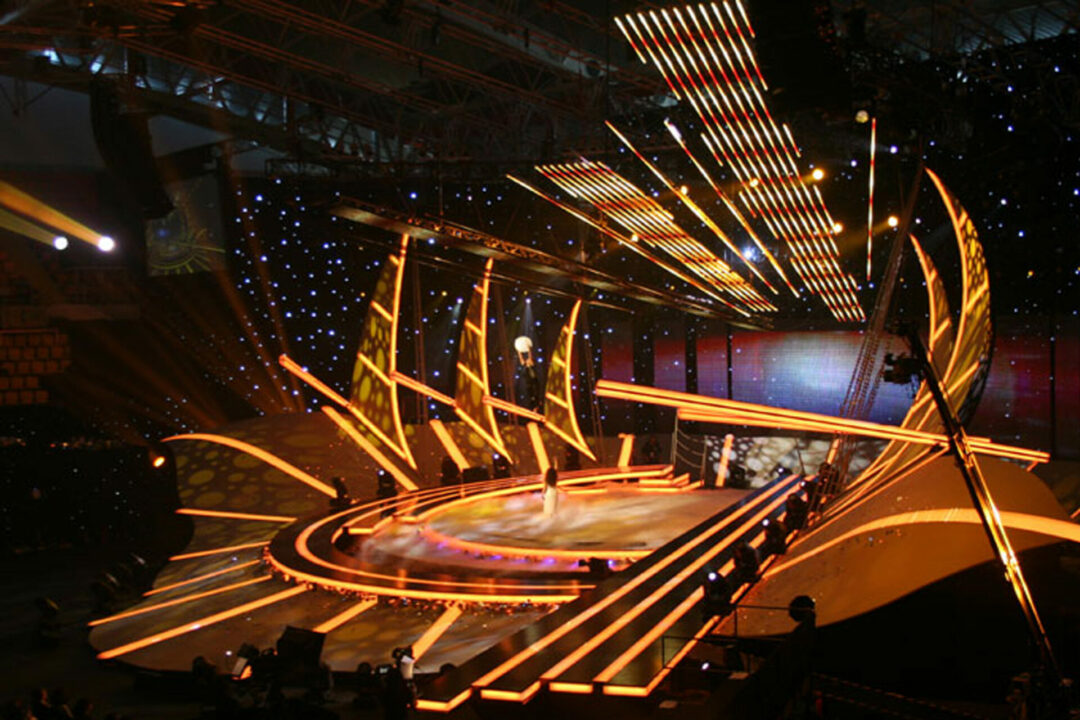
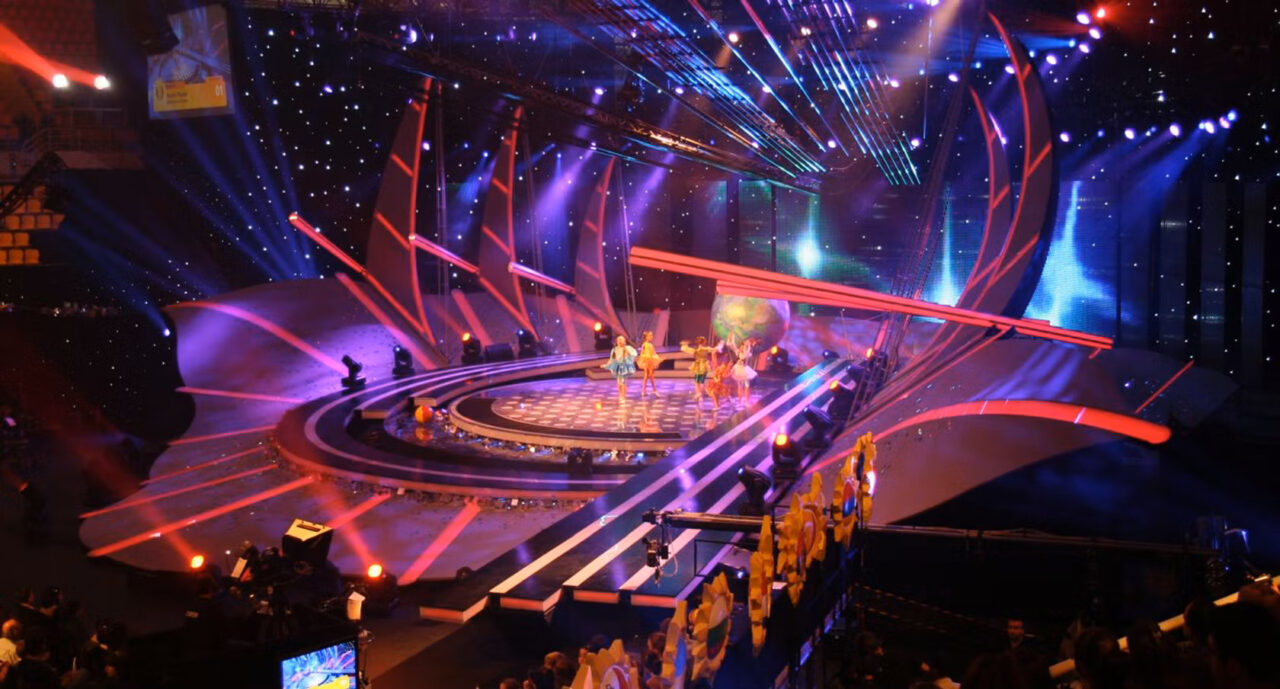
The stage of Limassol 2008 is one of the most innovative in the contest’s history. Designed by George Papadopoulos, the concept turned the central platform into a literal representation of Cyprus surrounded by real water. During each performance, a beach ball with the flag of the participating country floated in the pond, creating a memorable image. A large walkway was meant to resemble the island’s jetties, and the rest of the set evoked waves breaking and sailboats at sea, with a backdrop of LED stars that changed colour.
Having water on stage was a major challenge, as it had to be kept from damaging the structure. The solution was a double tank, with submersible LED lights and pumps to create the movement of the waves.
Sofia 2015: LED lighting and the dandelion
Edition: 13th Junior Eurovision (2015). Venue: Arena Armeec, Sofia (Bulgaria). Key features: a design based on the dandelion of the contest’s logo, curved shapes and large LED screens.
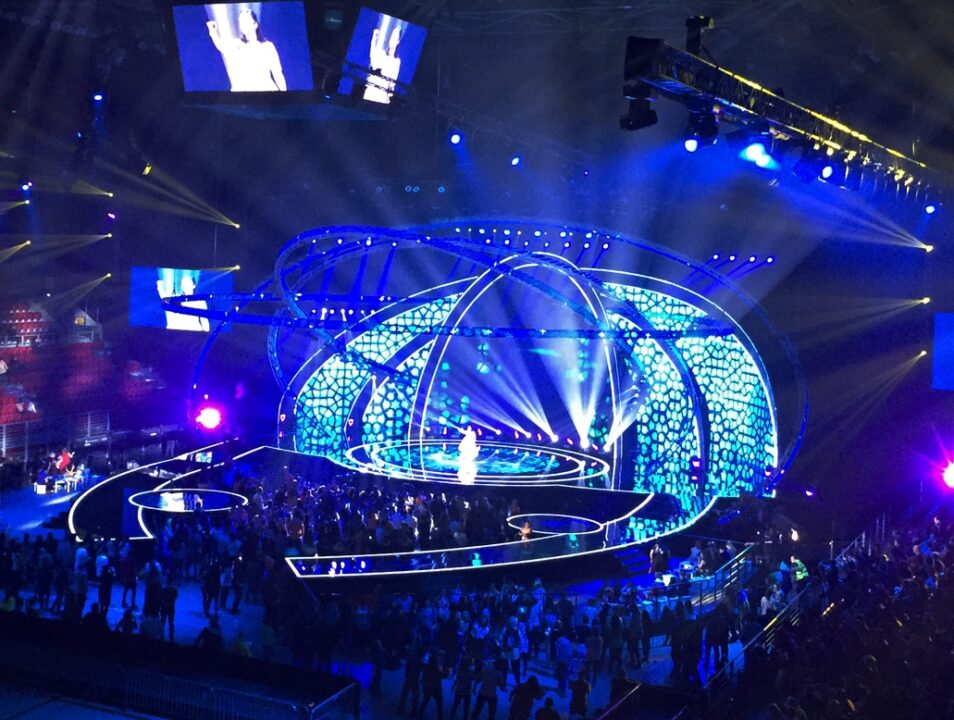
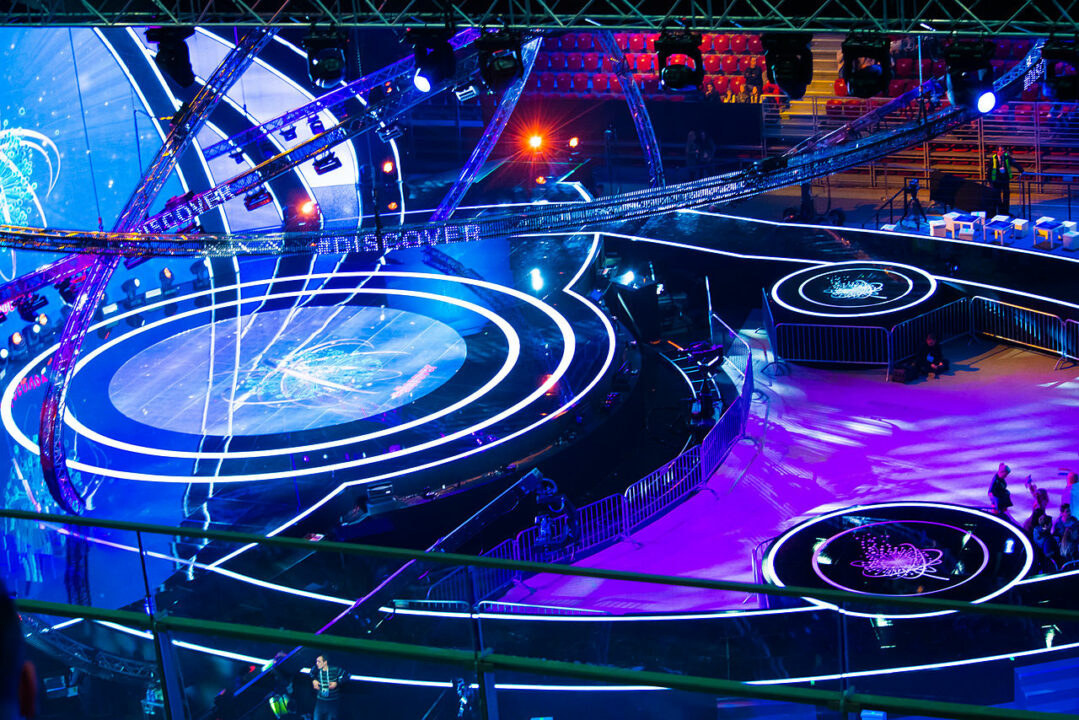
The stage of Sofia 2015 was built around the dandelion of the official logo, a flower that, as the organisers explained, evokes something “everyone has done as a child”: blowing the seeds away. Curved, circular shapes dominated the set, while large LED screens gave each entry the chance to build its own look. The dandelion idea was reflected in both the visual identity and the movement of the LED graphics, creating effects of dispersion and flight.
Many fans believe that the stage in Sofia has kept its appeal over time, proving that good staging does not necessarily need the latest technology.
Gliwice 2019: lightness, dynamism and the kite
Edition: 17th Junior Eurovision (2019). Venue: Gliwice Arena (Poland). Key features: vibrant LED ribbons, aerodynamic shapes and colourful lighting, inspired by the contest’s kite logo and its slogan ‘Share the Joy’.
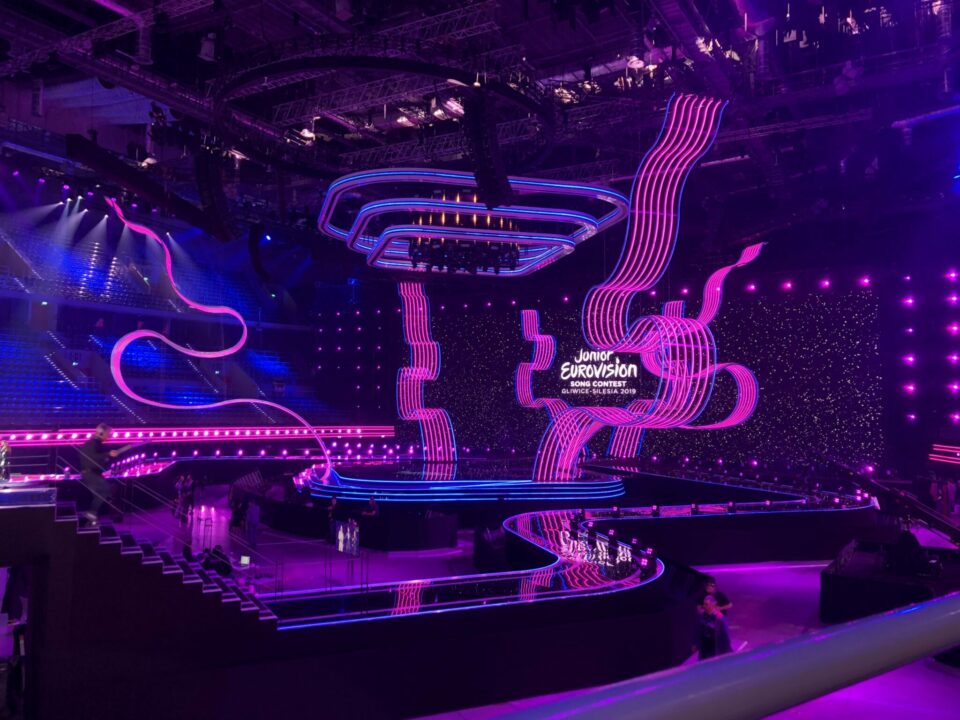
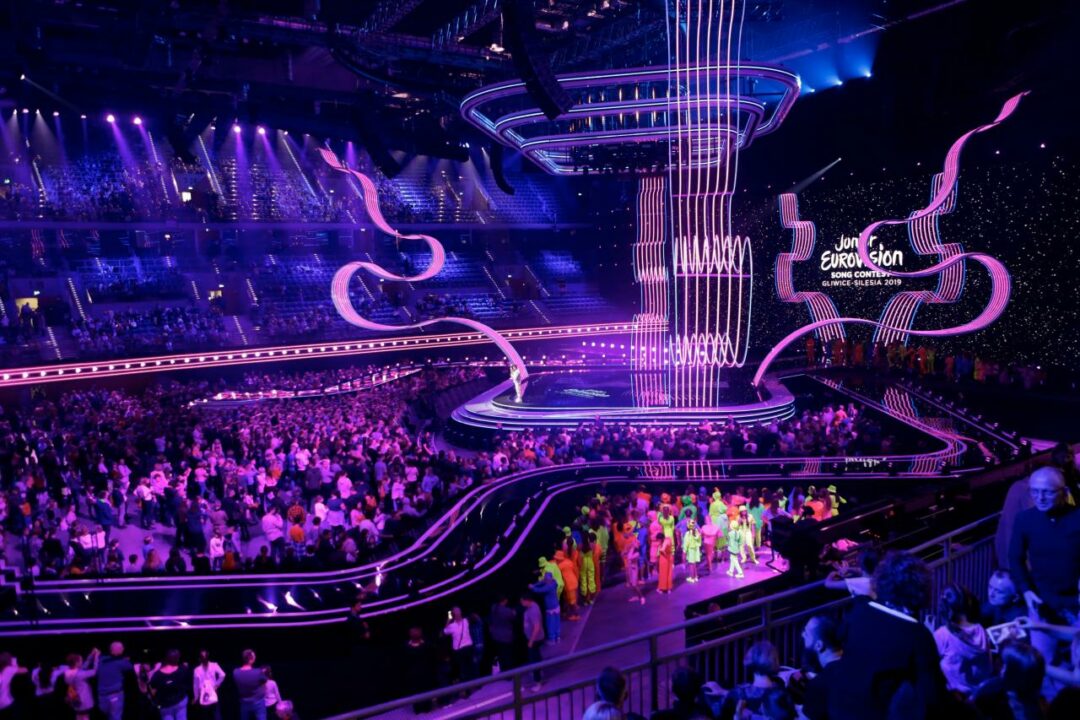
The most striking element of the Gliwice 2019 stage was the huge LED screen at the back of the arena, which set the layout of everything else: a large central stage shaped like a rhombus with rounded corners, inspired by “the wind, the air and the flight of a kite”, and walkways on either side that gave an impression of movement. The absence of distracting ornaments let every entry stand out, and the LED ribbon structures hanging over the stage suggested the tails of a flying kite. The design showed that the interplay of light and shape can be as striking as giant screens.
Warsaw 2020: augmented reality and circular symbolism
Edition: 18th Junior Eurovision (2020). Venue: Studio 5, TVP headquarters, Warsaw (Poland). Designer: Anna Brodnicka. Key features: giant multimedia spheres and rings, augmented reality and hundreds of lights.
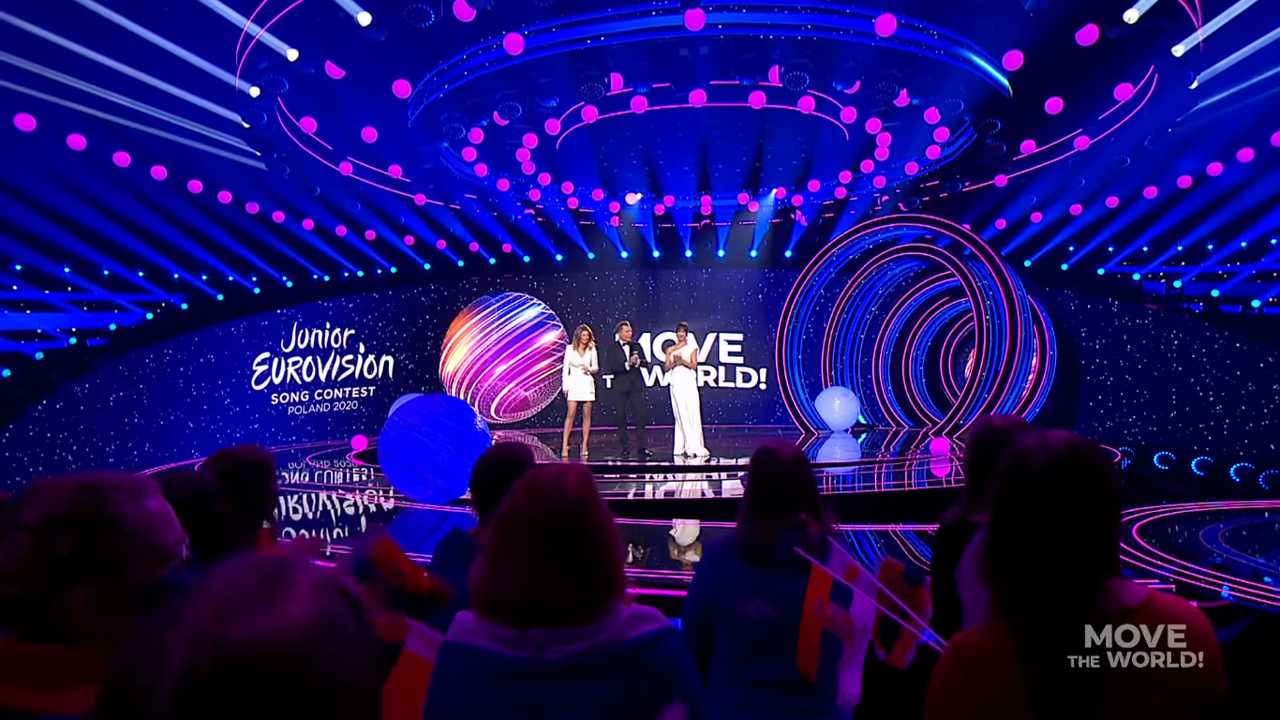
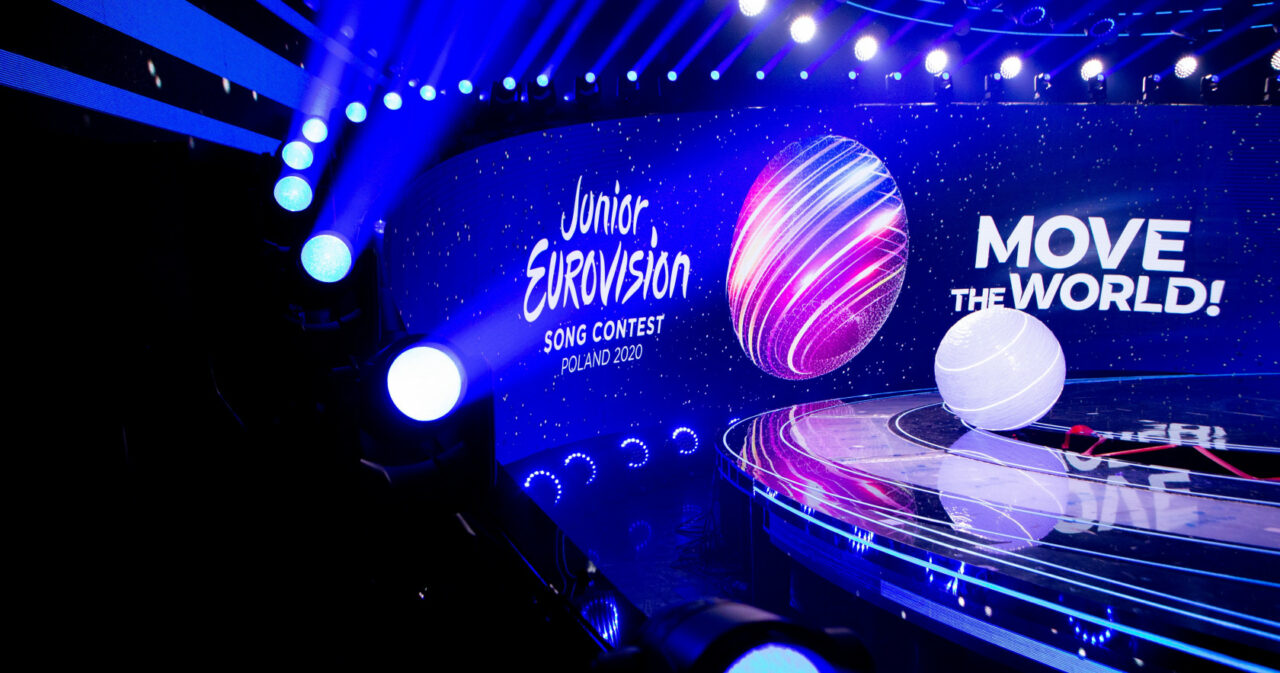
Despite the restrictions imposed by the Covid-19 pandemic, Warsaw 2020 produced one of the most innovative stages in the contest’s history. Anna Brodnicka’s design drew on the symbolism of the circle, with spheres, rings and circular multimedia platforms that moved in sync with the music. The show, held without a live audience, also used augmented-reality elements, and its lighting created a magical space that compensated for the lack of an audience. A clear example came when all the participants sang the year’s common song, “Move The World”, on the stage.
Madrid 2024: vertical innovation and a floral show
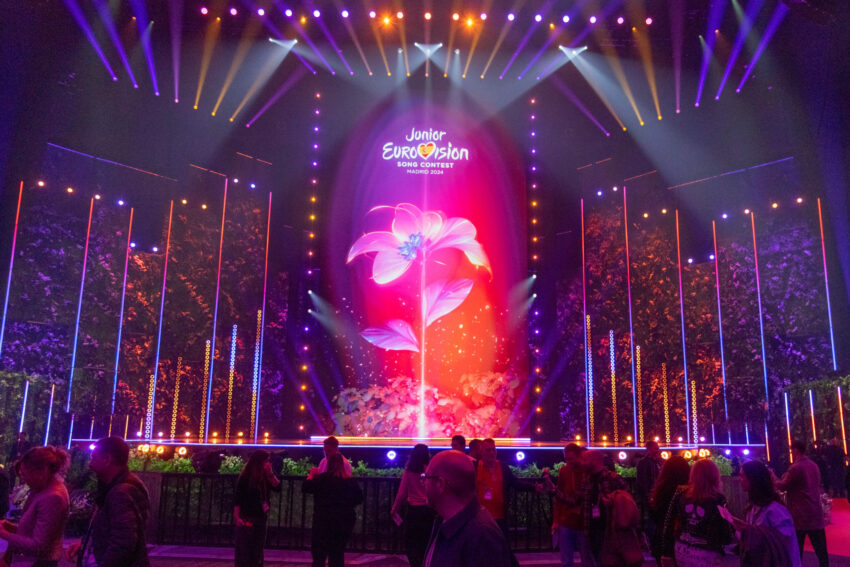
Edition: 22nd Junior Eurovision (2024). Venue: La Caja Mágica, Madrid (Spain). Artistic director: Marvin Dietmann. Key features: a huge vertical central screen and two flower gardens.
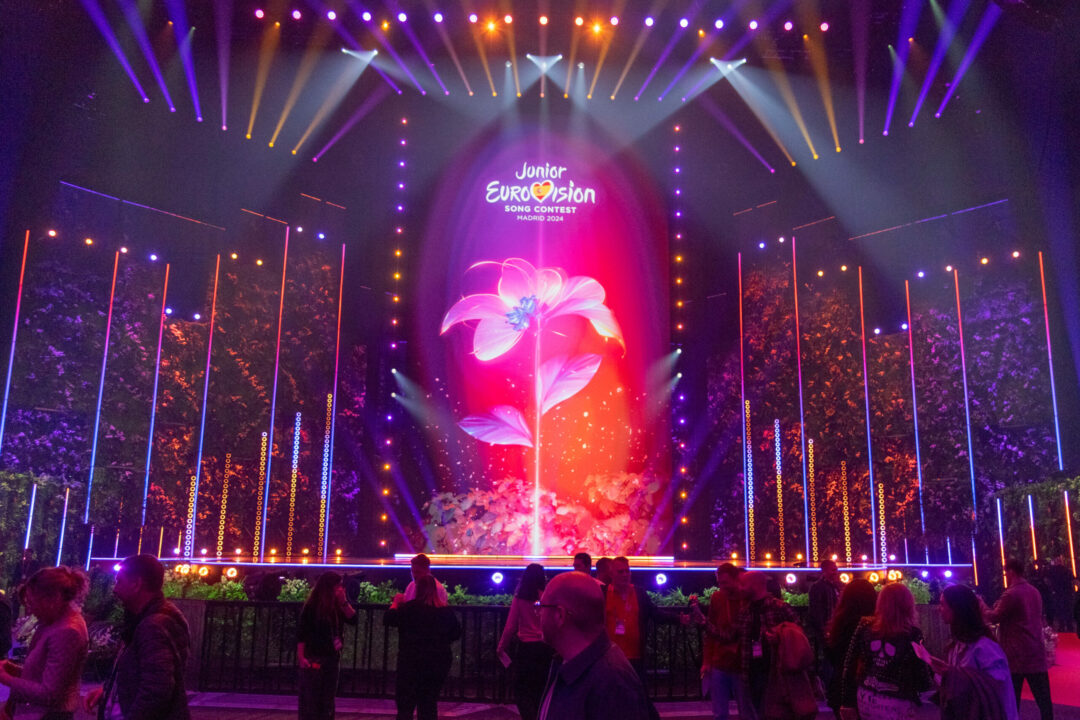
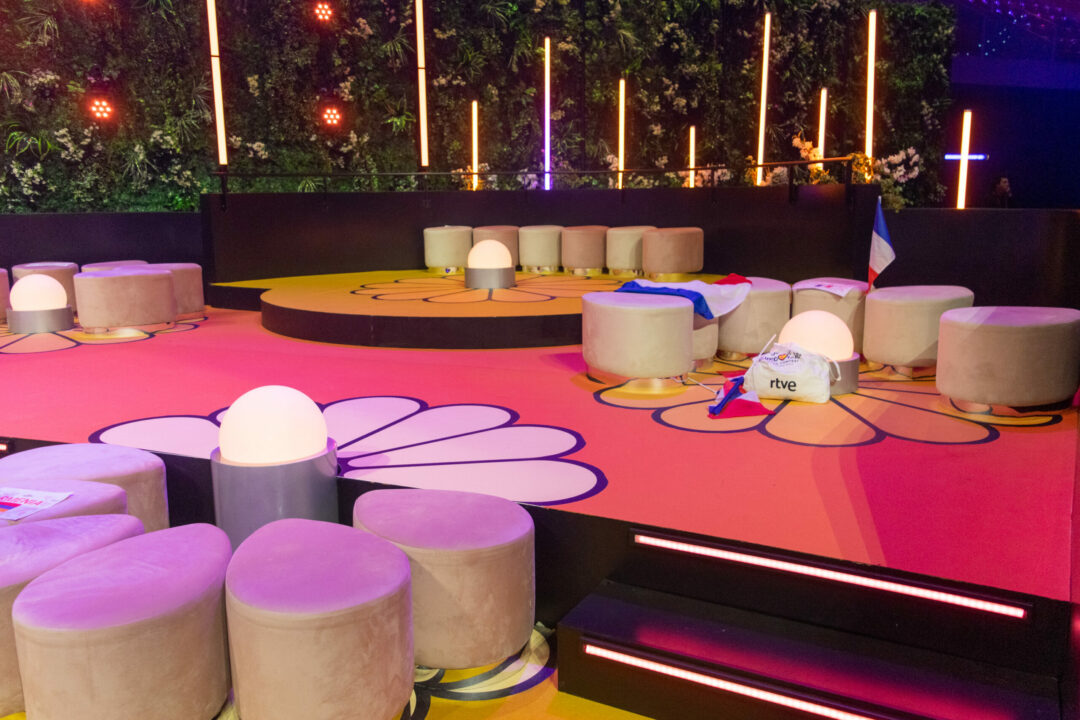
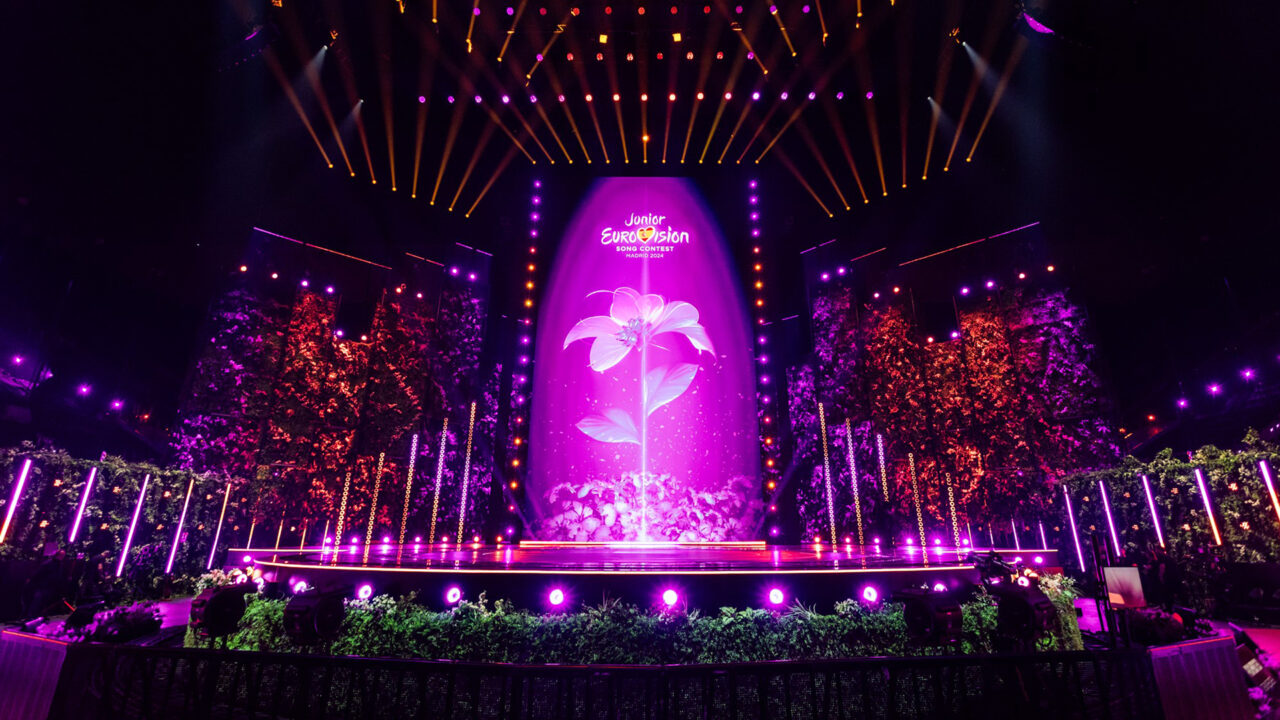
The production of Madrid 2024 was a turning point in the contest’s visual history. Under the theme “Let’s Bloom”, La Caja Mágica was transformed into a futuristic botanical show. The decision to use a monumental vertical screen broke with the horizontal tradition of television stage design, a technical challenge solved by flanking the screen with two flower gardens that kept the visual balance, creating a futuristic and welcoming atmosphere at the same time.
Chloe DelaRosa, Spain’s representative, made the most of it with a burst of colour and dance inspired by Lola Flores, using the LED structure for real-time projections and giant selfies. The staging showed how a vertical design can multiply the stage presence of a single artist.
Tbilisi 2025: ‘United by Music’ and Georgian heritage
Edition: 23rd Junior Eurovision (2025). Venue: Gymnastic Hall of Olympic City, Tbilisi (Georgia). Artistic director: Marvin Dietmann. Key features: a representation of the doli, the traditional Georgian drum, and sculptural shapes inspired by mountain landscapes.
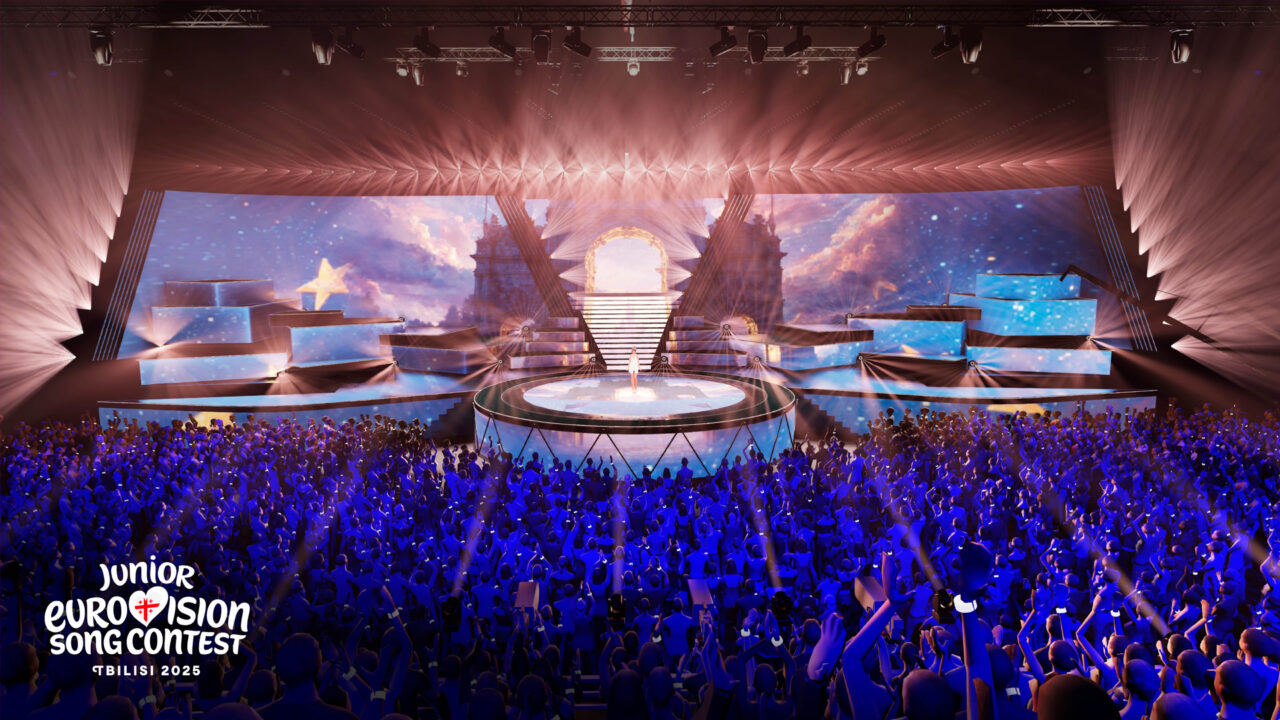
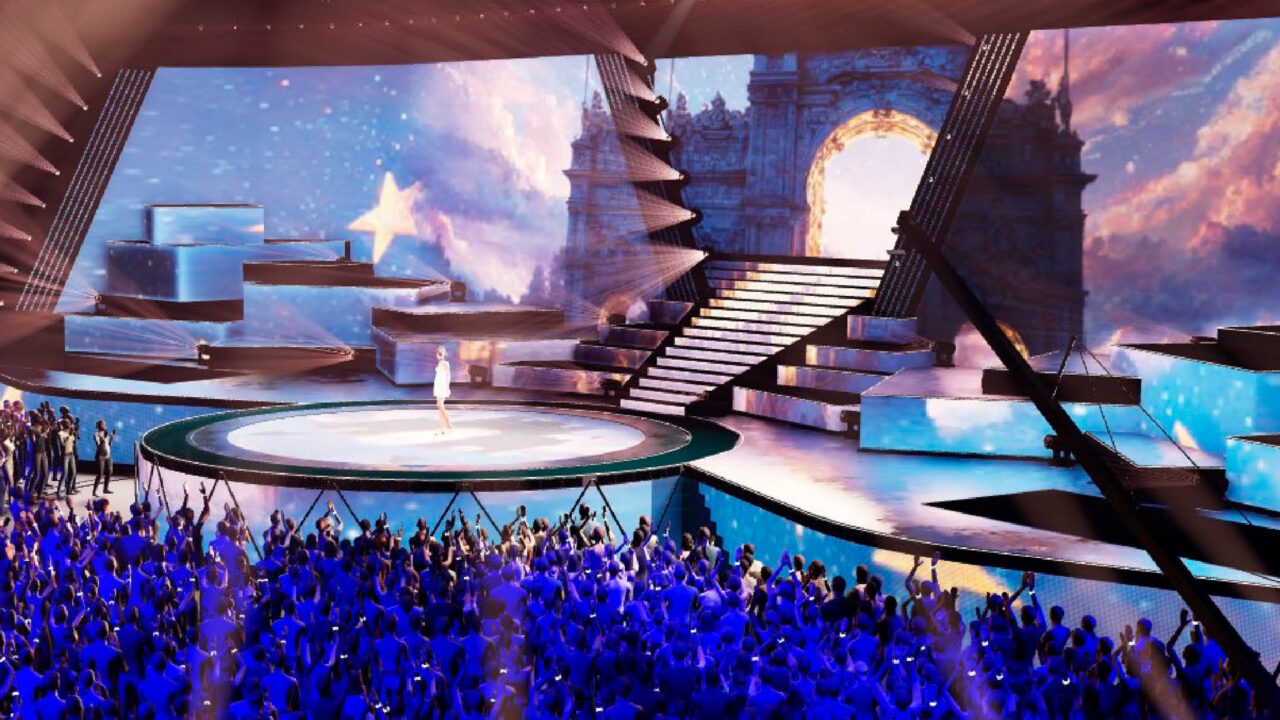
The stage designed for Tbilisi 2025 reflected a philosophy very different from the previous year’s: rather than prioritising maximalist technology, it sought to connect with the cultural identity of the host country. At the centre of the stage stood a striking representation of the doli, the traditional Georgian folk drum, surrounded by sculptural shapes inspired by Georgia’s mountains, castles and fortified villages. The result fused the timeless with the modern, letting the creativity of the young artists shine without being overshadowed by the set.
Ta’ Qali 2026: ‘Join the Festa’
Edition: 24th Junior Eurovision (2026). Venue: Malta Fairs & Conventions Centre (MFCC), Ta’ Qali (Malta). Key features: a design inspired by the Maltese festa, with architecture based on the façades and balconies of Maltese villages, and illuminated arches.
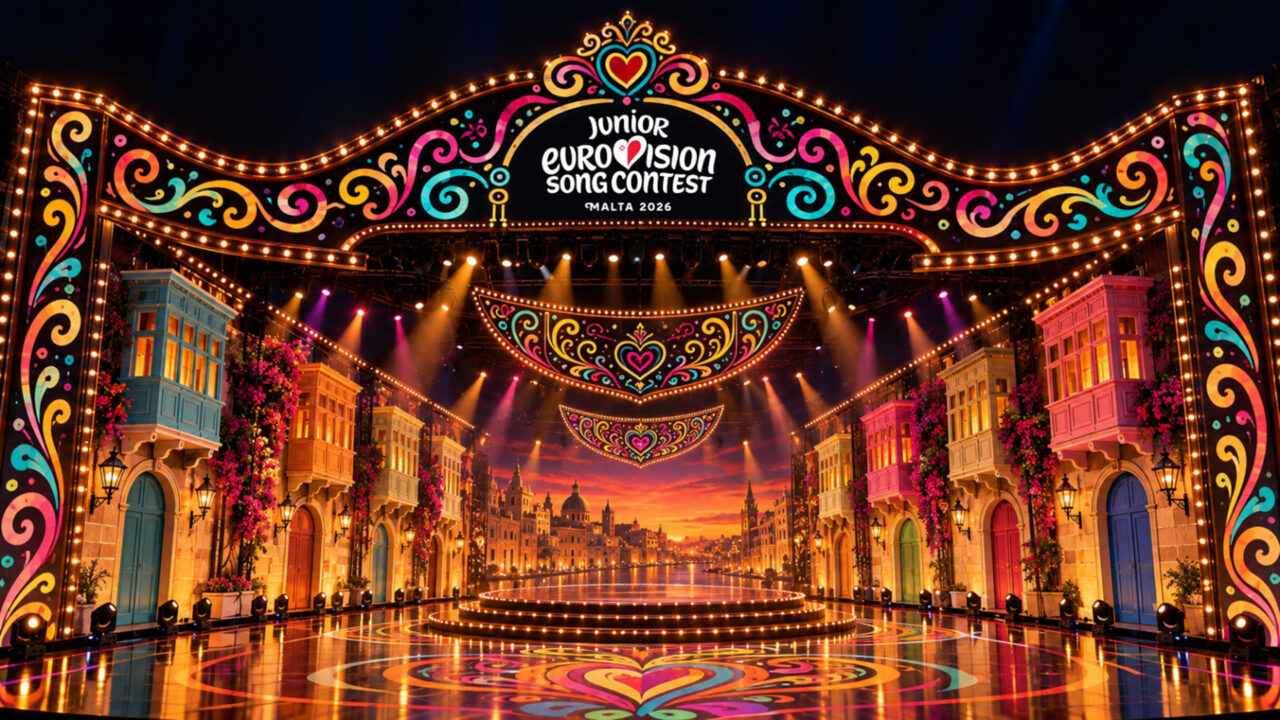
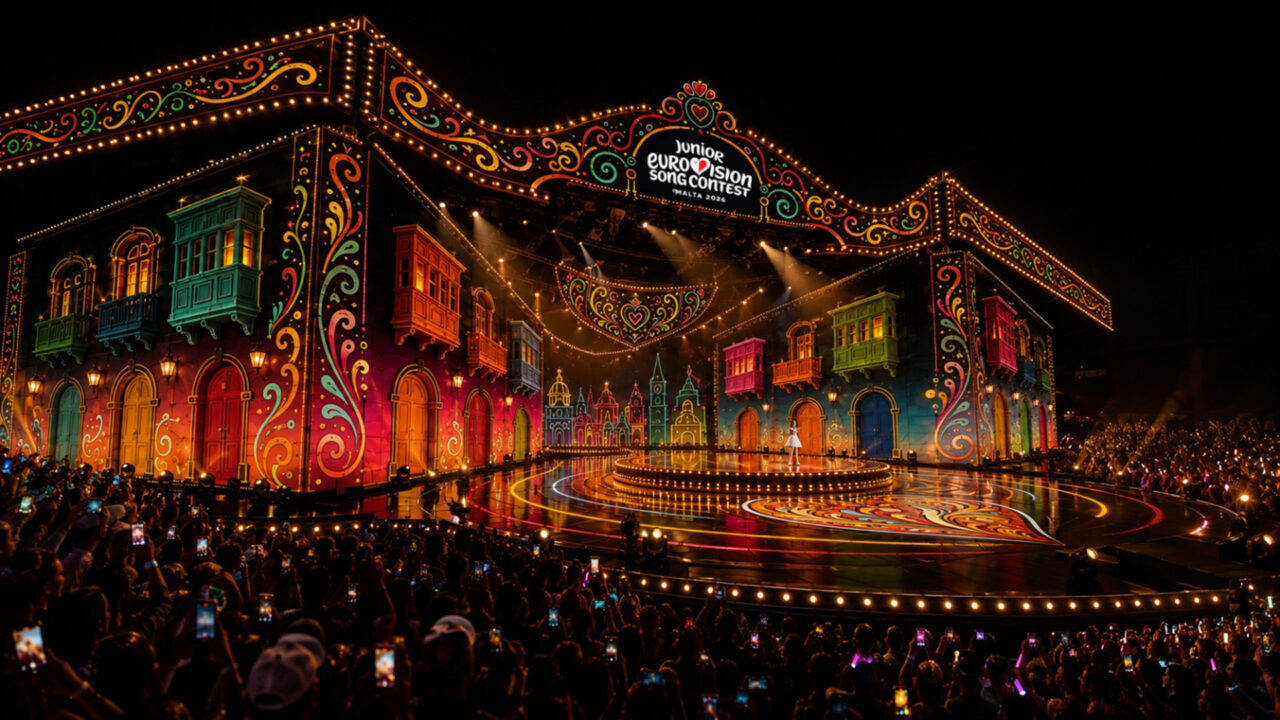
The latest stage, which will host the contest on 24 October 2026, takes its inspiration from the Maltese festa, one of the country’s most characteristic traditions, under the invitation “Join the Festa”. The renders show a large circular stage surrounded by architectural elements inspired by colourful façades and traditional Maltese balconies, with illuminated arches that echo the tent-like roof of the venue, and a second circular platform linked to the main stage by a catwalk. Although the architecture is strongly Maltese, the stage is meant to be flexible so that each delegation can create its own world.
What makes a great Junior Eurovision stage?
After looking at these productions, a few patterns emerge that distinguish a memorable stage from an ordinary one:
- Cultural identity and context. The most acclaimed stages add a layer of meaning specific to the host country, as Tbilisi 2025 did with the Georgian drum and Ta’ Qali 2026 does with the festa.
- A balance between technology and simplicity. Madrid 2024 found it through innovation, with its vertical screen, without sacrificing elegance. It is not about piling up technical devices, but about using them with artistic intent.
- Functionality for the choreography. The best stages make it easier, not harder, for artists to move and be creative, as the clean design of Gliwice 2019 did.
- Lighting as storytelling. Contemporary designs treat lighting as a narrative language rather than an accessory.
The best Junior Eurovision stages are not the most expensive or the ones with the most technology, but those that manage to balance innovation, cultural identity and artistic functionality. From the bold geometry of Sofia 2015 to the verticality of Madrid 2024, each stage tells a story about the values the contest tries to communicate: diversity, young talent, European unity and innovation.