

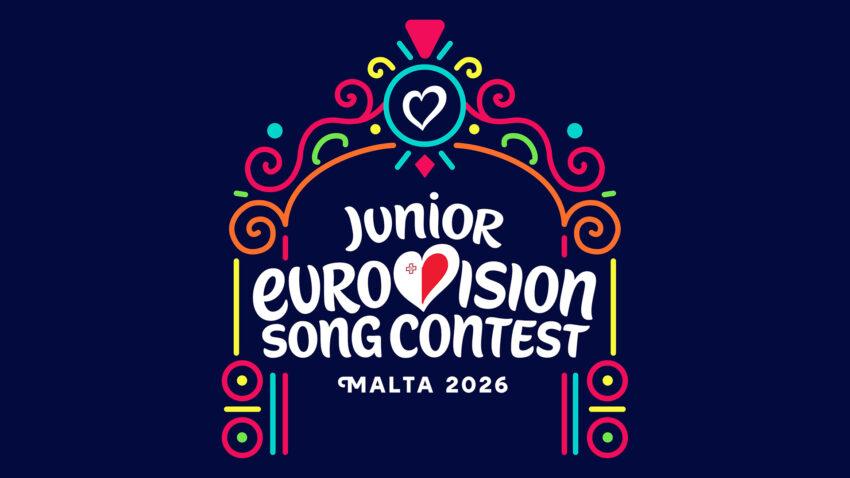
Preparations for the Junior Eurovision Song Contest 2026 are under way. The European Broadcasting Union (EBU) and host broadcaster Public Broadcasting Services (PBS Malta) have unveiled the official visual identity that will accompany the next edition of the contest.
Conceived to represent the creativity, diversity and excitement that characterise the children’s contest, the graphic design will be the visual backbone of the edition. The new identity will feature in the broadcasts, promotional material, digital platforms and staging, establishing a recognisable image for the participating delegations and the contest’s fans.
This visual project seeks to bring together young artists from all over Europe, keeping alive the spirit of a contest committed to talent, music and cultural exchange among the new generations.
This is the artistic concept of Junior Eurovision 2026
The visual identity of the Junior Eurovision Song Contest 2026 in Malta is based on the invitation “Join the Festa” and on the country’s folk and traditional elements.
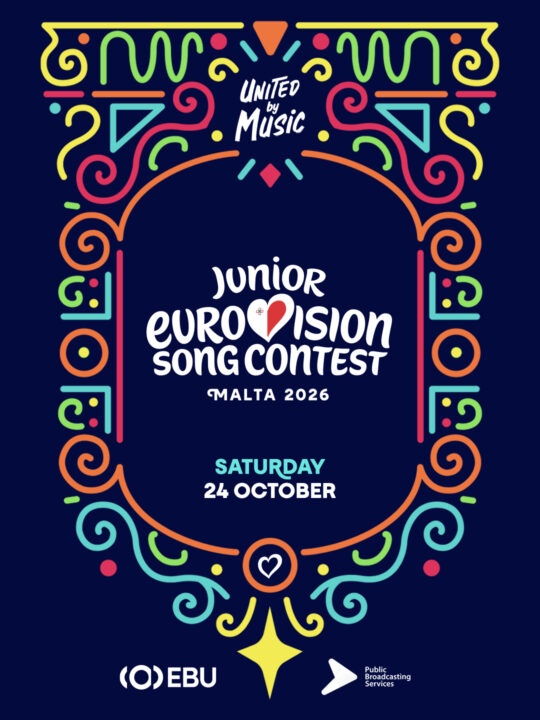
The design features a vertical composition that is highly colourful, symmetrical and visually dynamic, inspired by the decorative and ornamental elements typical of the traditional Maltese festa. It stands out for its use of bold colours such as yellow, green, turquoise, orange, pink and fuchsia in the surrounding geometric elements, which contrast sharply with a dark blue background to create a striking, cheerful and energetic image.
At the centre of the composition, the different versions include the generic Junior Eurovision logo, the slogan “United by Music” and the edition’s invitation “Join the Festa” in white lettering. Since Tbilisi 2025, “United by Music” has been the permanent slogan shared by all the Eurovision contests, while each host adds its own localised slogan: in Malta, it is “Join the Festa”. The typography has an irregular, handwritten look that brings dynamism, spontaneity and a strong festive character to the whole.
Around this central element, a wide variety of decorative motifs is arranged, including spirals, curved lines, geometric shapes, dots, stars and other elements that evoke the garlands, bunting and ornaments of traditional Maltese celebrations.
At the top, a large decoration acts as a frame, combined with wavy shapes in green and turquoise tones, pink and orange circles and orange elements in the central area, creating a balanced and ornamental visual structure. The lower part keeps the same graphic richness with more spirals, curved shapes and multicoloured ornaments, culminating in a yellow star that reinforces the feeling of celebration, spectacle and festivity. And the iconic Eurovision heart also takes a prominent place in the composition.
Overall, the image aims to convey party, community, colour, music and celebration, visually transferring the idea of the Maltese festa to the contest. The design seems conceived so that its ornamental elements can also work as staging, lighting and on-screen graphics resources during the show.
A festive spirit to reach beyond the screen
Under the invitation “Join the Festa”, Malta is preparing an edition that aims to bring to the international stage one of the country’s most deeply rooted and recognisable traditions: the Maltese festa. These celebrations bring together families, neighbours and entire generations over several days, turning the streets of the islands’ villages and towns into true stages of music, colour and celebration.
The organisers promise an especially colourful and dynamic night, in which local traditions will be combined with the spectacular visual language of Junior Eurovision.
The centrepiece of the artistic concept will be the Maltese festa, a tradition deeply linked to the cultural identity of the archipelago. These celebrations, held in many towns and villages across Malta and Gozo, bring communities together around music, processions, decorations and a festive atmosphere that lasts from day well into the night.
For Junior Eurovision 2026, broadcaster PBS intends to bring all these elements to the Ta’ Qali stage and to its visual identity, reinterpreting them from a contemporary perspective. Flags, festoons, brass bands, traditional instruments, lights, confetti and fireworks will be some of the main sources of inspiration for building the atmosphere of the show.
The intention is for the international audience to recognise from the very first moment some of the most characteristic elements of Maltese celebrations, adapted to the television format of a major music production.
Malta 2026 invites us to its “festa”
The invitation chosen by Malta sums up precisely this philosophy. Rather than simply presenting a music show, the organisers want to invite viewers from all over Europe and the rest of the world to be part of a big celebration.
The artistic design will seek to recreate the transformation that Maltese towns and villages undergo during a festa. The streets fill with decorations, flags and ornamental elements, while band music accompanies the celebrations and processions.
These components will be the starting point for developing different aspects of the Junior Eurovision 2026 production, from the staging and lighting to the sound and the staging of the performances.
The organisers promise a show that will evolve throughout the night, recreating the feeling of a celebration that begins during the day and gradually builds in intensity until it reaches its climax. Colour will therefore play a key role. Lighting and decorations will be joined by visual resources such as confetti and pyrotechnic effects, with the aim of creating a festive atmosphere full of energy.

Brass bands at the heart of the sound identity
This theme art will be accompanied by a sound identity. Band music is another fundamental element of the Maltese festa and will be reflected in the identity of the contest.
Brass bands and traditional instruments are part of the soundscape of these celebrations and accompany different moments of the feasts and processions. Broadcaster PBS will bring this inspiration to the Junior Eurovision production, so that Malta’s musical identity is present beyond the competing songs themselves.
The intention is to combine this tradition with a modern television production, creating a show in which the sounds and images linked to Maltese culture sit alongside the performances of the Junior Eurovision 2026 participants.
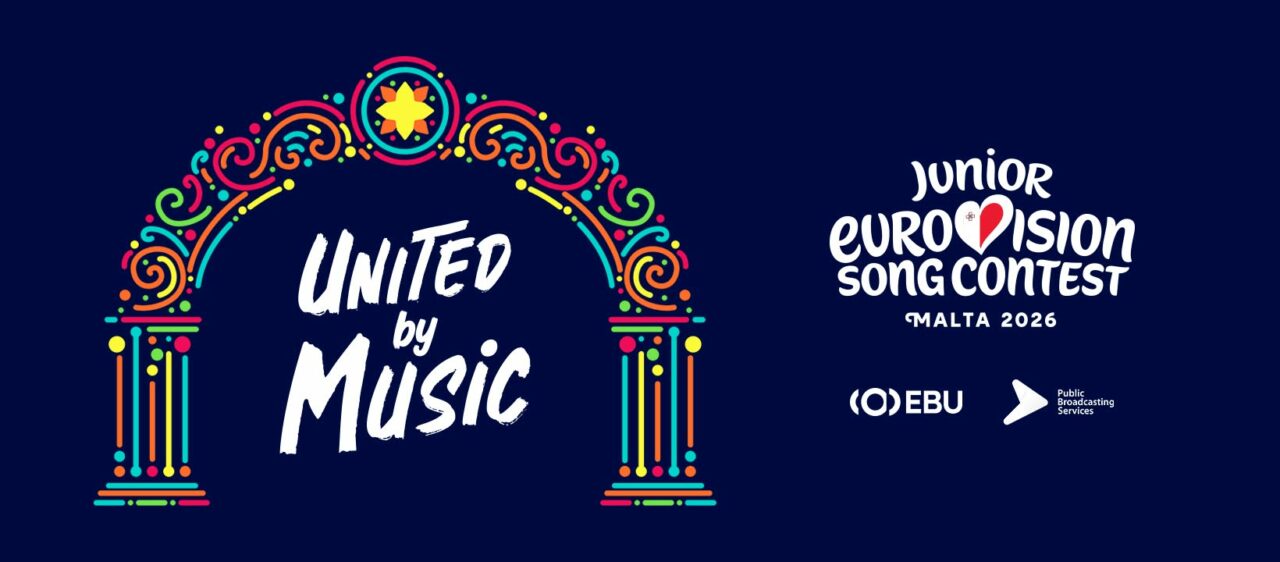
“United by Music”, the generic slogan of all the Eurovision contests
Since the Tbilisi 2025 edition, Junior Eurovision has used “United by Music” as its generic slogan, the same motto that has accompanied the Eurovision Song Contest since its 2023 edition in Liverpool (United Kingdom).
Martin Green CBE, Director of the Junior Eurovision Song Contest, confirmed that the children’s contest was joining the global brand strategy that the European organisation aims to consolidate in its plans for the future.
Under the slogan “United by Music”, both contests are the cornerstone of the content that the EBU produces together with its public broadcasters across Europe.
Junior Eurovision slogans throughout its history
At Junior Eurovision, the slogan has always been a key element in building the visual and television concept. In fact, the traditional common song performed by all the young artists taking part in the contest used to revolve around the slogan.
The aim has always been to find positive, inspiring phrases with a clear vocation to put the spotlight on the talent of children from all over Europe, both the participants and their millions of fans.
Throughout its history, the Junior Eurovision Song Contest has always had a slogan accompanying its visual identity and other graphic elements, except in the 2003 and 2004 editions.
| Edition | Slogan | Edition | Slogan |
|---|---|---|---|
| Hasselt 2005 | Let’s Get Loud | Valletta 2016 | Embrace |
| Bucharest 2006 | Let the Music Play | Tbilisi 2017 | Shine Bright |
| Rotterdam 2007 | Make a Big Splash | Minsk 2018 | #LightUp |
| Limassol 2008 | Fun in the Sun | Gliwice-Silesia 2019 | Share the Joy |
| Kyiv 2009 | For the Joy of People | Poland 2020 | #MoveTheWorld! |
| Minsk 2010 | Feel the Magic | Paris 2021 | Imagine |
| Yerevan 2011 | Reach for the Top! | Yerevan 2022 | Spin the Magic |
| Amsterdam 2012 | Break the Ice | Nice 2023 | Heroes |
| Kyiv 2013 | Be Creative | Madrid 2024 | Let’s Bloom |
| Malta 2014 | #Together | Tbilisi 2025 | United by Music (shared slogan) |
| Bulgaria 2015 | #Discover | Malta 2026 | United by Music + Join the Festa (localised) |
The first time a common song was performed was in Rotterdam 2007. In the early editions it was not usual, and the idea was only repeated occasionally, in Limassol 2008 and Minsk 2010.
From the contest’s 10th anniversary in Amsterdam 2012, it became a tradition. In addition, since Kyiv 2013, the common song has taken the slogan of each edition as its title. Since “United by Music” became the permanent shared slogan in 2025, the common song carries its own title, as with “We’re Rising High” in Tbilisi.
It is a tradition that continues year after year, and the common song has become a symbol of each edition of the format. In recent years, these group songs have become a hallmark of the television show, seeking to capture the spirit of the contest and foster unity and collaboration among the young artists.
Look back at the common songs of Junior Eurovision throughout its history: